Summary information and primary citation
- PDB-id
-
1f5h;
DSSR-derived features in text and
JSON formats
- Class
- RNA
- Method
- NMR
- Summary
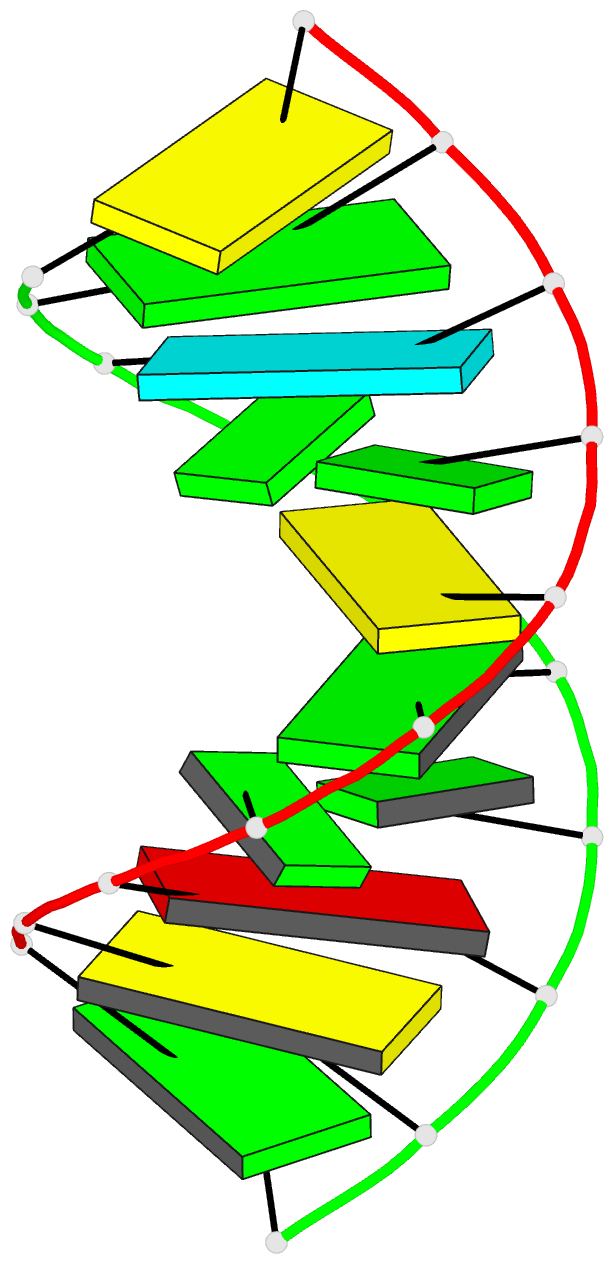
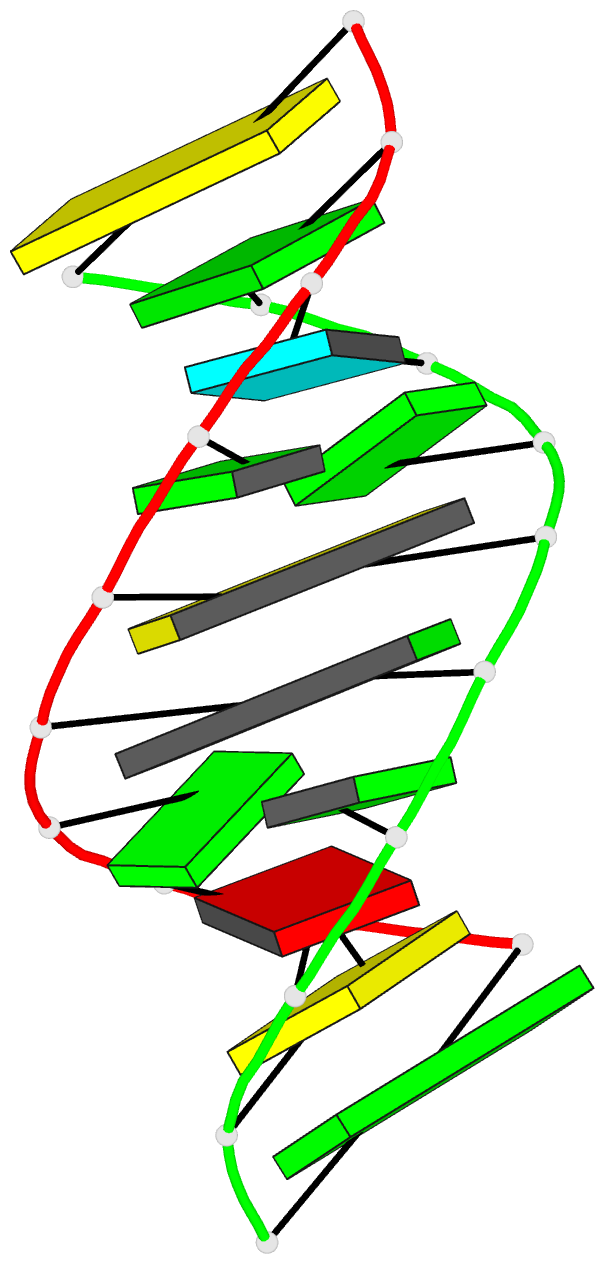
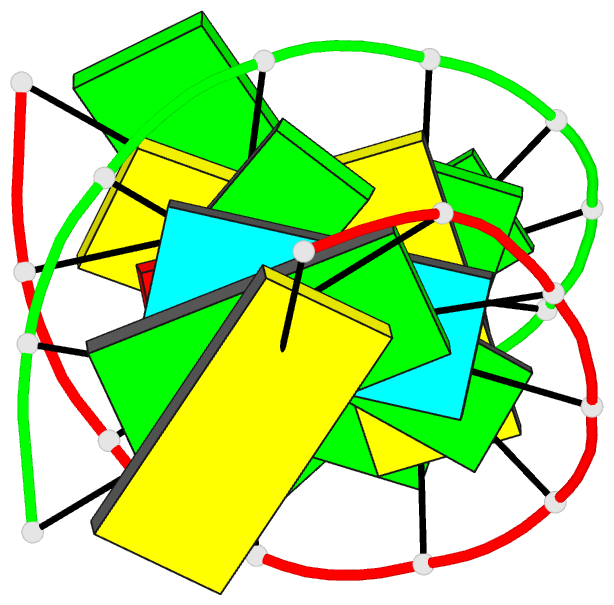
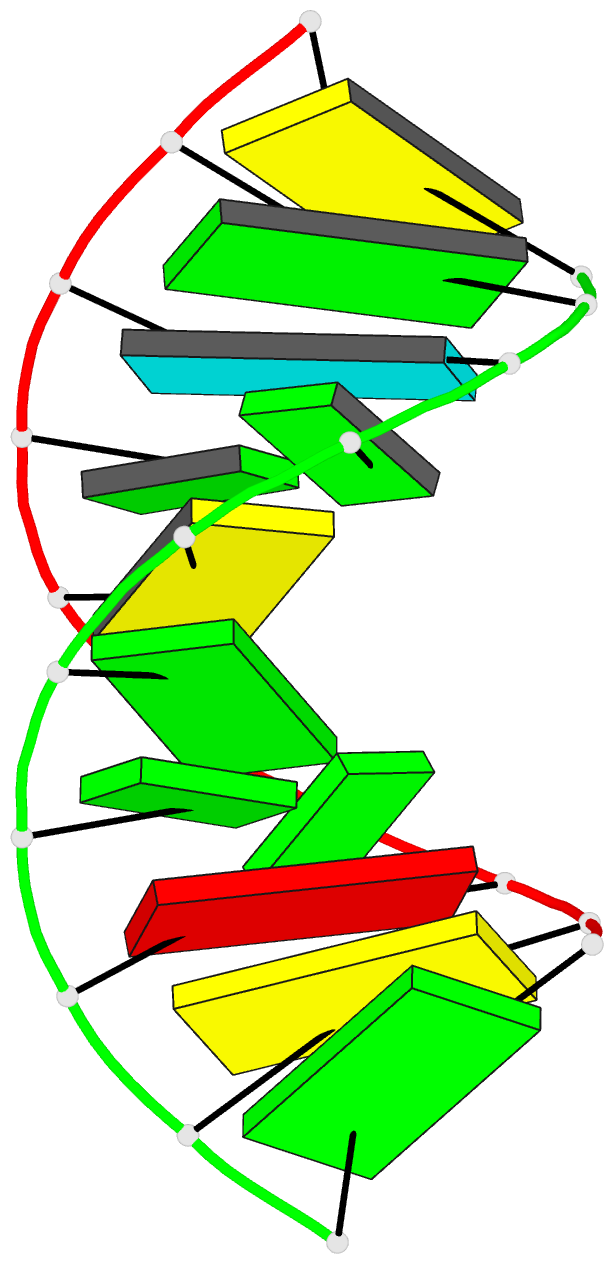
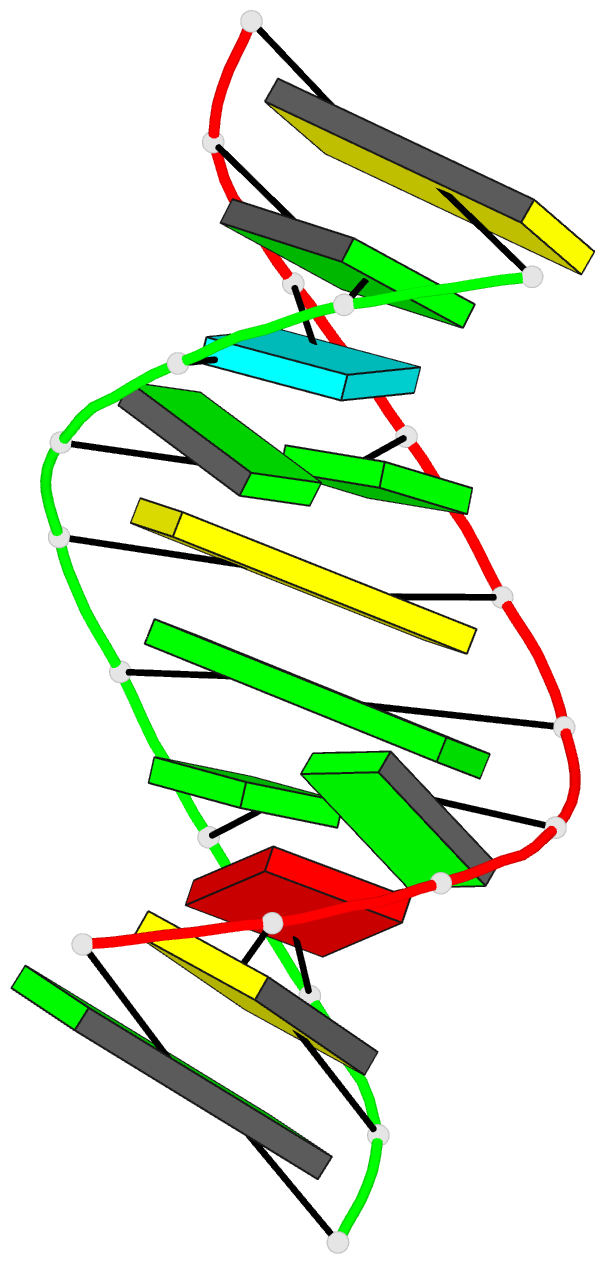
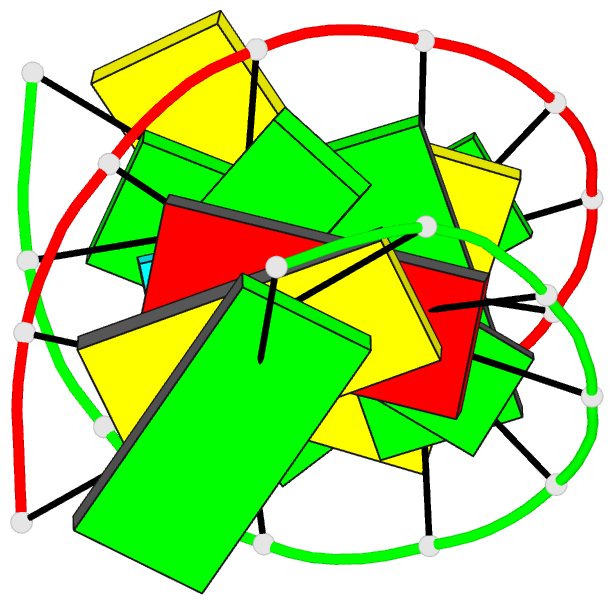
- The g7(syn)-g4(anti) structure of r(gcaggcgugc)2
- Reference
-
Burkard ME, Turner DH (2000): "NMR
structures of r(GCAGGCGUGC)2 and determinants of
stability for single guanosine-guanosine base pairs."
Biochemistry, 39, 11748-11762.
doi: 10.1021/bi000720i.
- Abstract
- Nucleotides in RNA that are not Watson-Crick-paired
form unique structures for recognition or catalysis, but
determinants of these structures and their stabilities are
poorly understood. A single noncanonical pair of two
guanosines (G) is more stable than other noncanonical pairs
and can potentially form pairing structures with two
hydrogen bonds in four different ways. Here, the energetics
and structure of single GG pairs are investigated in
several sequence contexts by optical melting and NMR. The
data for r(5'GCAGGCGUGC3')(2), in which G4 and G7 are
paired, are consistent with a model in which G4 and G7
alternate syn glycosidic conformations in a
two-hydrogen-bond pair. The two distinct structures are
derived from nuclear Overhauser effect spectroscopic
distance restraints coupled with simulated annealing using
the AMBER 95 force field. In each structure, the imino and
amino protons of the anti G are hydrogen bonded to the O6
and N7 acceptors of the syn G, respectively. An additional
hydrogen-bond connects the syn G amino group to the 5'
nonbridging pro-R(p) phosphate oxygen. The GG pair fits
well into a Watson-Crick helix. In r(5'GCAGGCGUGC3')(2),
the G4(anti), G7(syn) structure is preferred over G4(syn),
G7(anti). For single GG pairs in other contexts, exchange
processes make interpretation of spectra more difficult but
the pairs are also G(syn), G(anti). Thermodynamic data for
a variety of duplexes containing pairs of G, inosine, and
7-deazaguanosine flanked by GC pairs are consistent with
the structural and energetic interpretations for
r(5'GCAGGCGUGC3')(2), suggesting similar GG
conformations.