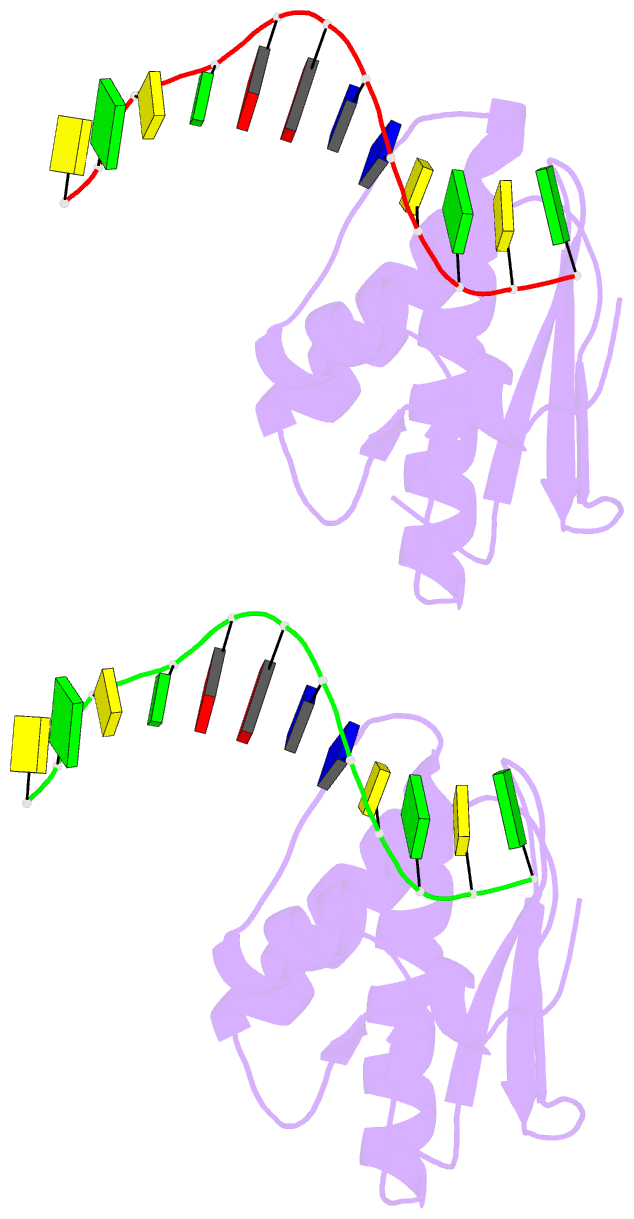
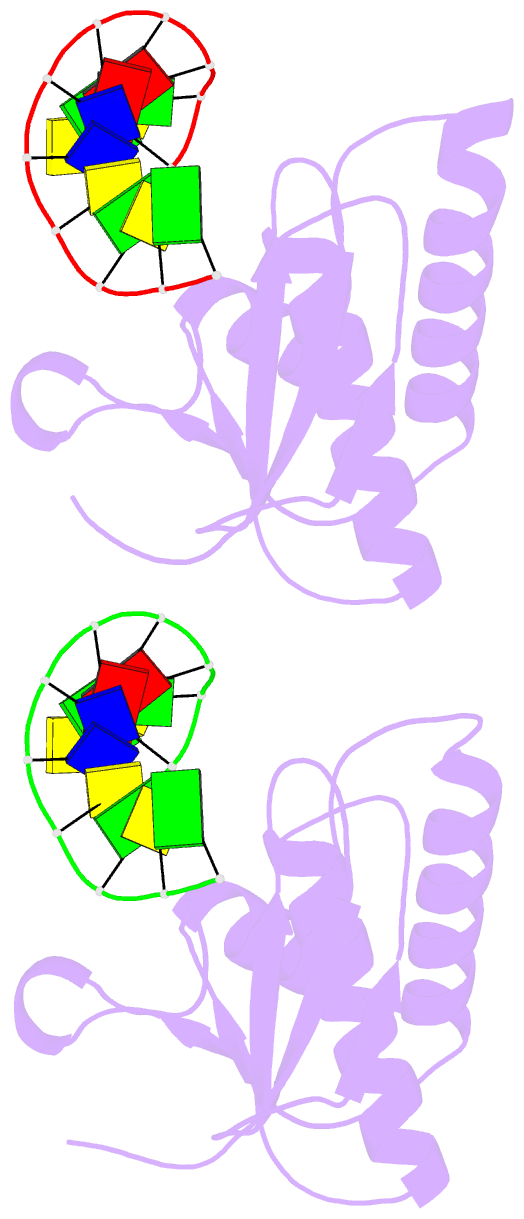
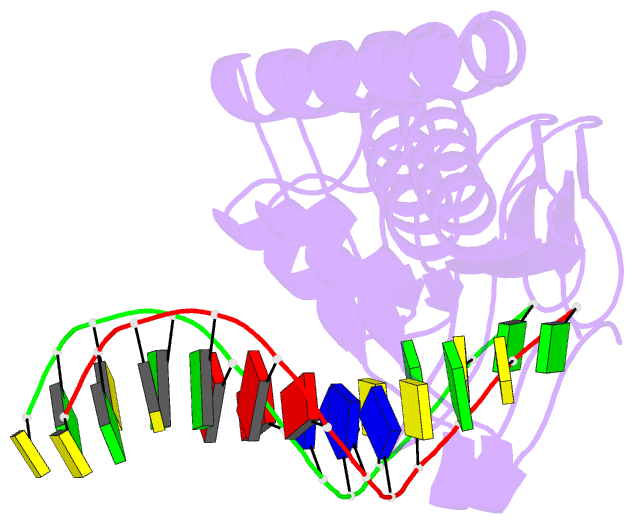
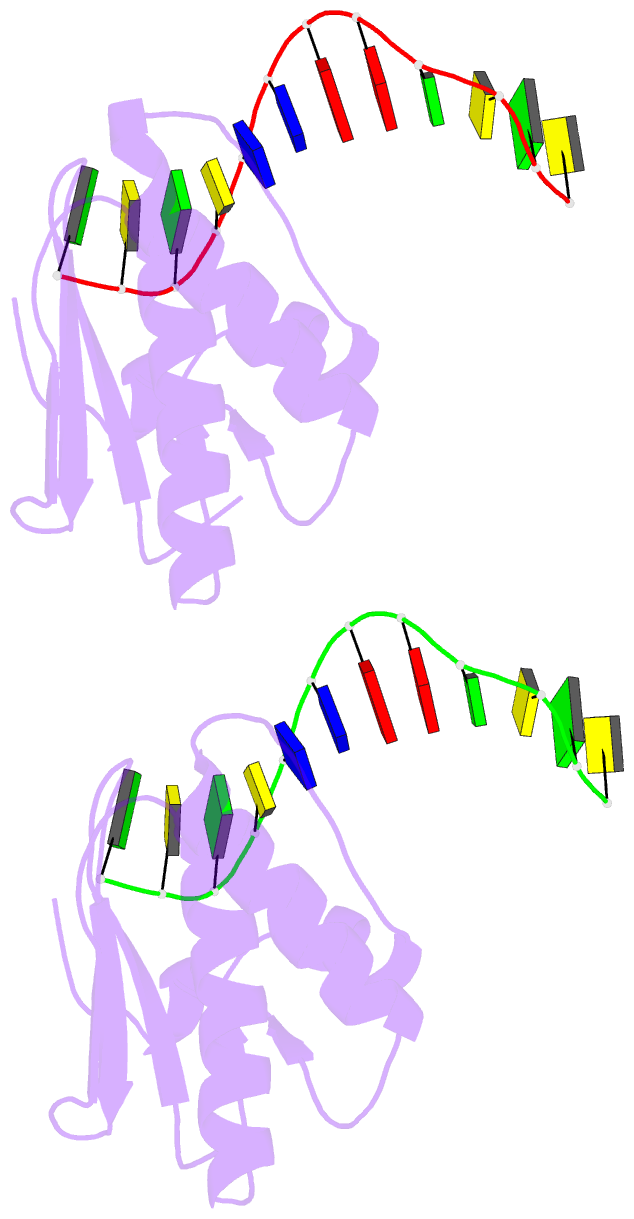
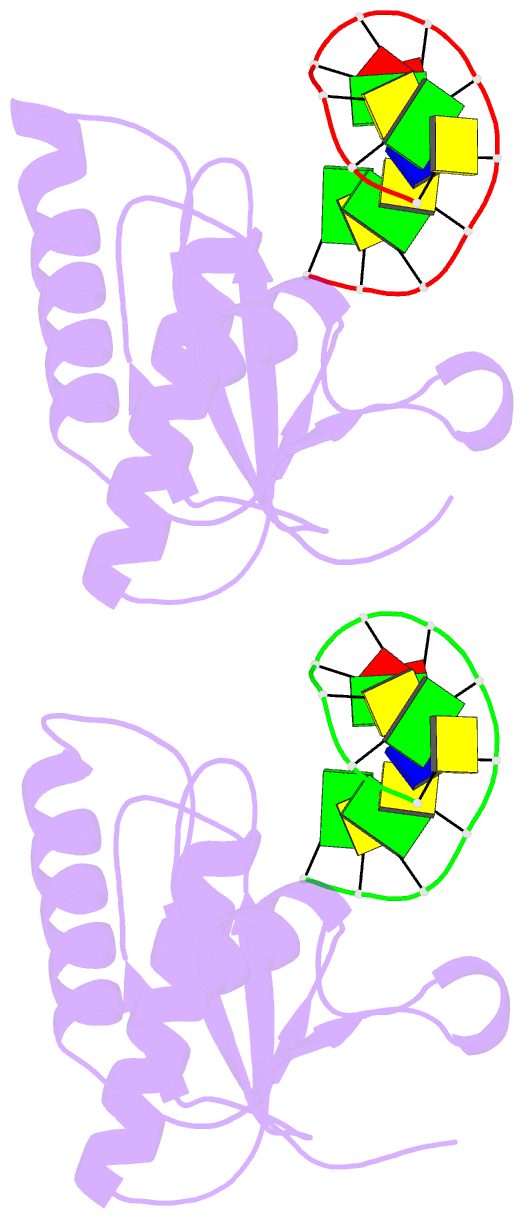
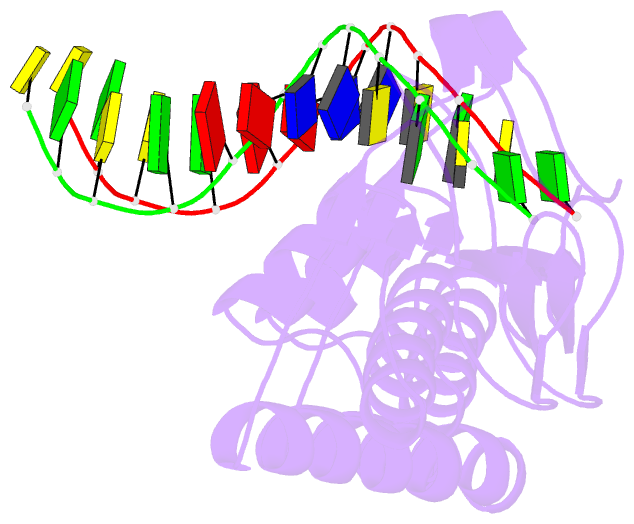
Summary information and primary citation
- PDB-id
-
3d0p;
DSSR-derived features in text and
JSON formats
- Class
- hydrolase-DNA
- Method
- X-ray (1.8 Å)
- Summary
- Insights into RNA-DNA hybrid recognition and processing
by rnase h from the crystal structure of a non-specific
enzyme-dsDNA complex
- Reference
-
Pallan PS, Egli M (2008): "Insights
into RNA/DNA hybrid recognition and processing by RNase H
from the crystal structure of a non-specific enzyme-dsDNA
complex." Cell Cycle, 7,
2562-2569.
- Abstract
- Ribonuclease HI (RNase H) is a member of the
nucleotidyl-transferase superfamily and
endo-nucleolytically cleaves the RNA portion in RNA/DNA
hybrids and removes RNA primers from Okazaki fragments. The
enzyme also binds RNA and DNA duplexes but is unable to
cleave either. Three-dimensional structures of bacterial
and human RNase H catalytic domains bound to RNA/DNA
hybrids have revealed the basis for substrate recognition
and the mechanism of cleavage. In order to visualize the
enzyme's interactions with duplex DNA and to establish the
structural differences that afford tighter binding to
RNA/DNA hybrids relative to dsDNA, we have determined the
crystal structure of Bacillus halodurans RNase H in complex
with the B-form DNA duplex [d(CGCGAATTCGCG)](2). The
structure demonstrates that the inability of the enzyme to
cleave DNA is due to the deviating curvature of the DNA
strand relative to the substrate RNA strand and the absence
of Mg(2+) at the active site. A subset of amino acids
engaged in contacts to RNA 2'-hydroxyl groups in the
substrate complex instead bind to bridging or non-bridging
phosphodiester oxygens in the complex with dsDNA.
Qualitative comparison of the enzyme's interactions with
the substrate and inhibitor duplexes is consistent with the
reduced binding affinity for the latter and sheds light on
determinants of RNase H binding and cleavage
specificity.