Summary information and primary citation
- PDB-id
-
4b5g;
DSSR-derived features in text and
JSON formats
- Class
- hydrolase-DNA
- Method
- X-ray (2.75 Å)
- Summary
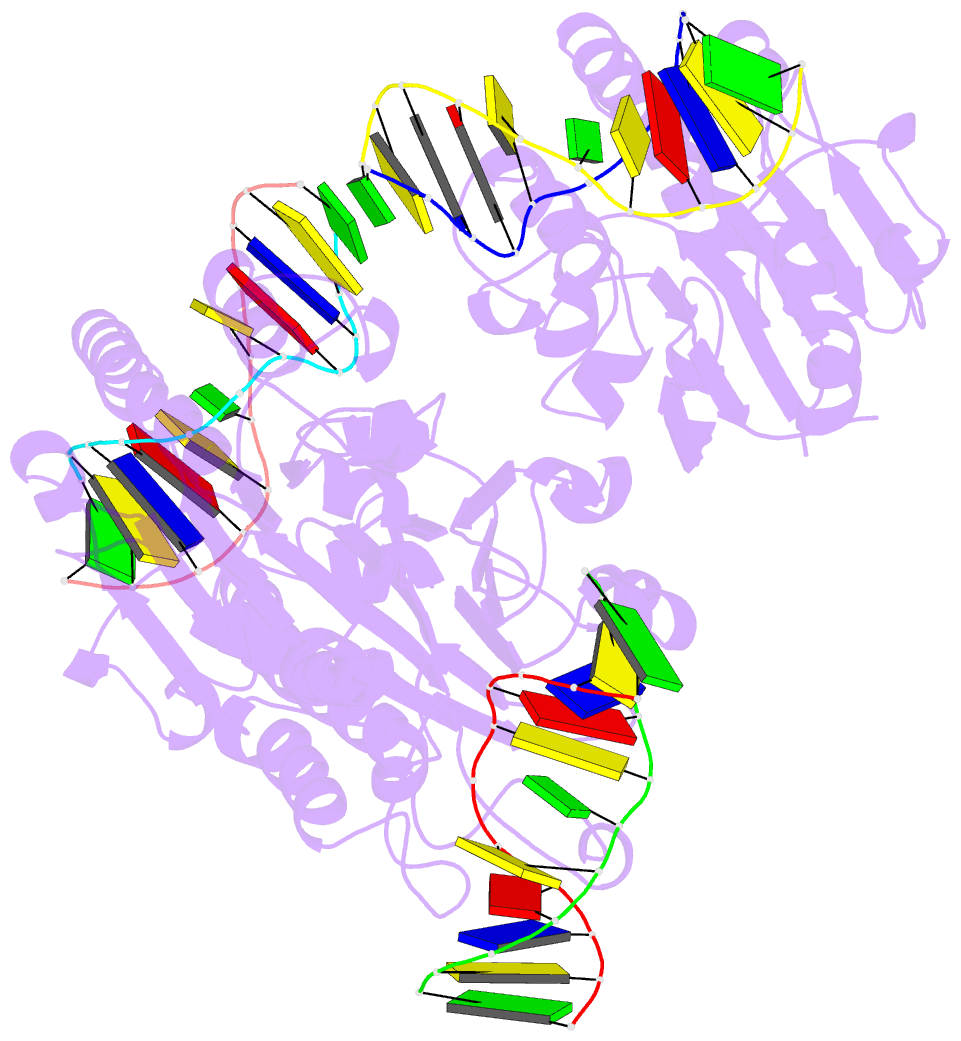
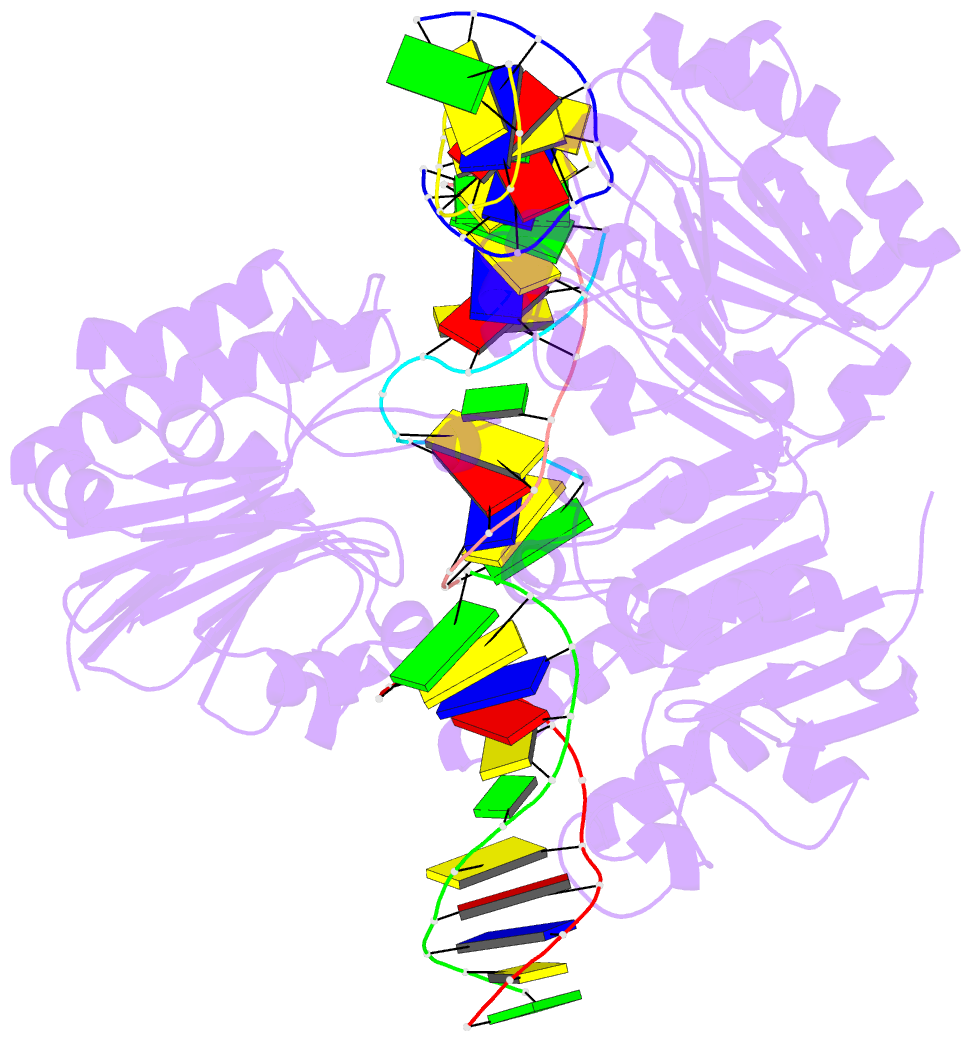
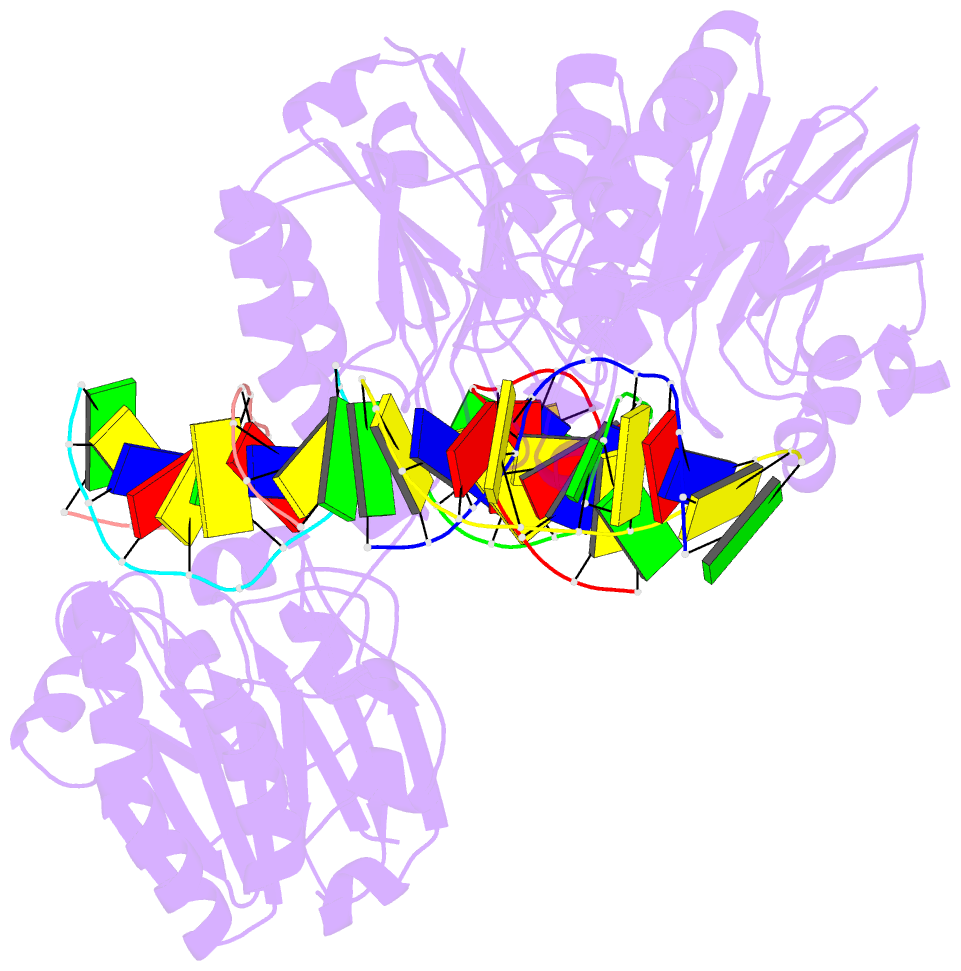
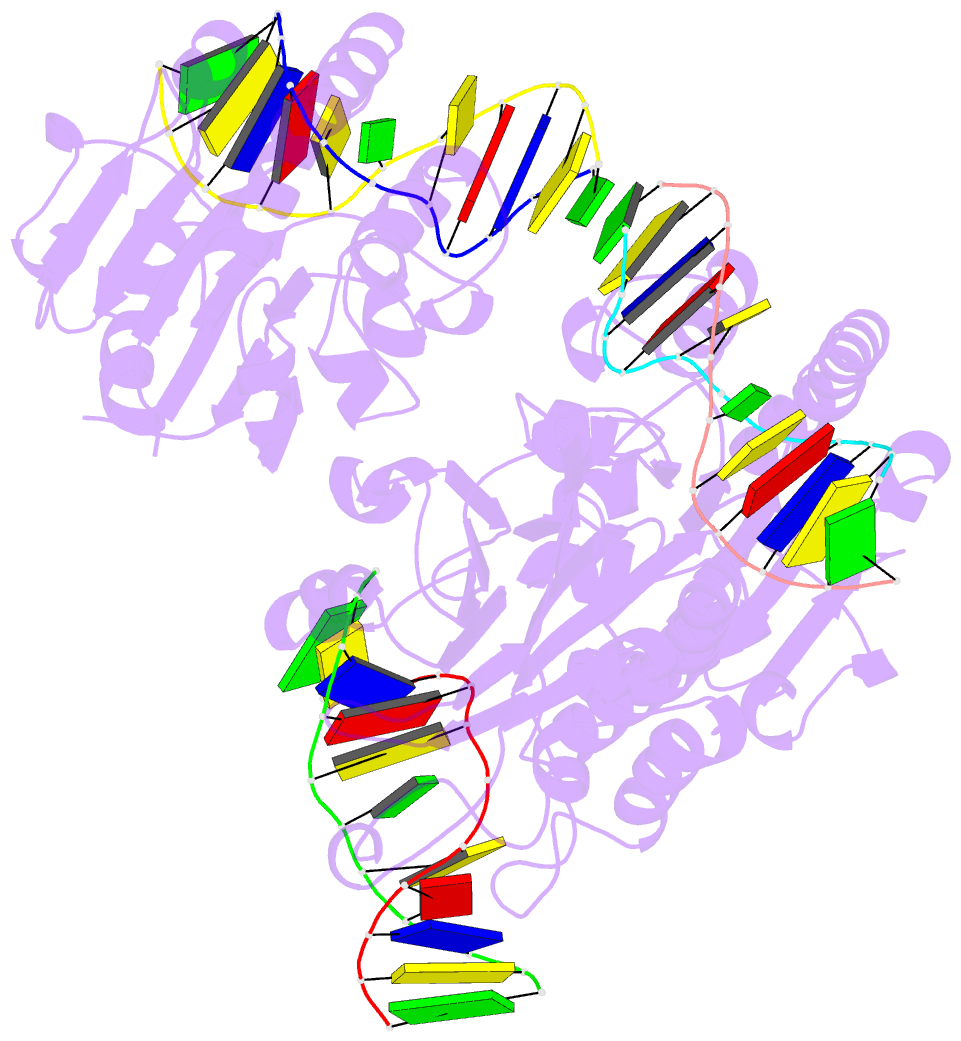
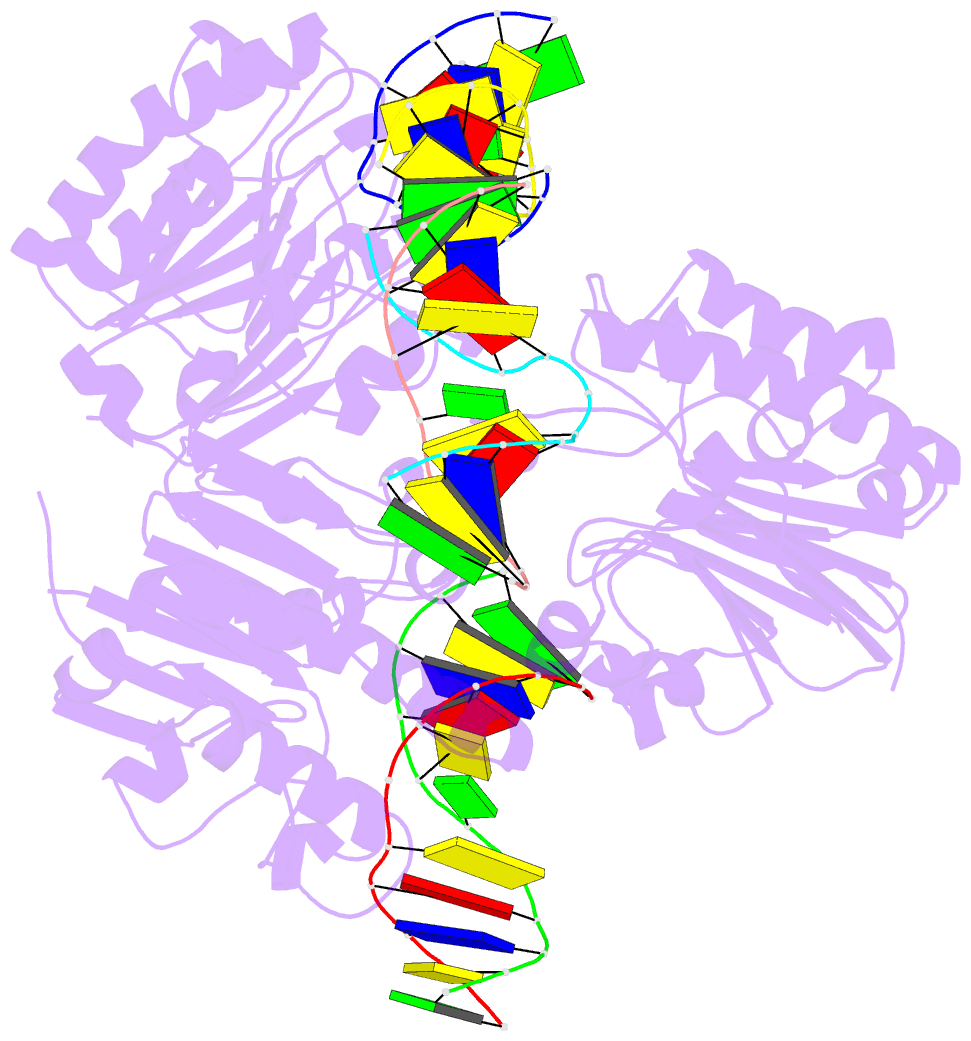
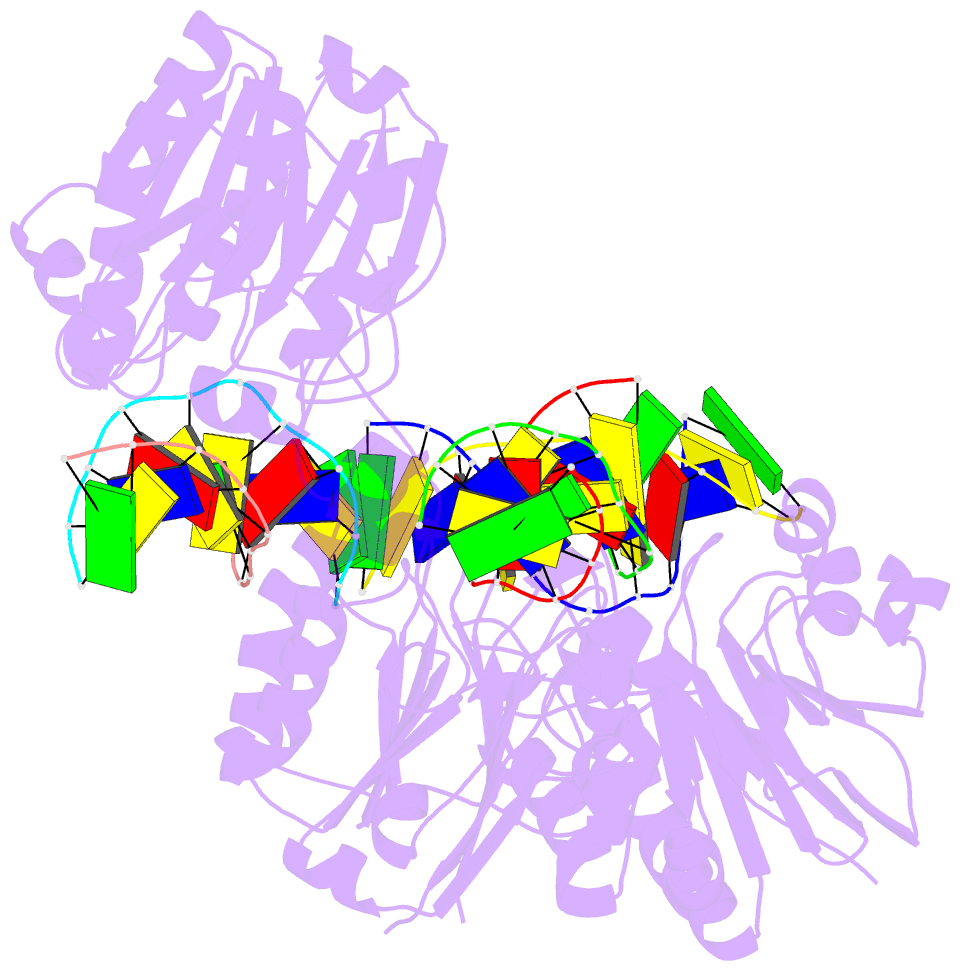
- Substrate bound neisseria ap endonuclease in absence of
metal ions (crystal form 2)
- Reference
-
Lu D, Silhan J, MacDonald JT, Carpenter EP, Jensen K,
Tang CM, Baldwin GS, Freemont PS (2012): "Structural
basis for the recognition and cleavage of abasic DNA in
Neisseria meningitidis." Proc. Natl. Acad. Sci.
U.S.A., 109, 16852-16857. doi:
10.1073/pnas.1206563109.
- Abstract
- Base excision repair (BER) is a highly conserved DNA
repair pathway throughout all kingdoms from bacteria to
humans. Whereas several enzymes are required to complete
the multistep repair process of damaged bases,
apurinic-apyrimidic (AP) endonucleases play an essential
role in enabling the repair process by recognizing
intermediary abasic sites cleaving the phosphodiester
backbone 5' to the abasic site. Despite extensive study,
there is no structure of a bacterial AP endonuclease bound
to substrate DNA. Furthermore, the structural mechanism for
AP-site cleavage is incomplete. Here we report a detailed
structural and biochemical study of the AP endonuclease
from Neisseria meningitidis that has allowed us to capture
structural intermediates providing more complete snapshots
of the catalytic mechanism. Our data reveal subtle
differences in AP-site recognition and kinetics between the
human and bacterial enzymes that may reflect different
evolutionary pressures.