Summary information and primary citation
- PDB-id
-
4j1j;
DSSR-derived features in text and
JSON formats
- Class
- viral protein-DNA
- Method
- X-ray (2.65 Å)
- Summary
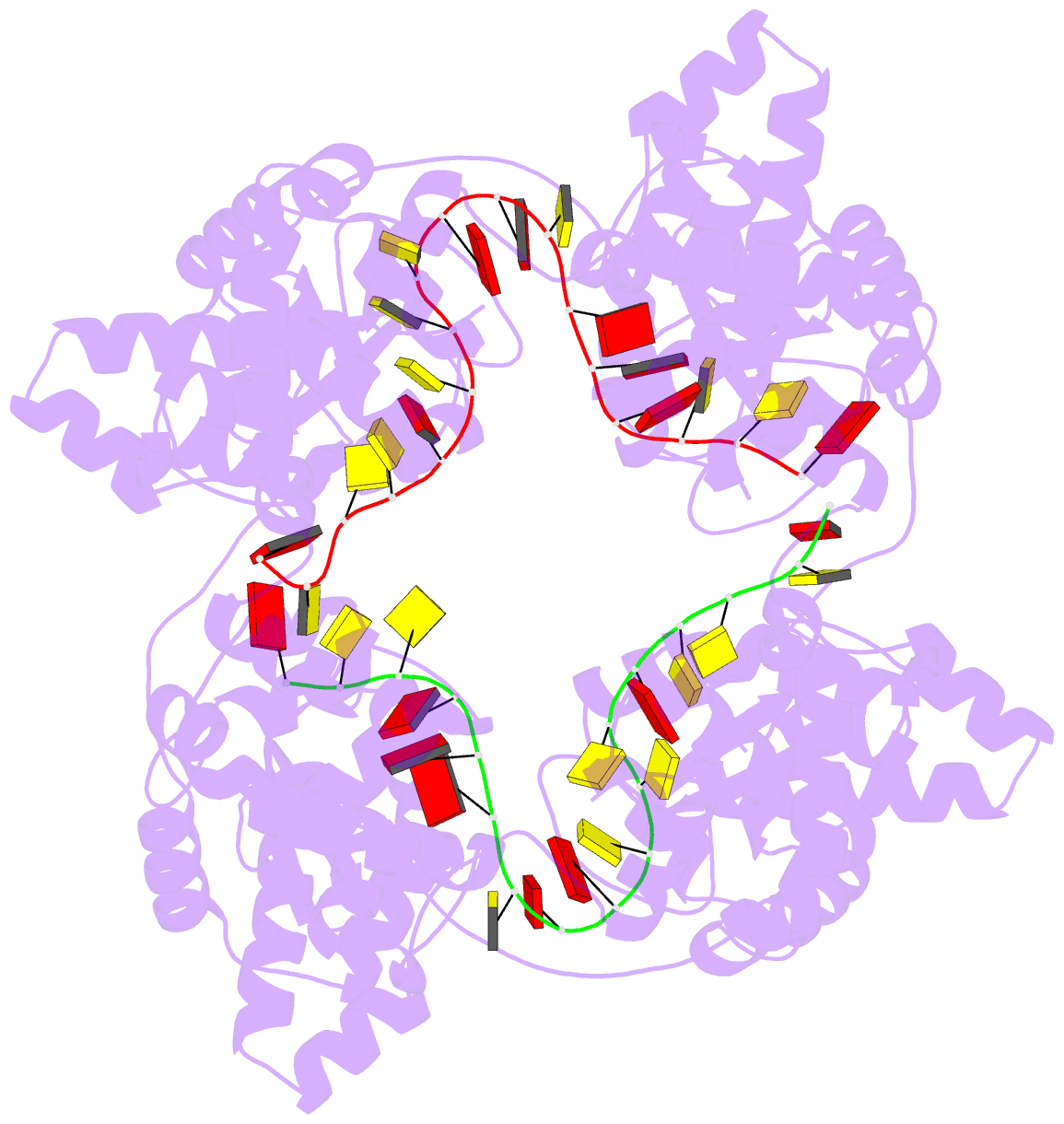
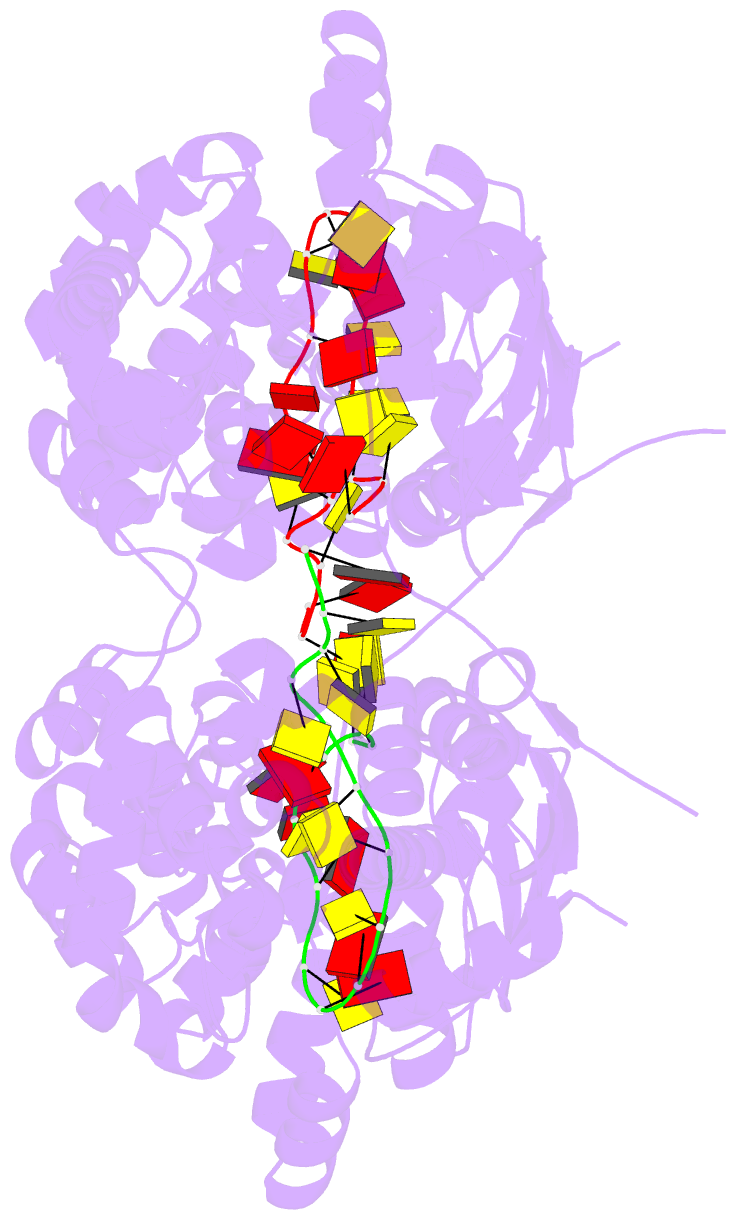
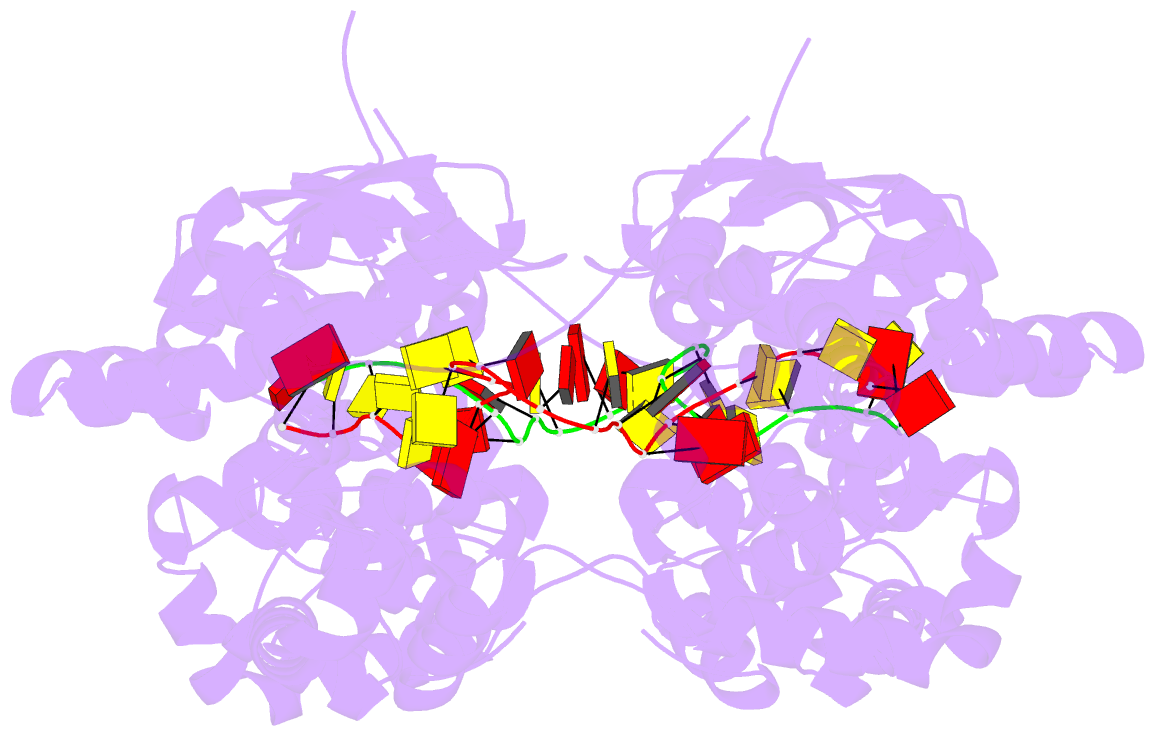
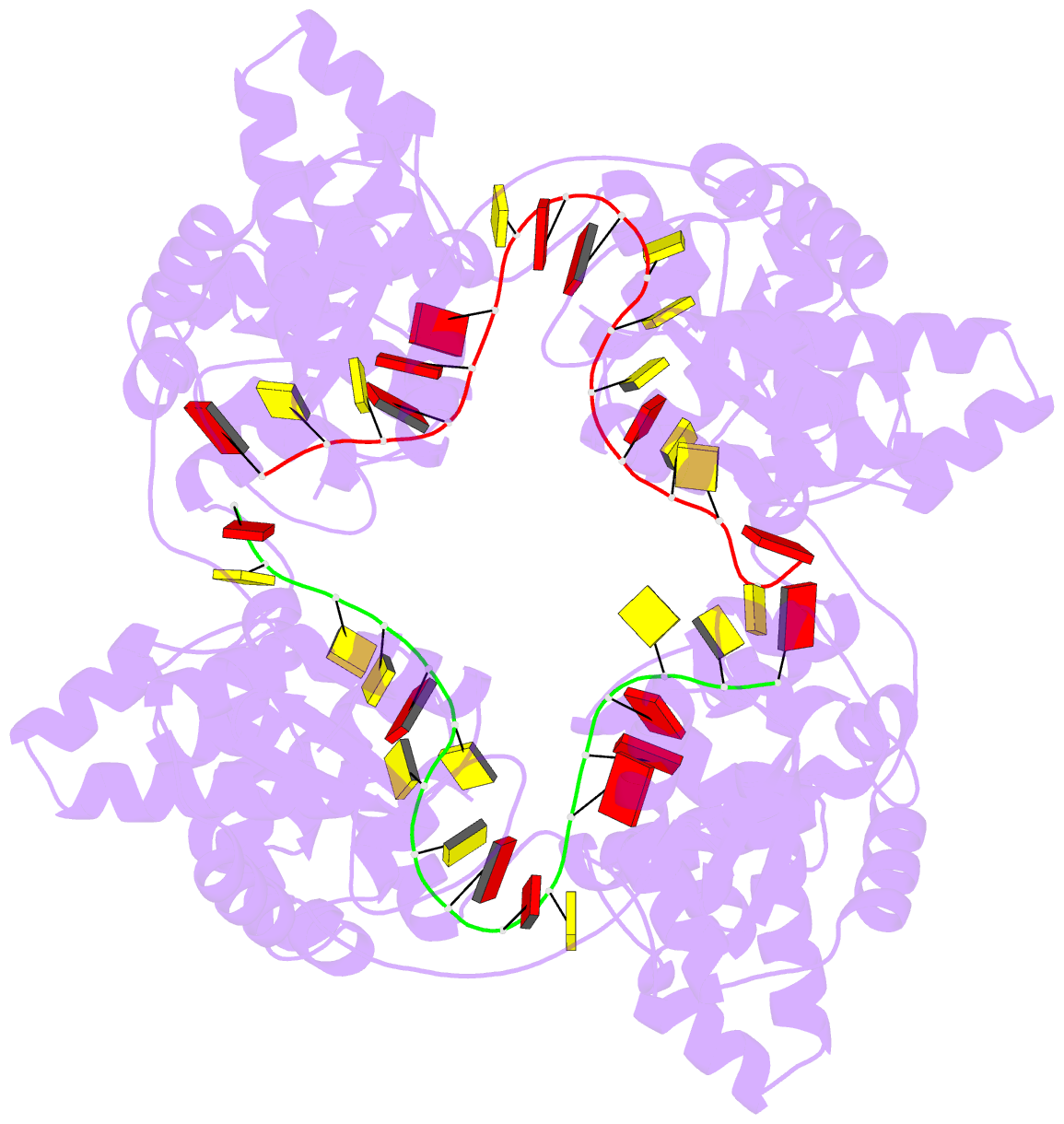
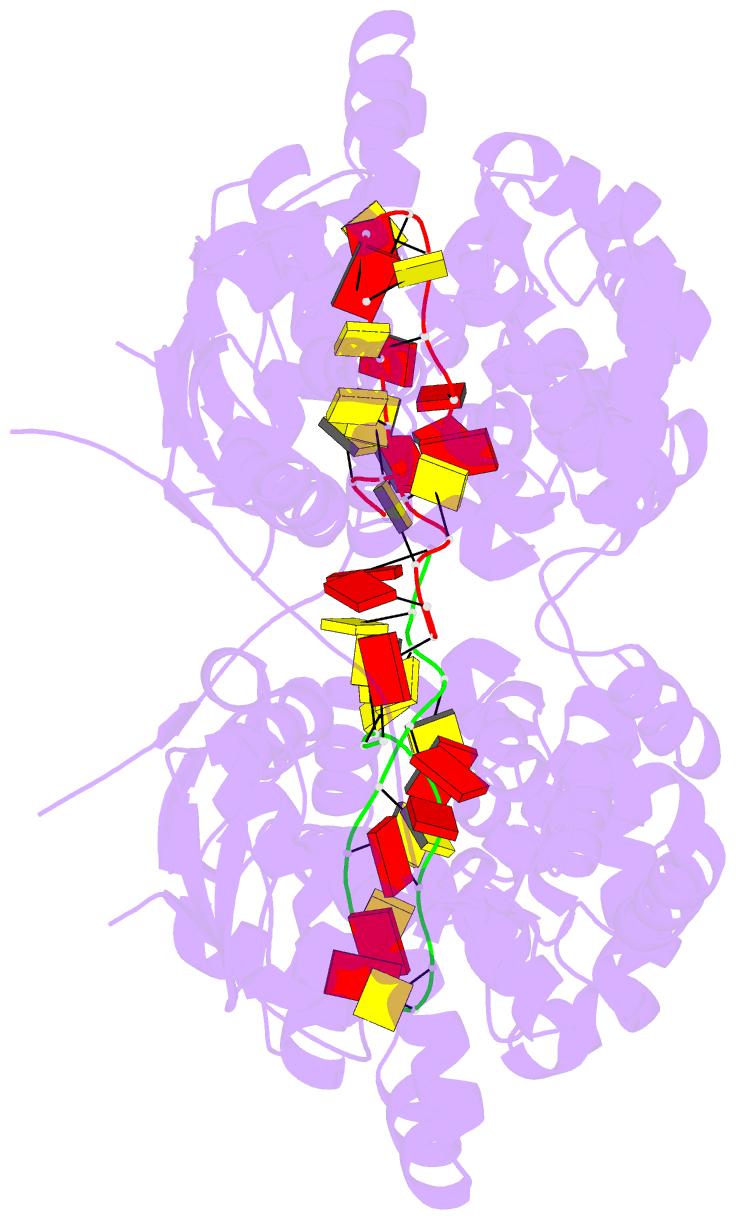
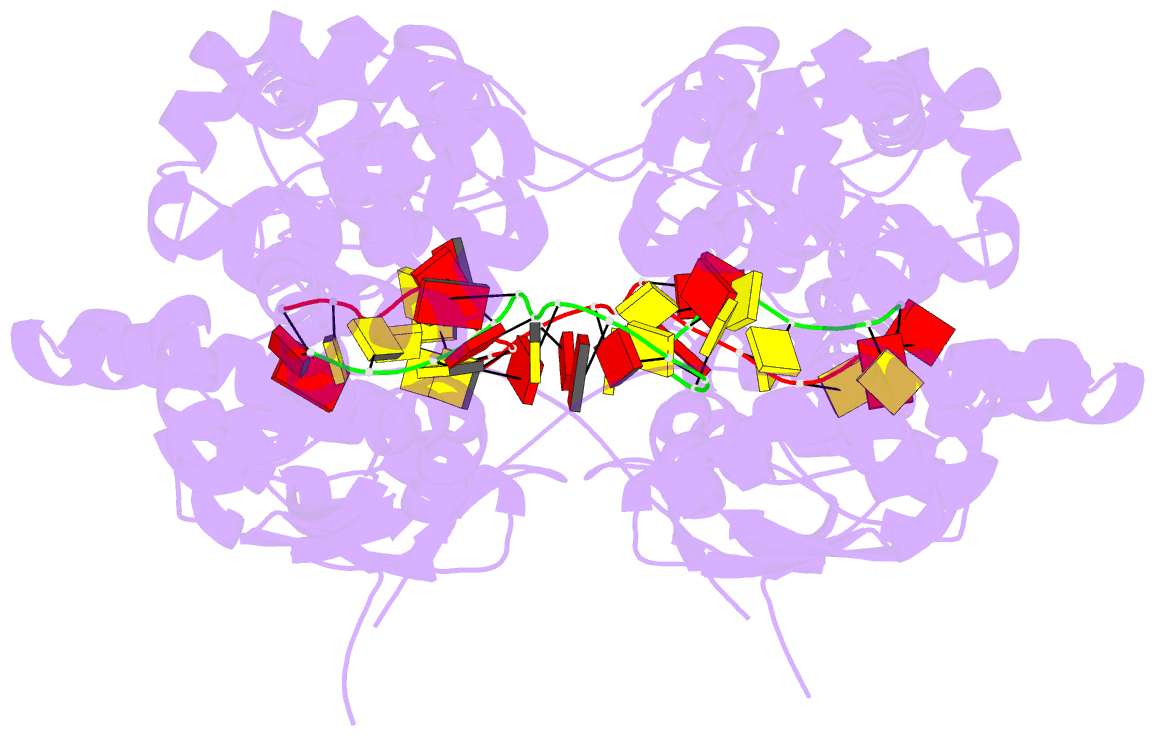
- Leanyer orthobunyavirus nucleoprotein-ssDNA
complex
- Reference
-
Niu F, Shaw N, Wang YE, Jiao L, Ding W, Li X, Zhu P, Upur
H, Ouyang S, Cheng G, Liu ZJ (2013): "Structure
of the Leanyer orthobunyavirus nucleoprotein-RNA complex
reveals unique architecture for RNA encapsidation."
Proc.Natl.Acad.Sci.USA, 110,
9054-9059. doi: 10.1073/pnas.1300035110.
- Abstract
- Negative-stranded RNA viruses cover their genome with
nucleoprotein (N) to protect it from the human innate
immune system. Abrogation of the function of N offers a
unique opportunity to combat the spread of the viruses.
Here, we describe a unique fold of N from Leanyer virus
(LEAV, Orthobunyavirus genus, Bunyaviridae family) in
complex with single-stranded RNA refined to 2.78 Å
resolution as well as a 2.68 Å resolution structure of LEAV
N-ssDNA complex. LEAV N is made up of an N- and a
C-terminal lobe, with the RNA binding site located at the
junction of these lobes. The LEAV N tetramer binds a
44-nucleotide-long single-stranded RNA chain. Hence,
oligomerization of N is essential for encapsidation of the
entire genome and is accomplished by using extensions at
the N and C terminus. Molecular details of the
oligomerization of N are illustrated in the structure where
a circular ring-like tertiary assembly of a tetramer of
LEAV N is observed tethering the RNA in a positively
charged cavity running along the inner edge. Hydrogen bonds
between N and the C2 hydroxyl group of ribose sugar explain
the specificity of LEAV N for RNA over DNA. In addition,
base-specific hydrogen bonds suggest that some regions of
RNA bind N more tightly than others. Hinge movements around
F20 and V125 assist in the reversal of capsidation during
transcription and replication of the virus. Electron
microscopic images of the ribonucleoprotein complexes of
LEAV N reveal a filamentous assembly similar to those found
in phleboviruses.