Summary information and primary citation
- PDB-id
-
5t8y;
DSSR-derived features in text and
JSON formats
- Class
- oxidoreductase-RNA
- Method
- X-ray (2.653 Å)
- Summary
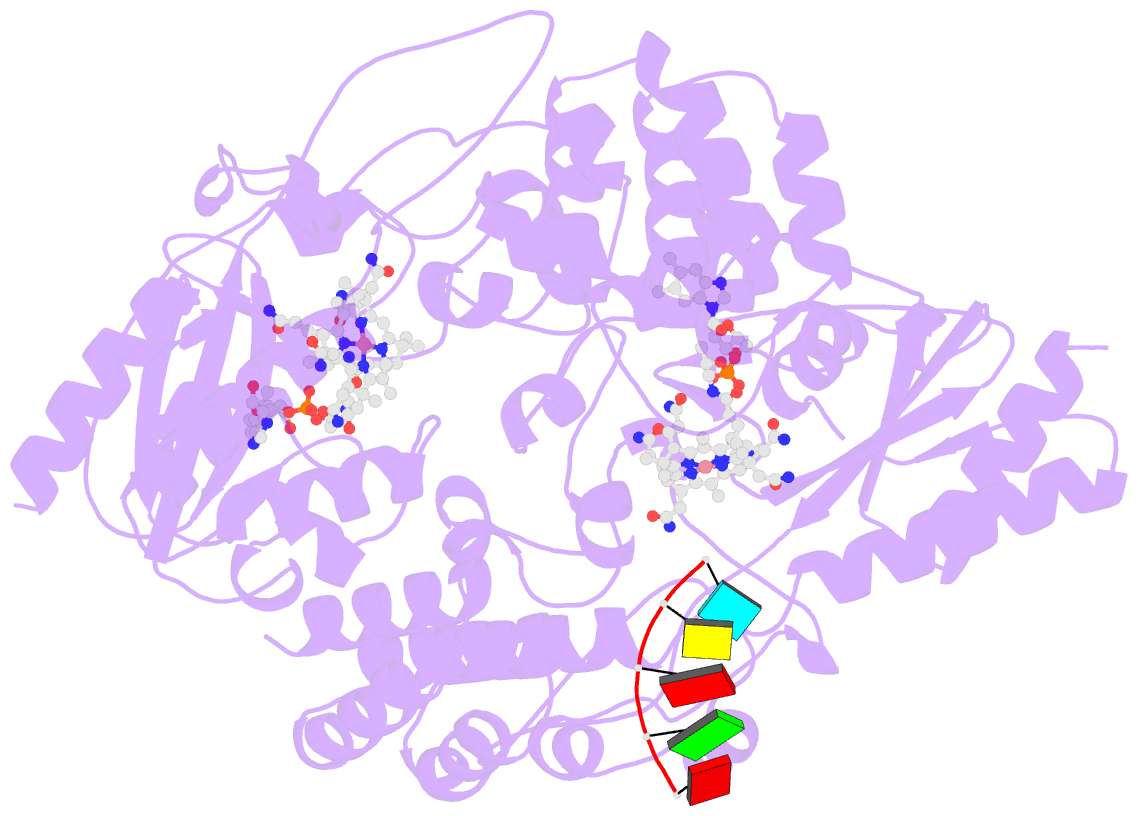
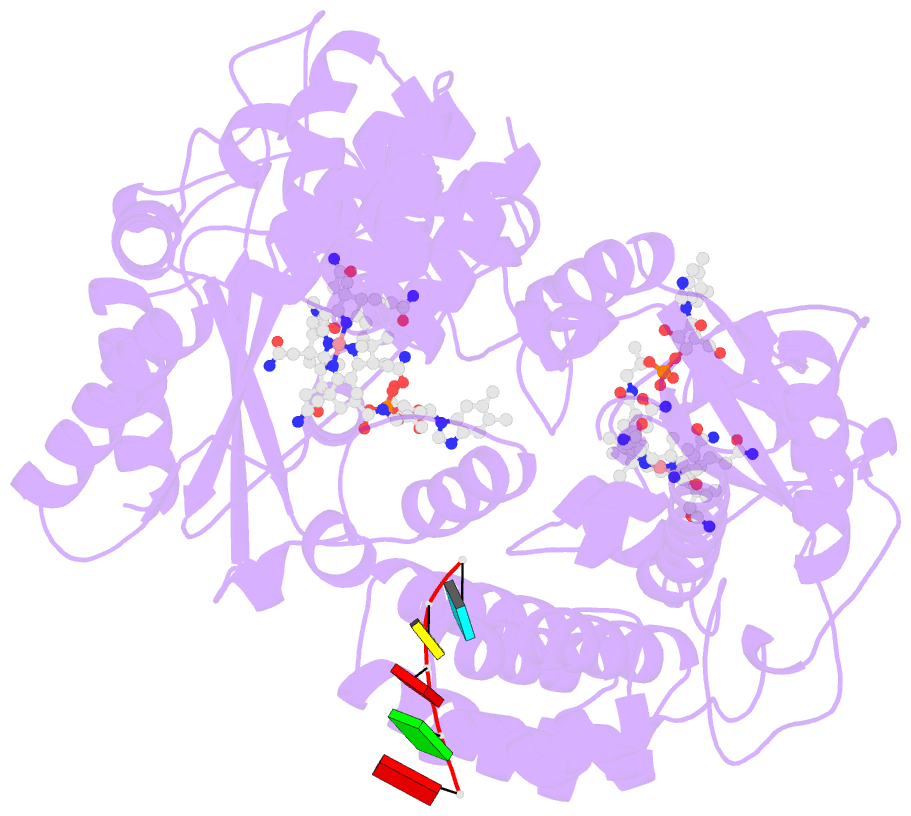
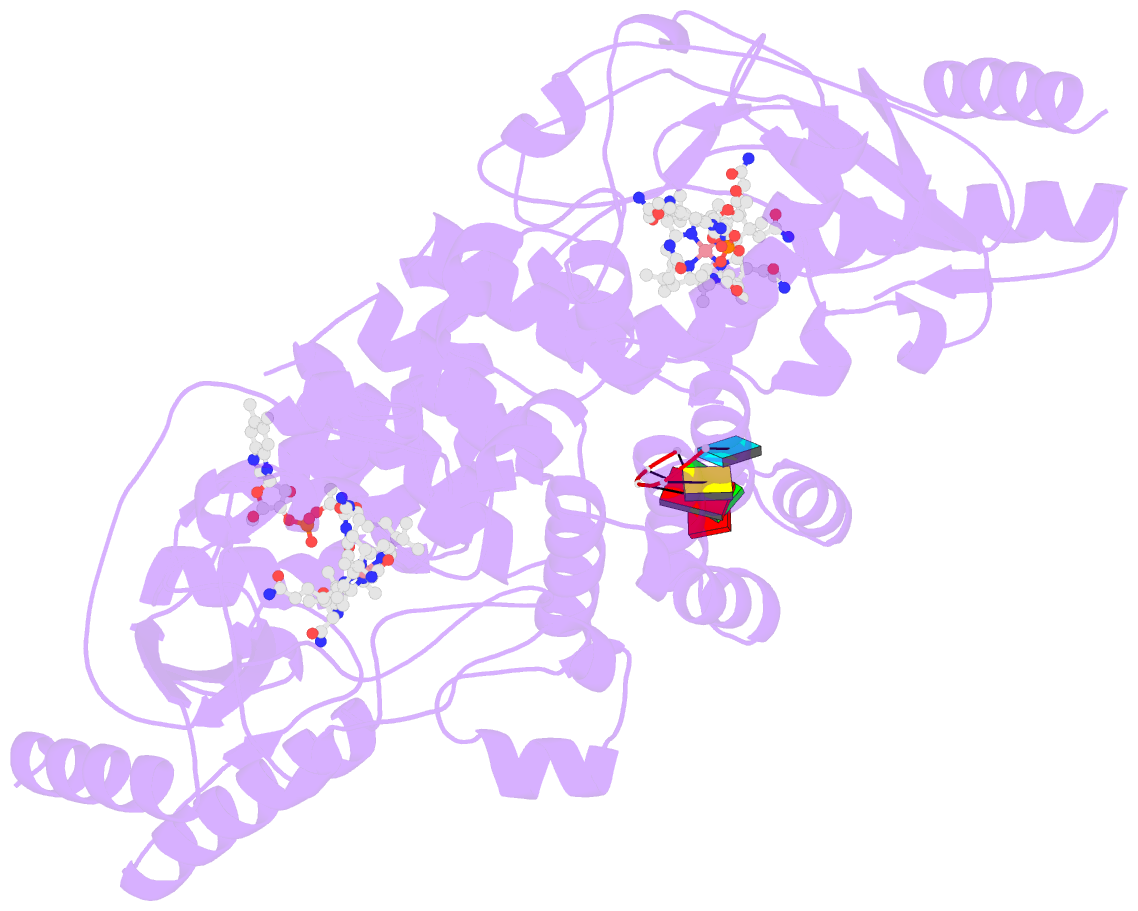
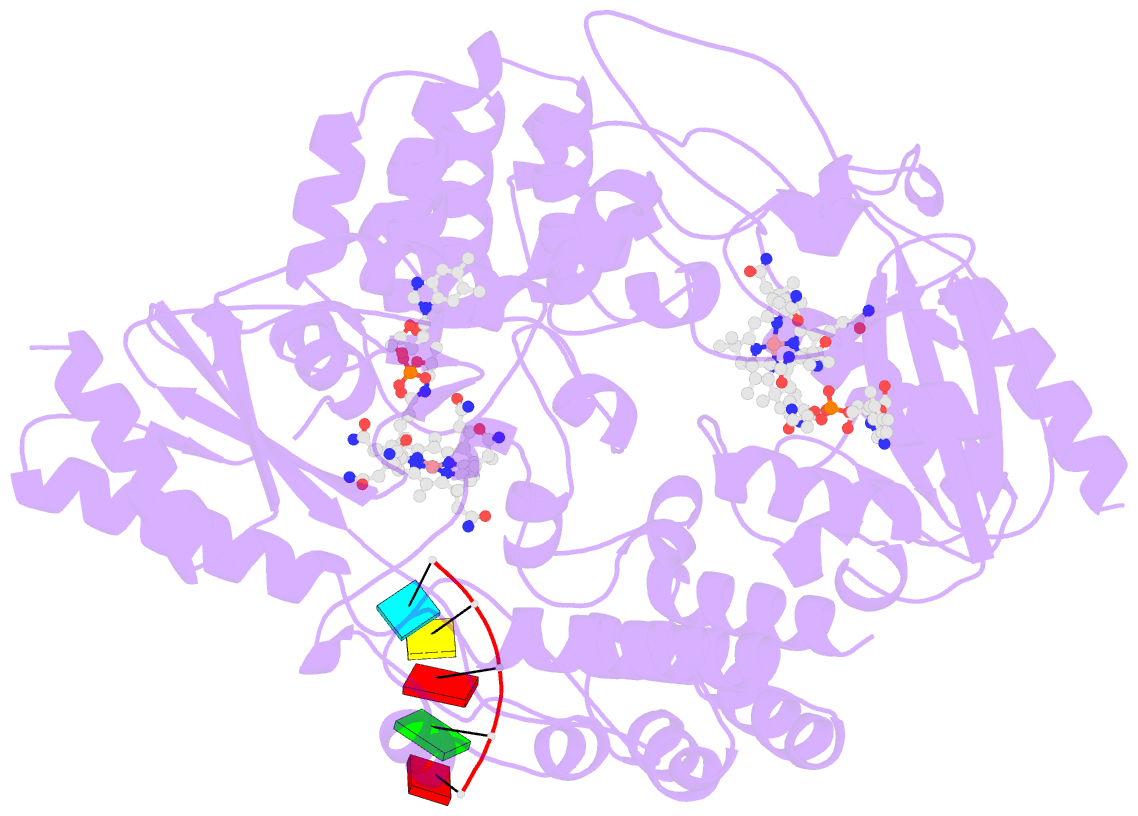
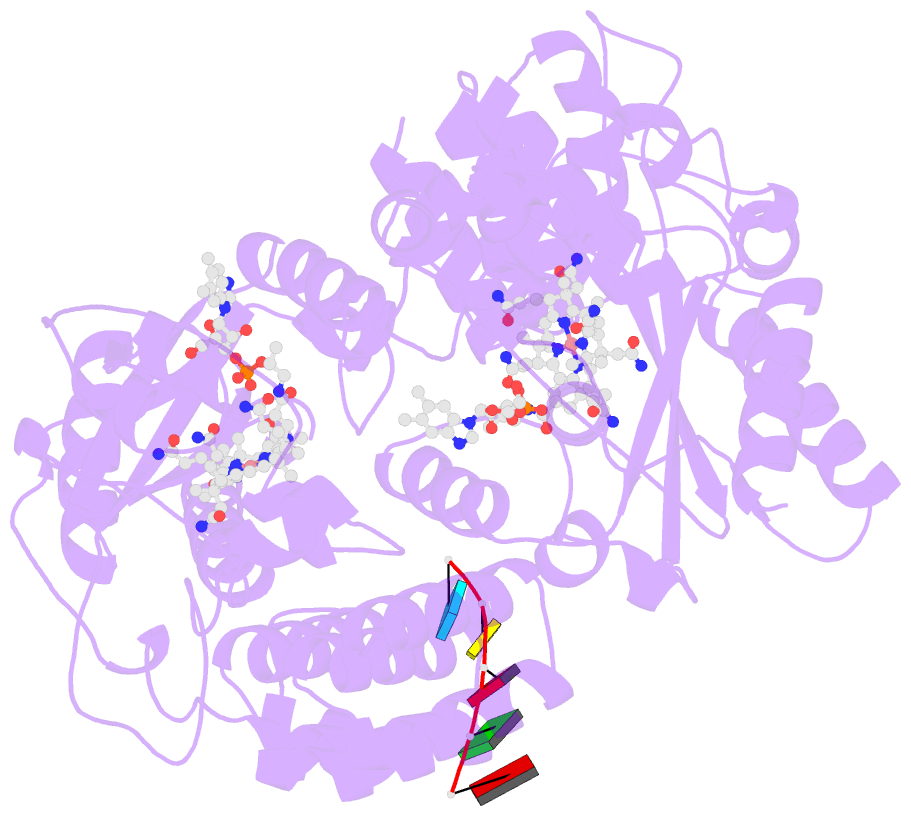
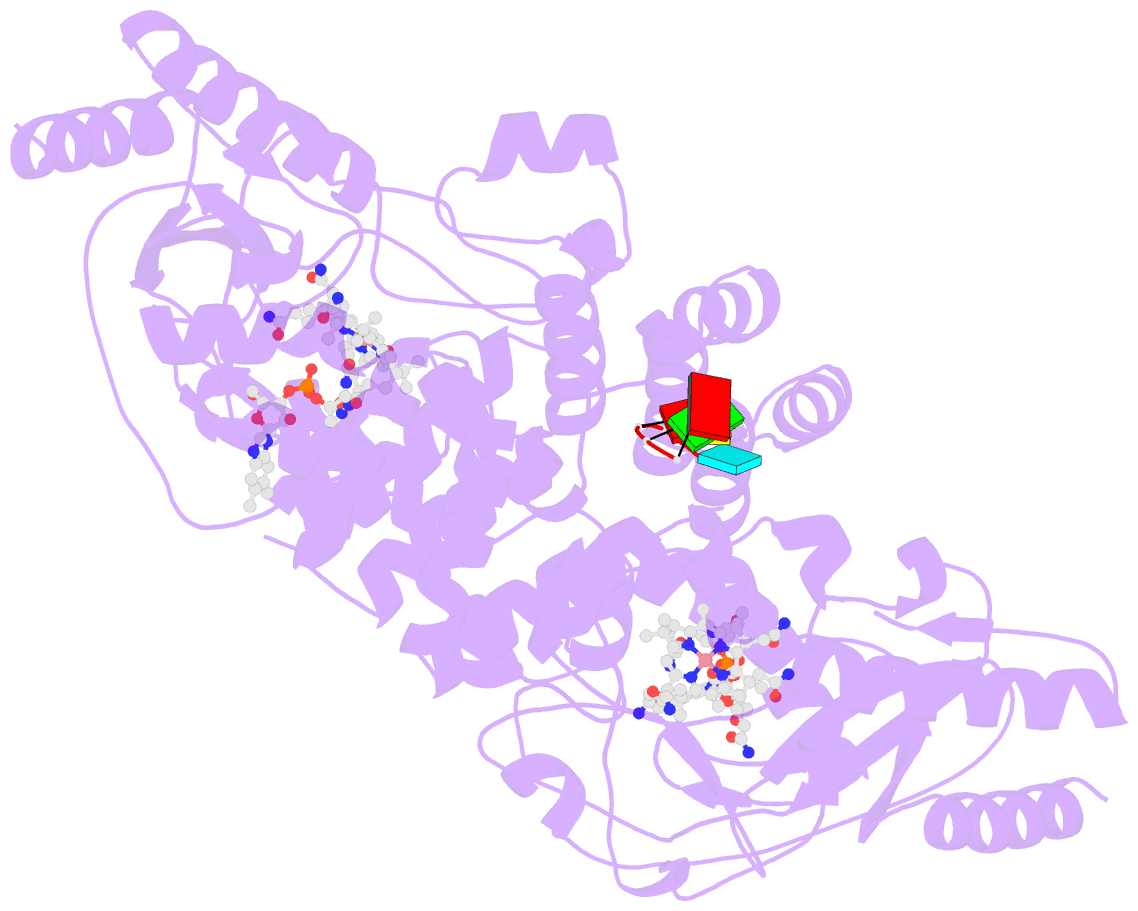
- Structure of epoxyqueuosine reductase from bacillus
subtilis with the asp134 catalytic loop swung out of the
active site.
- Reference
-
Dowling DP, Miles ZD, Kohrer C, Maiocco SJ, Elliott SJ,
Bandarian V, Drennan CL (2016): "Molecular
basis of cobalamin-dependent RNA modification."
Nucleic Acids Res., 44,
9965-9976. doi: 10.1093/nar/gkw806.
- Abstract
- Queuosine (Q) was discovered in the wobble position of
a transfer RNA (tRNA) 47 years ago, yet the final
biosynthetic enzyme responsible for Q-maturation,
epoxyqueuosine (oQ) reductase (QueG), was only recently
identified. QueG is a cobalamin (Cbl)-dependent, [4Fe-4S]
cluster-containing protein that produces the hypermodified
nucleoside Q in situ on four tRNAs. To understand how QueG
is able to perform epoxide reduction, an unprecedented
reaction for a Cbl-dependent enzyme, we have determined a
series of high resolution structures of QueG from Bacillus
subtilis Our structure of QueG bound to a
tRNA<sub>Tyr</sub> anticodon stem loop shows
how this enzyme uses a HEAT-like domain to recognize the
appropriate anticodons and position the hypermodified
nucleoside into the enzyme active site. We find Q bound
directly above the Cbl, consistent with a reaction
mechanism that involves the formation of a covalent
Cbl-tRNA intermediate. Using protein film electrochemistry,
we show that two [4Fe-4S] clusters adjacent to the Cbl have
redox potentials in the range expected for Cbl reduction,
suggesting how Cbl can be activated for nucleophilic attack
on oQ. Together, these structural and electrochemical data
inform our understanding of Cbl dependent nucleic acid
modification.