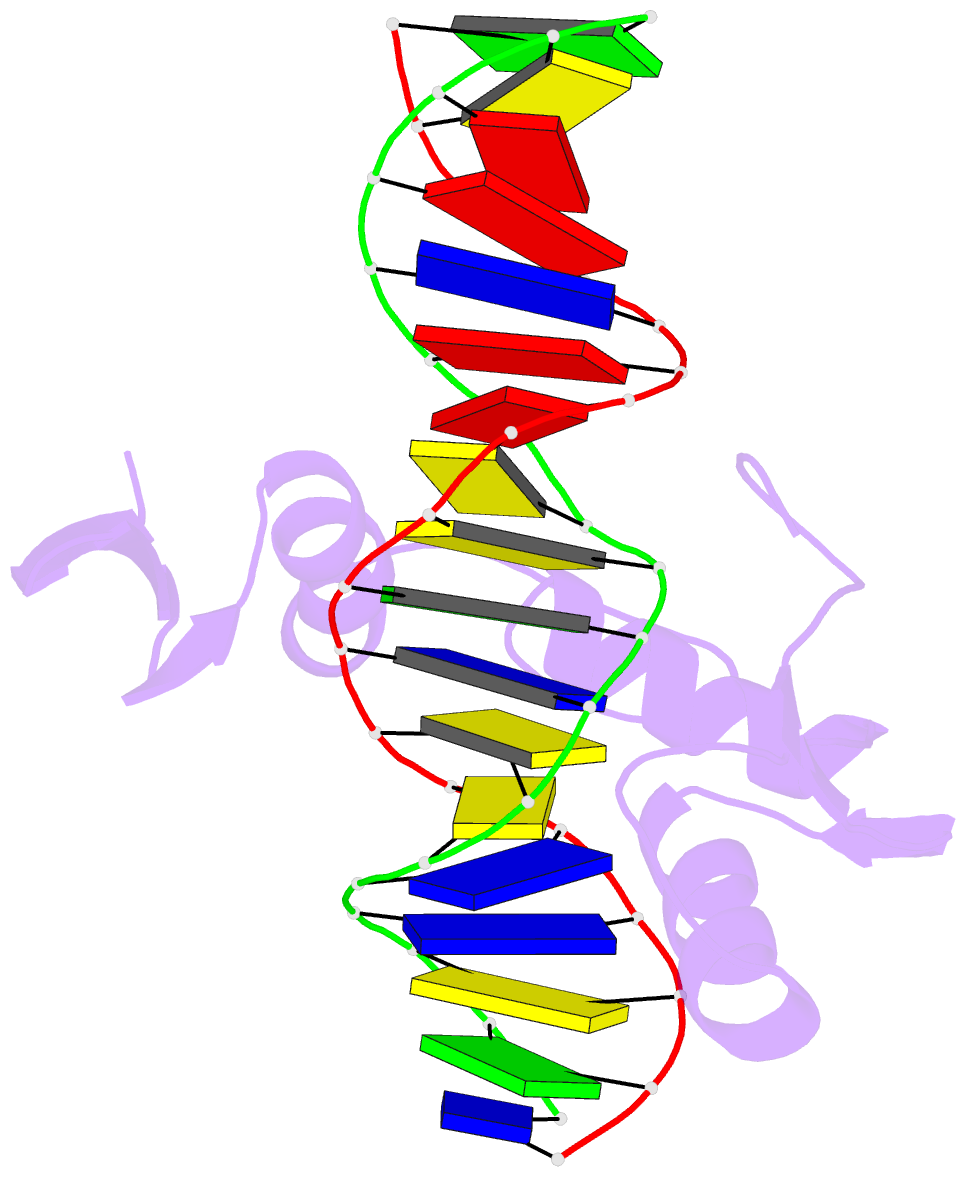
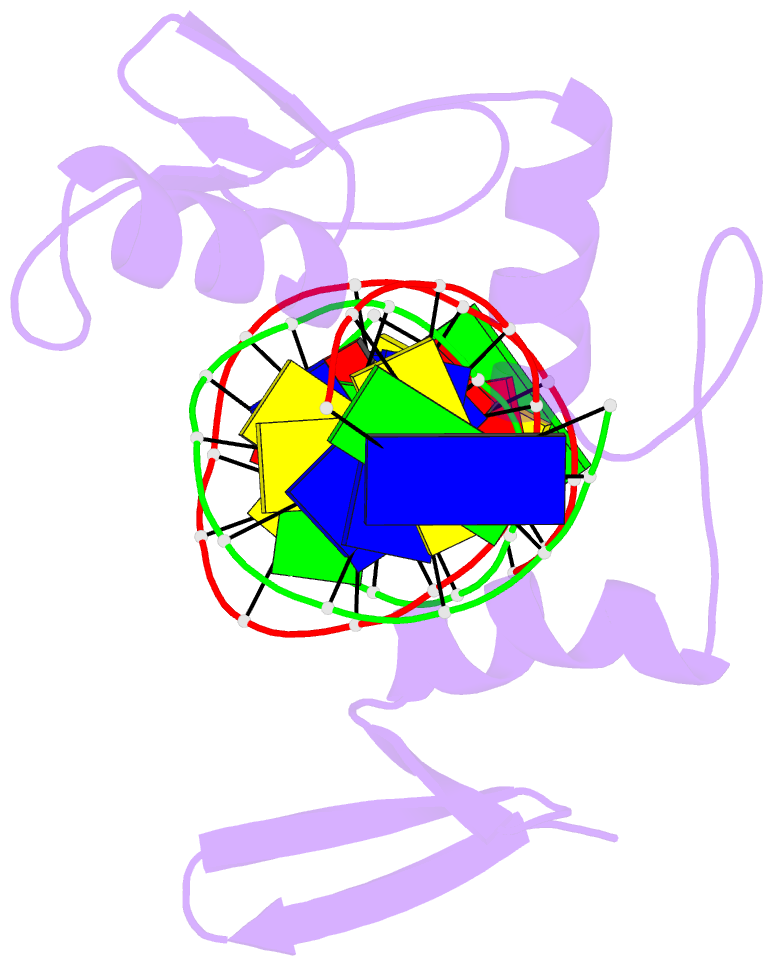
Summary information and primary citation
- PDB-id
-
6dfa;
DSSR-derived features in text and
JSON formats
- Class
- DNA binding protein-DNA
- Method
- X-ray (1.908 Å)
- Summary
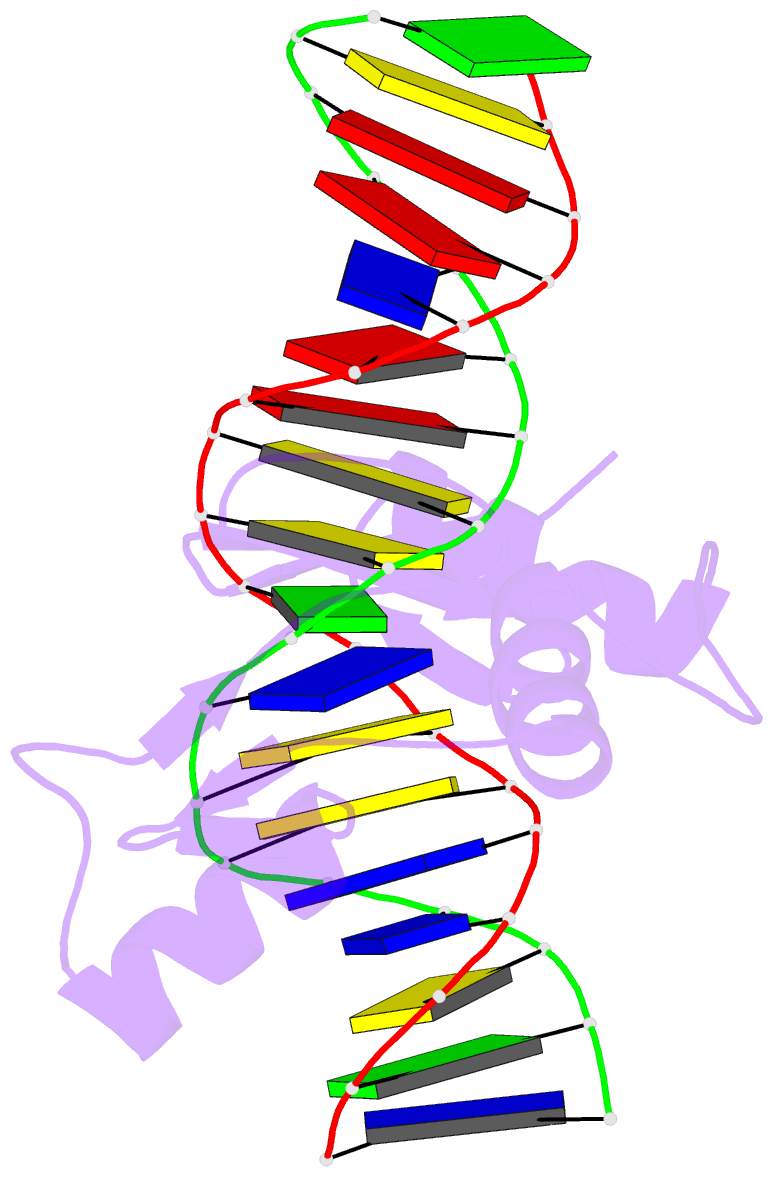
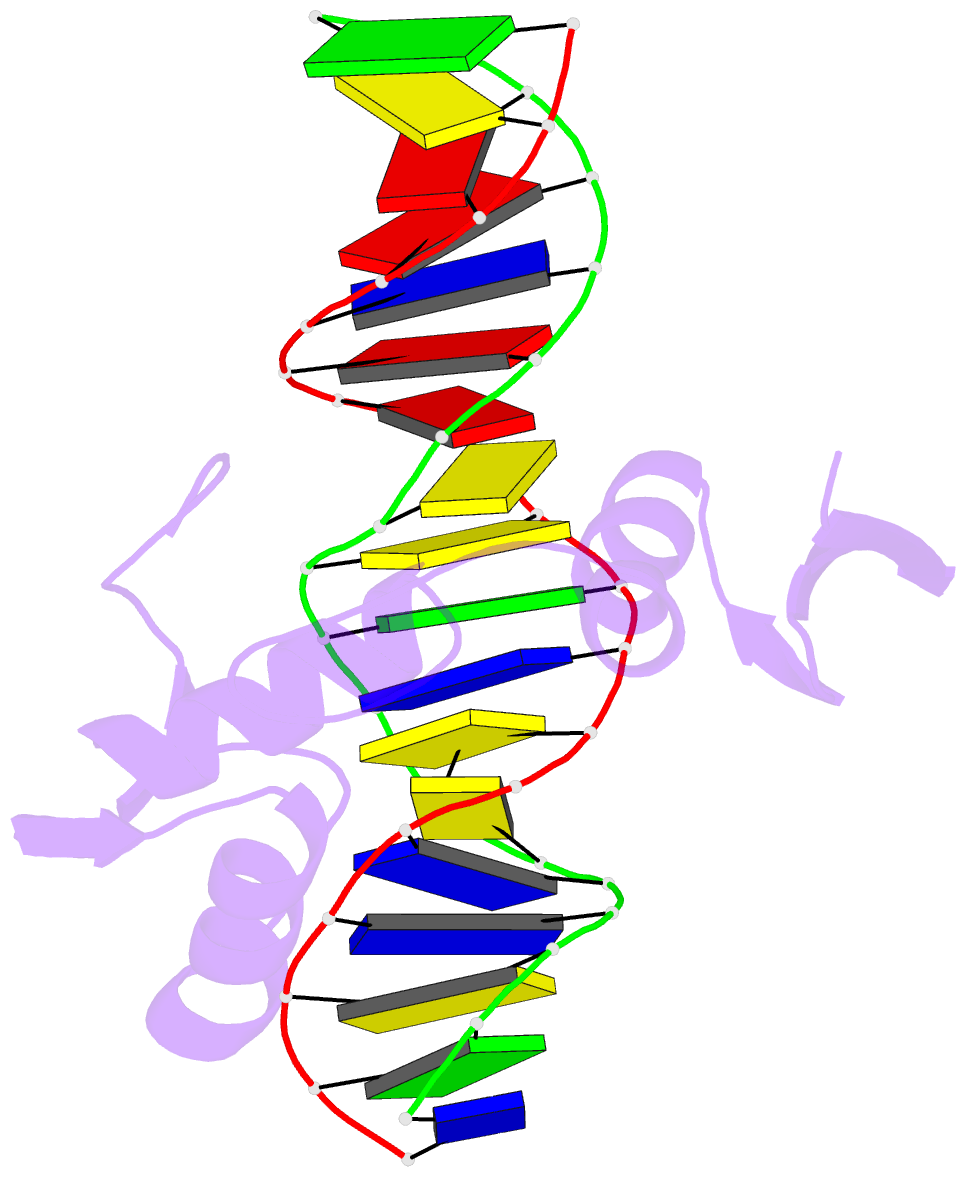
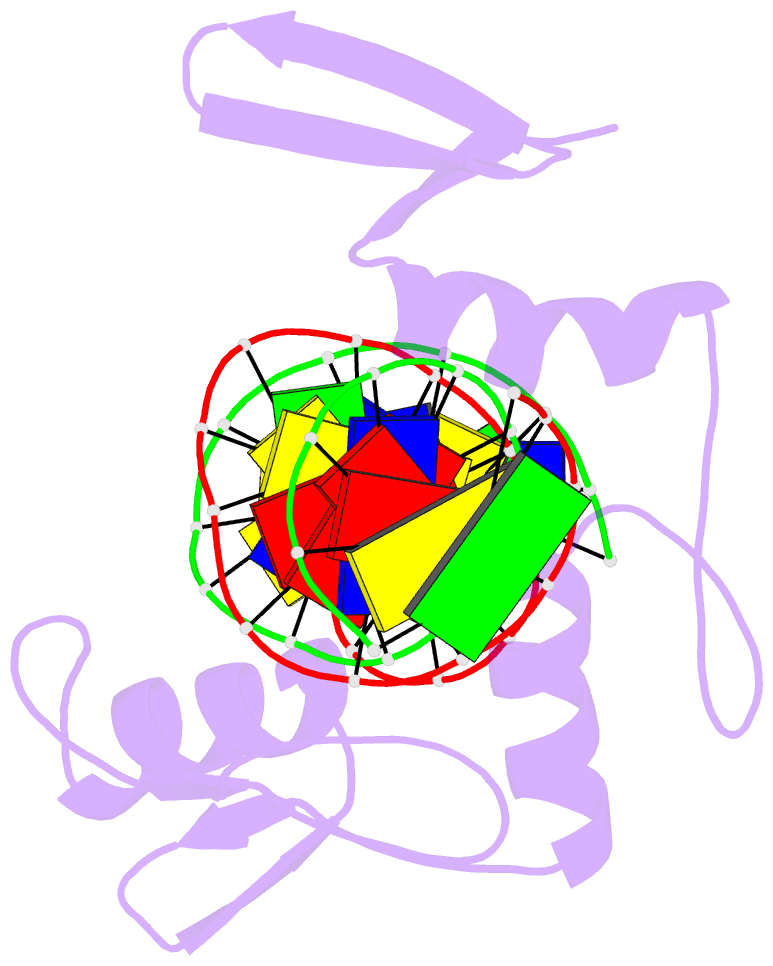
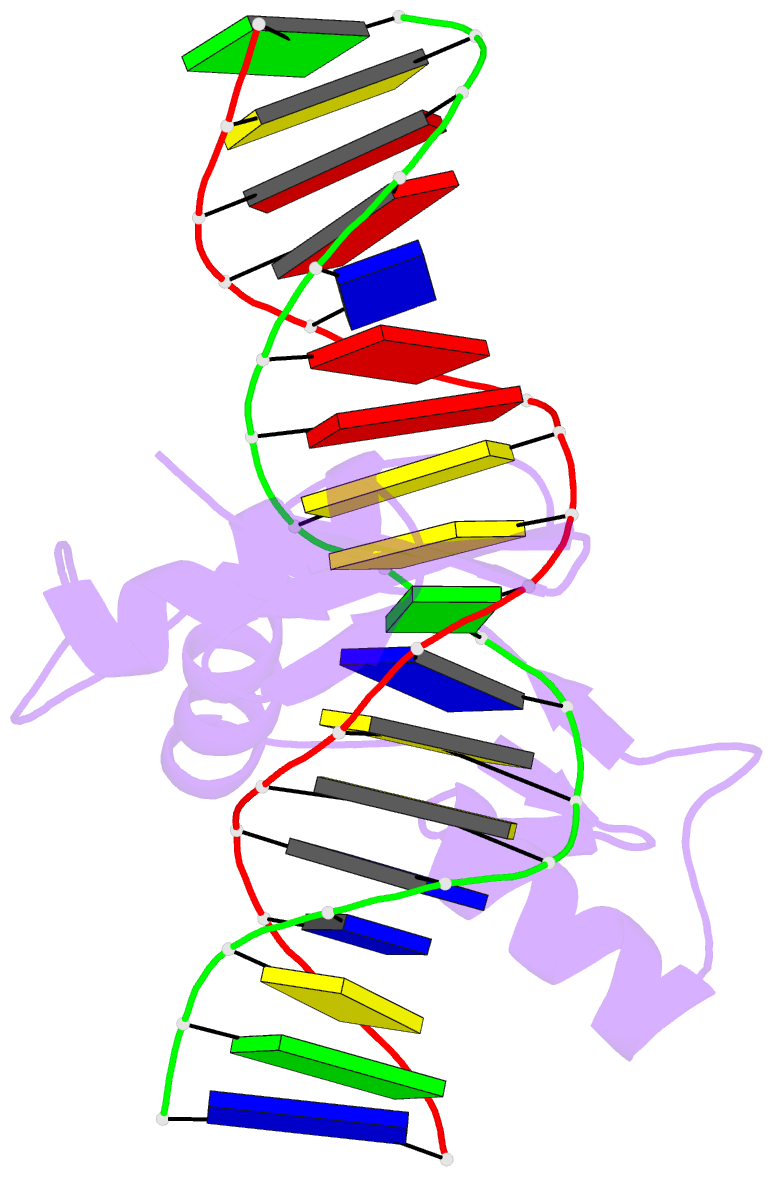
- Kaiso (zbtb33) e535a zinc finger DNA binding domain in
complex with the specific kaiso binding sequence (kbs)
- Reference
-
Nikolova EN, Stanfield RL, Dyson HJ, Wright PE (2020):
"A
conformational switch in the zinc finger protein Kaiso
mediates differential readout of specific and methylated
DNA sequences." Biochemistry. doi: 10.1021/acs.biochem.0c00253.
- Abstract
- Recognition of the epigenetic mark 5-methylcytosine
(mC) at CpG sites in DNA has emerged as a novel function of
many eukaryotic transcription factors (TFs). It remains
unclear why the sequence specificity of these TFs differs
for CpG-methylated motifs and consensus motifs. Here, we
dissect the structural and dynamic basis for this
differential DNA binding specificity in the human zinc
finger TF Kaiso, which exhibits high affinity for two
consecutive mCpG sites in variable contexts and also for a
longer, sequence-specific Kaiso binding site (KBS). By
integrating structural analysis and DNA binding studies
with targeted protein mutagenesis and nucleotide
substitutions, we identify distinct mechanisms for readout
of methylated and KBS motifs by Kaiso. We show that a key
glutamate residue (E535), critical for mCpG site
recognition, adopts different conformations in complexes
with specific and methylated DNA. These conformational
differences, together with intrinsic variations in DNA
flexibility and/or solvation at TpG versus mCpG sites,
contribute to the different DNA affinity and sequence
specificity. With methylated DNA, multiple direct contacts
between E535 and the 5' mCpG site dominate the binding
affinity, allowing for tolerance of different flanking DNA
sequences. With KBS, Kaiso employs E535 as part of an
indirect screen of the 5' flanking sequence, relying on key
tyrosine-DNA interactions to stabilize an optimal DNA
conformation and select against noncognate sites. These
findings demonstrate how TFs use conformational adaptation
and exploit variations in DNA flexibility to achieve
distinct DNA readout outcomes and target a greater variety
of regulatory and epigenetic sites than previously
appreciated.