Summary information and primary citation
- PDB-id
-
6n6h;
DSSR-derived features in text and
JSON formats
- Class
- RNA binding protein-RNA
- Method
- X-ray (1.757 Å)
- Summary
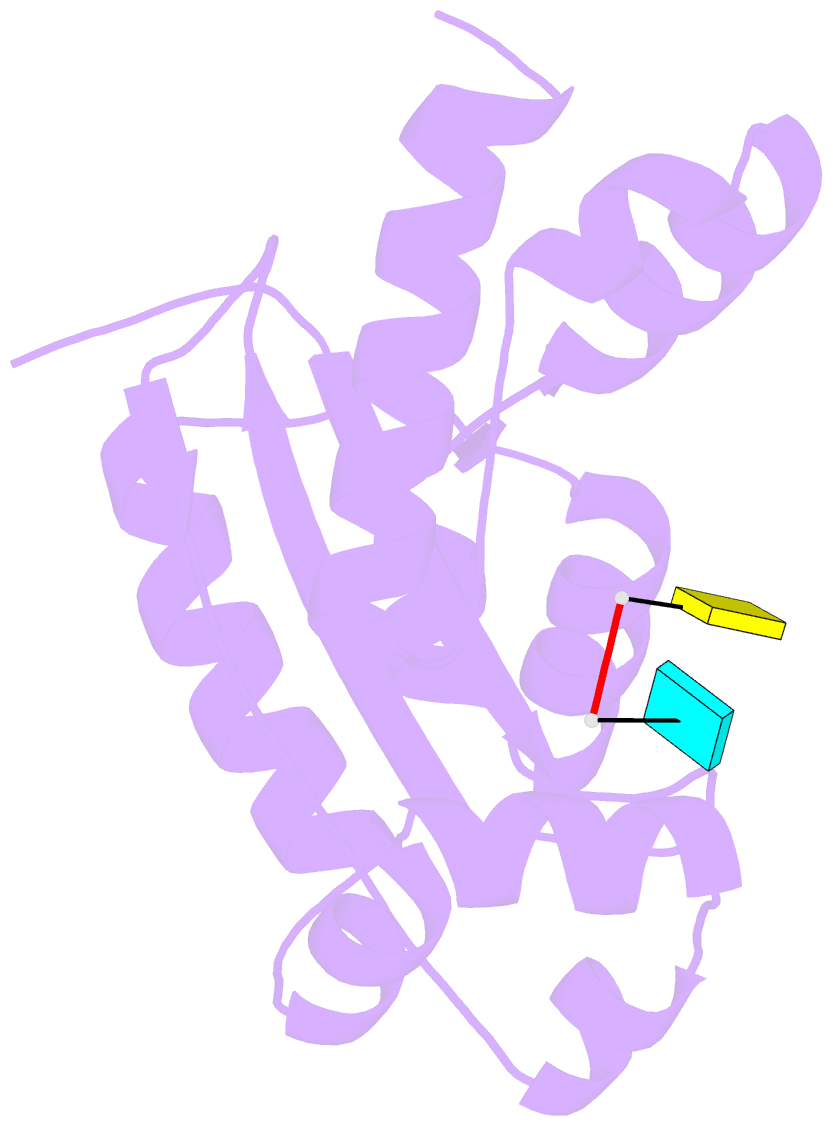
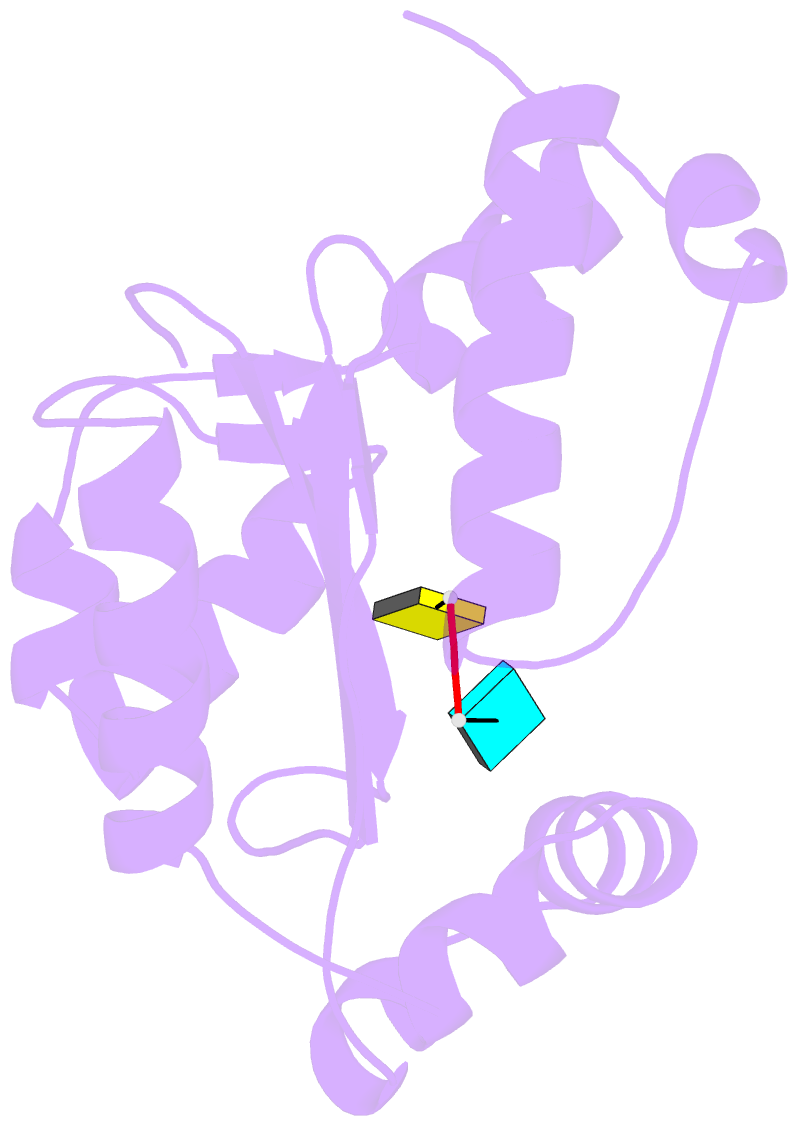
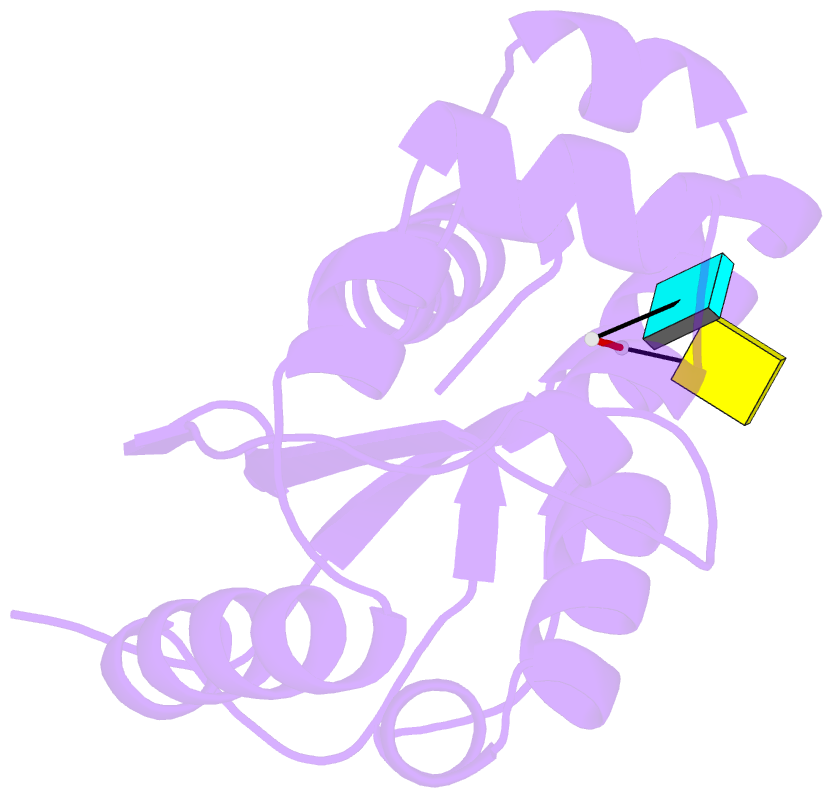
- Vibrio cholerae oligoribonuclease bound to pcpu
- Reference
-
Kim SK, Lormand JD, Weiss CA, Eger KA, Turdiev H, Turdiev
A, Winkler WC, Sondermann H, Lee VT (2019): "A
dedicated diribonucleotidase resolves a key bottleneck
for the terminal step of RNA degradation."
Elife, 8. doi: 10.7554/eLife.46313.
- Abstract
- Degradation of RNA polymers, an ubiquitous process in
all cells, is catalyzed by specific subsets of endo- and
exoribonucleases that together recycle RNA fragments into
nucleotide monophosphate. In γ-proteobacteria, 3-'5'
exoribonucleases comprise up to eight distinct enzymes.
Among them, Oligoribonuclease (Orn) is unique as its
activity is required for clearing short RNA fragments,
which is important for cellular fitness. However, the
molecular basis of Orn's unique cellular function remained
unclear. Here, we show that Orn exhibits exquisite
substrate preference for diribonucleotides. Crystal
structures of substrate-bound Orn reveal an active site
optimized for diribonucleotides. While other cellular
RNases process oligoribonucleotides down to
diribonucleotide entities, Orn is the one and only
diribonucleotidase that completes the terminal step of RNA
degradation. Together, our studies indicate RNA degradation
as a step-wise process with a dedicated enzyme for the
clearance of a specific intermediate pool,
diribonucleotides, that affects cellular physiology and
viability.