Summary information and primary citation
- PDB-id
-
6ne0;
DSSR-derived features in text and
JSON formats
- Class
- immune system-RNA
- Method
- cryo-EM (3.4 Å)
- Summary
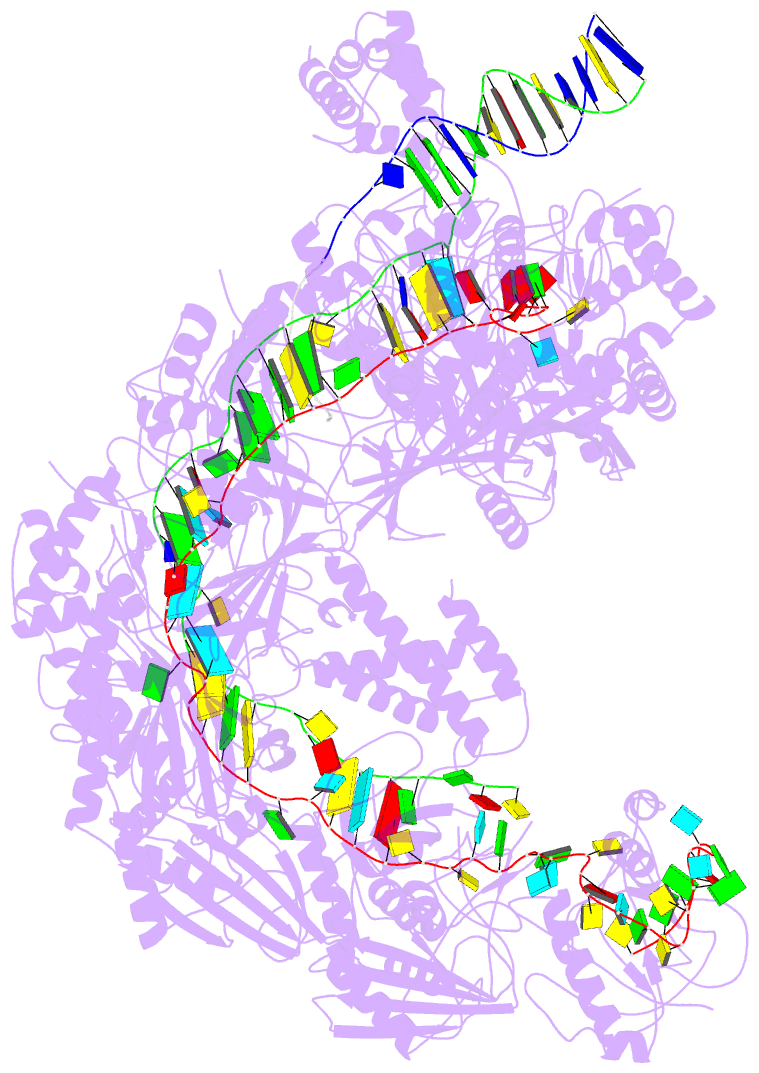
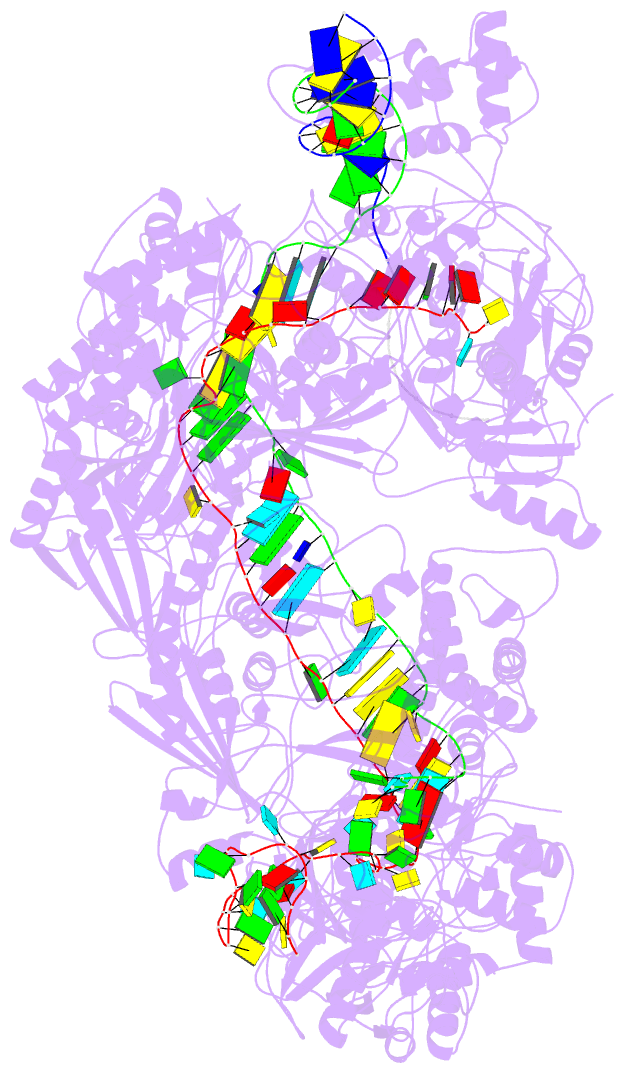
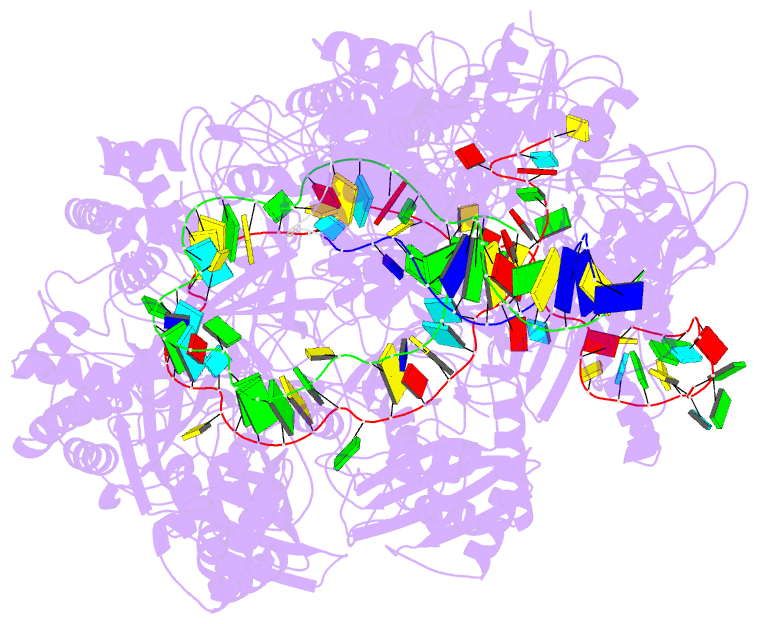
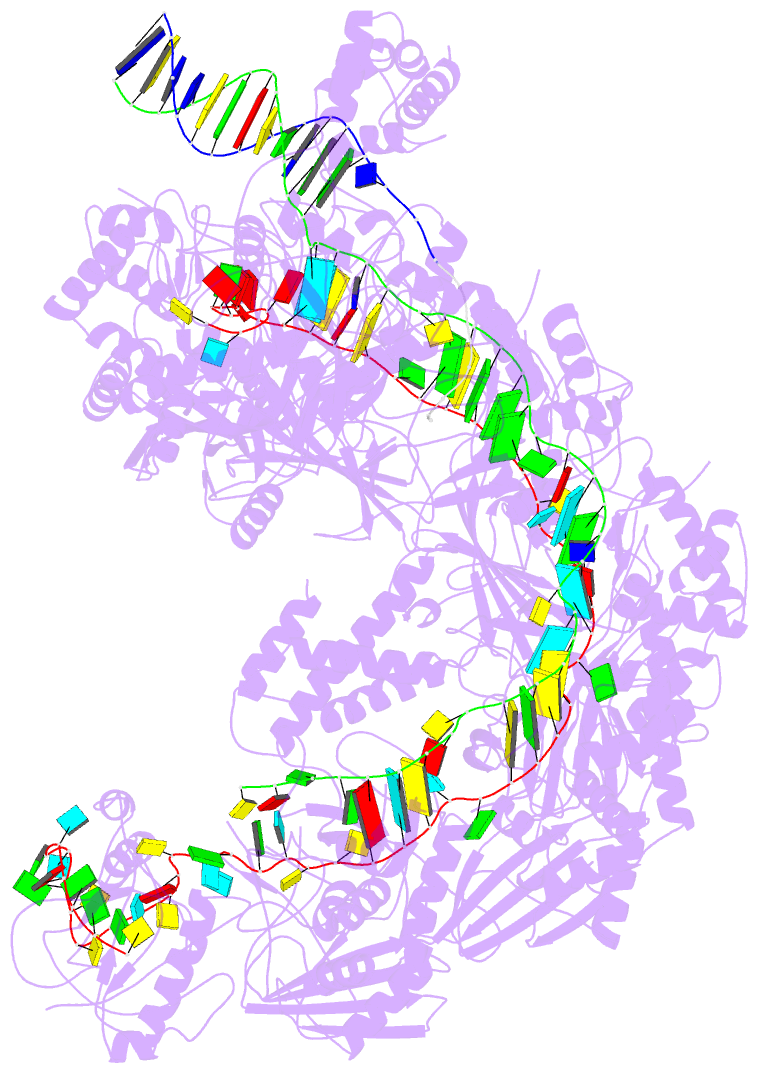
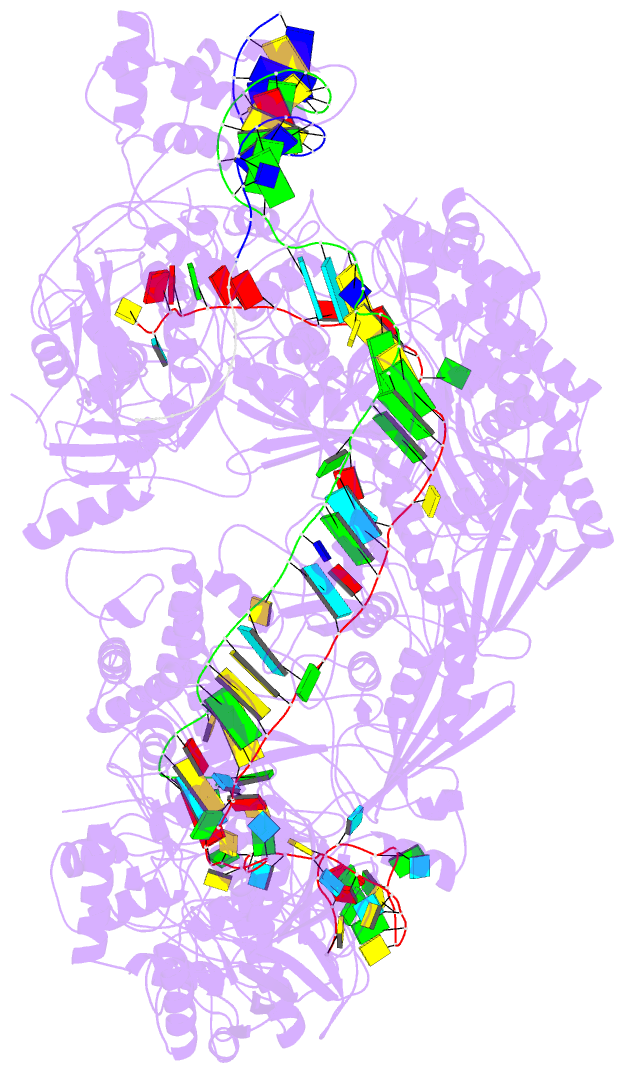
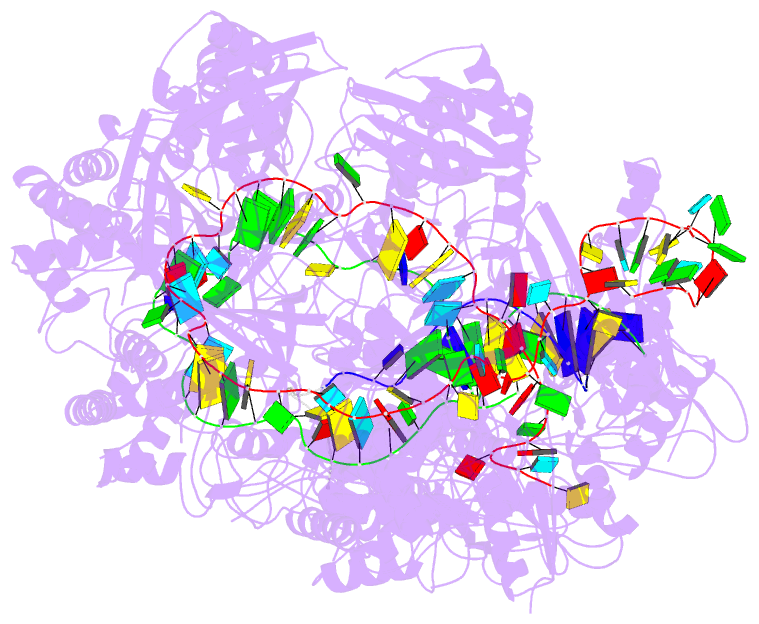
- Structure of double-stranded target DNA engaged csy
complex from pseudomonas aeruginosa (pa-14)
- Reference
-
Rollins MF, Chowdhury S, Carter J, Golden SM, Miettinen
HM, Santiago-Frangos A, Faith D, Lawrence CM, Lander GC,
Wiedenheft B (2019): "Structure
Reveals a Mechanism of CRISPR-RNA-Guided Nuclease
Recruitment and Anti-CRISPR Viral Mimicry." Mol.
Cell, 74, 132-142.e5. doi: 10.1016/j.molcel.2019.02.001.
- Abstract
- Bacteria and archaea have evolved sophisticated
adaptive immune systems that rely on CRISPR RNA
(crRNA)-guided detection and nuclease-mediated elimination
of invading nucleic acids. Here, we present the
cryo-electron microscopy (cryo-EM) structure of the type
I-F crRNA-guided surveillance complex (Csy complex)
from Pseudomonas aeruginosa bound to a double-stranded DNA
target. Comparison of this structure to previously
determined structures of this complex reveals a ∼180-degree
rotation of the C-terminal helical bundle on the "large"
Cas8f subunit. We show that the double-stranded DNA
(dsDNA)-induced conformational change in Cas8f exposes a
Cas2/3 "nuclease recruitment helix" that is structurally
homologous to a virally encoded anti-CRISPR protein
(AcrIF3). Structural homology between Cas8f and AcrIF3
suggests that AcrIF3 is a mimic of the Cas8f nuclease
recruitment helix.