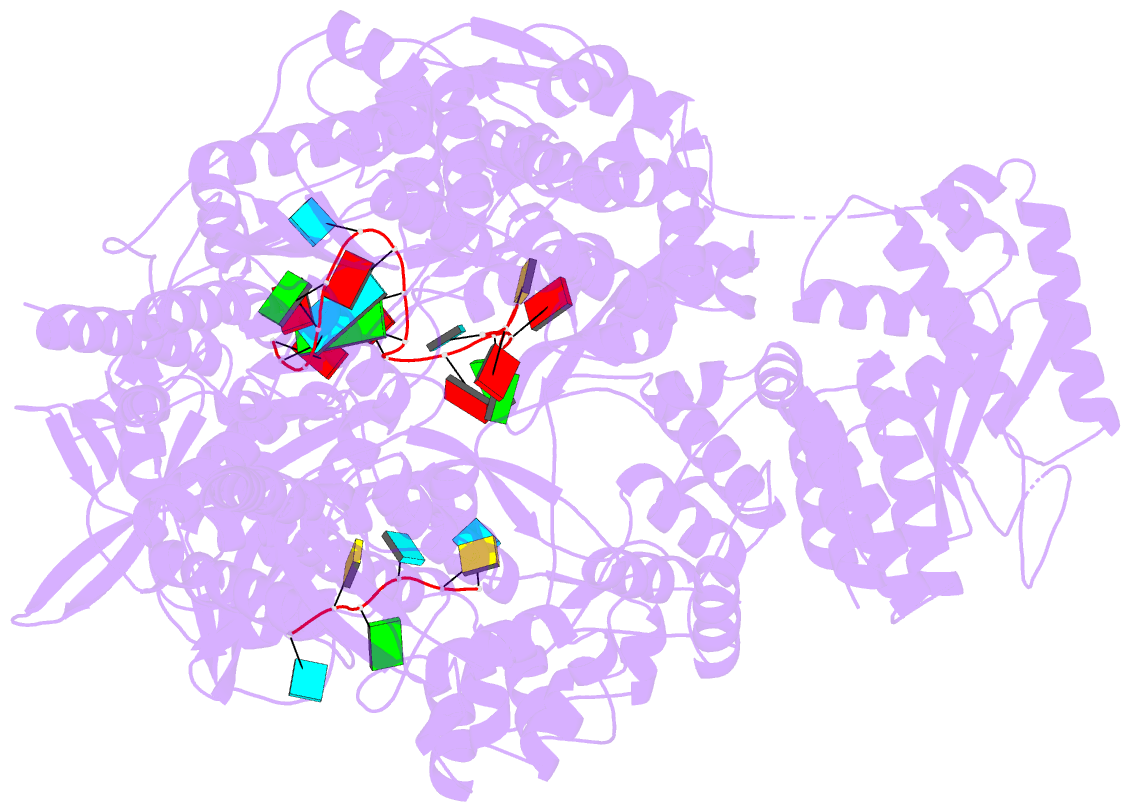
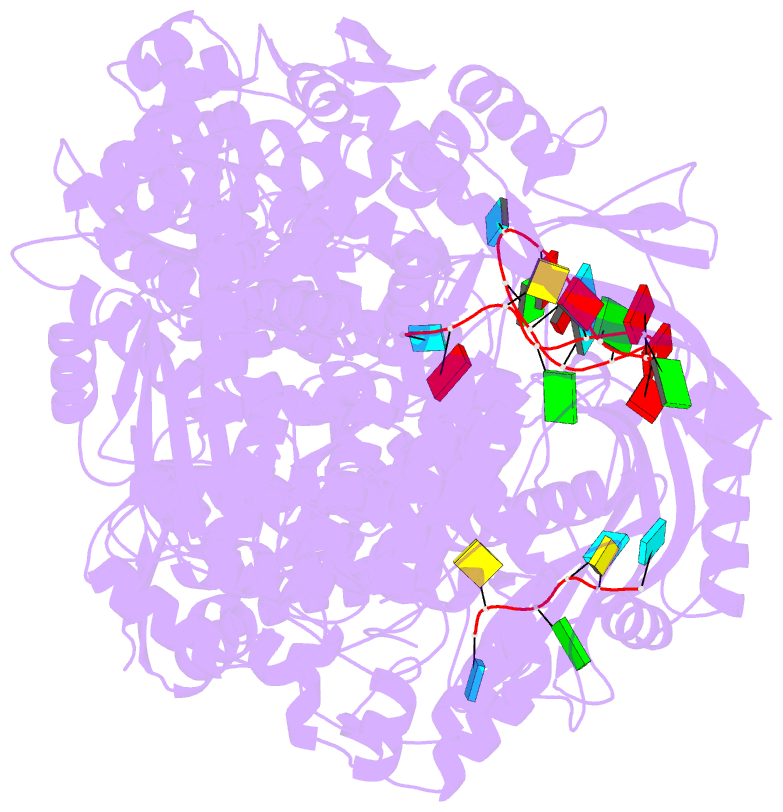
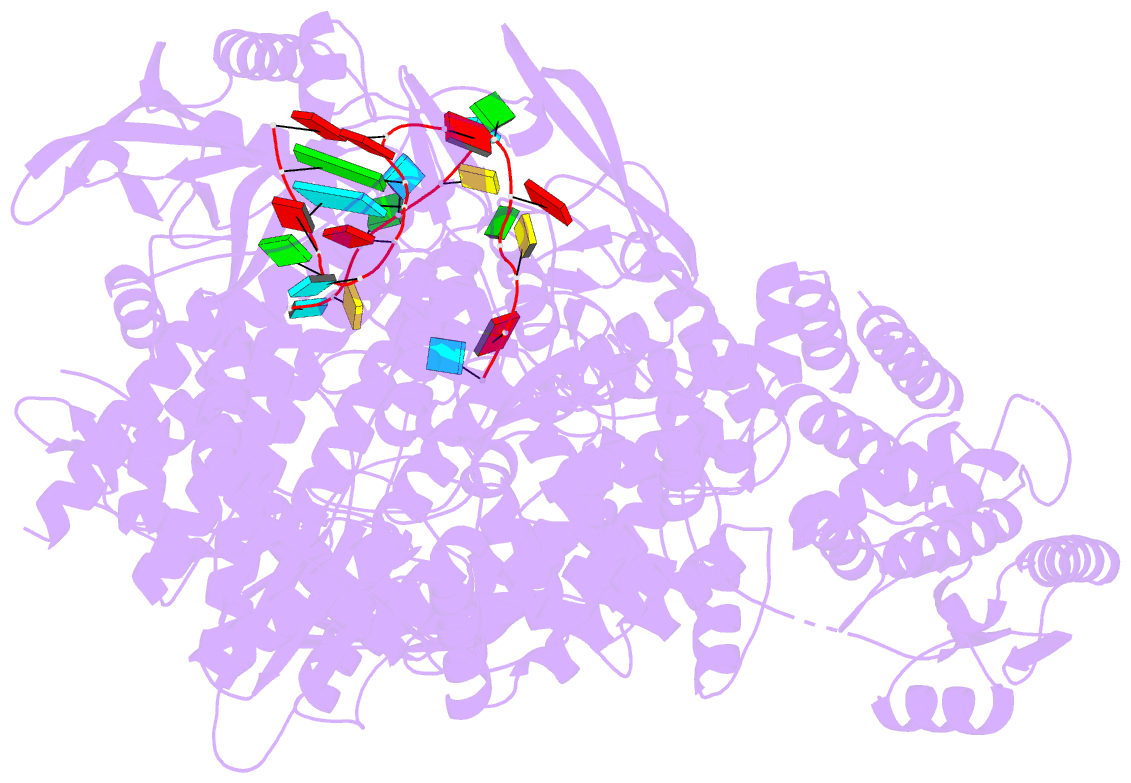
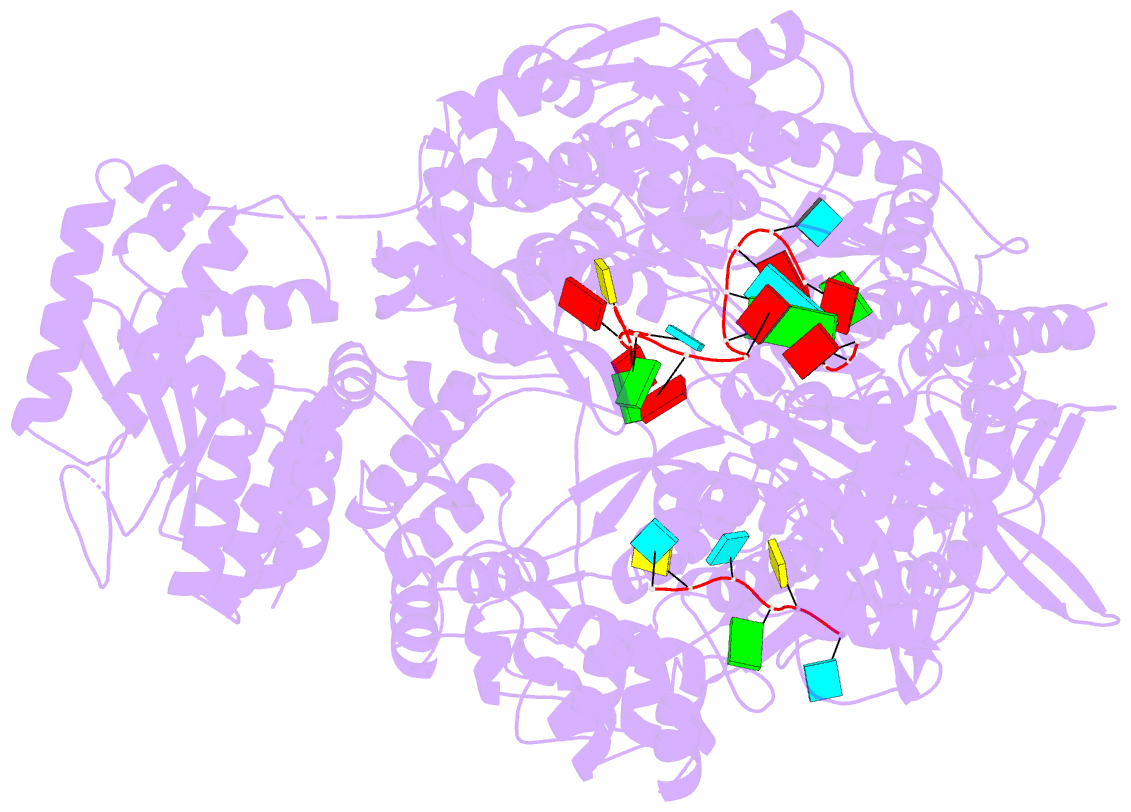
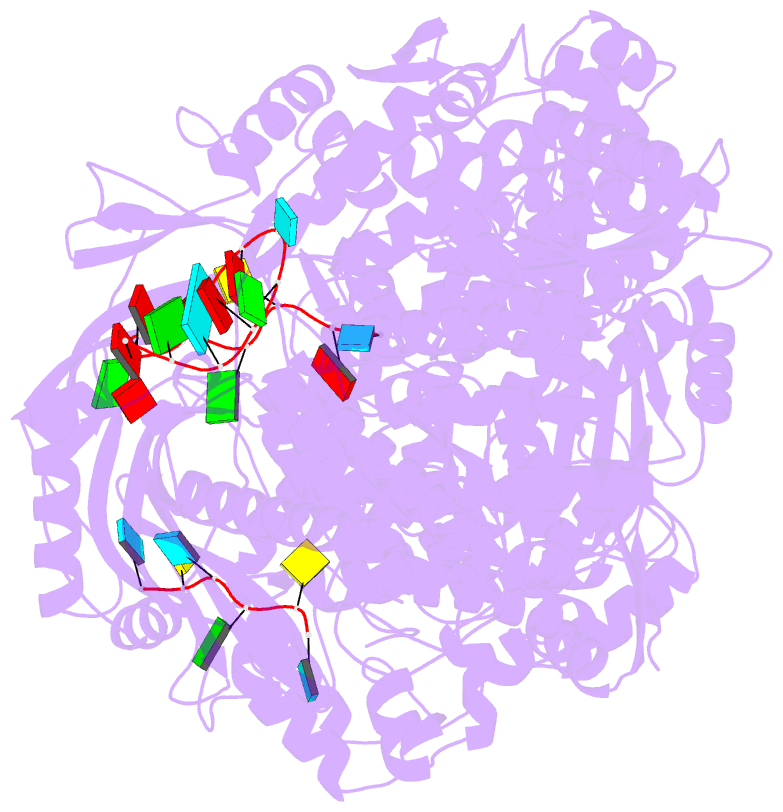
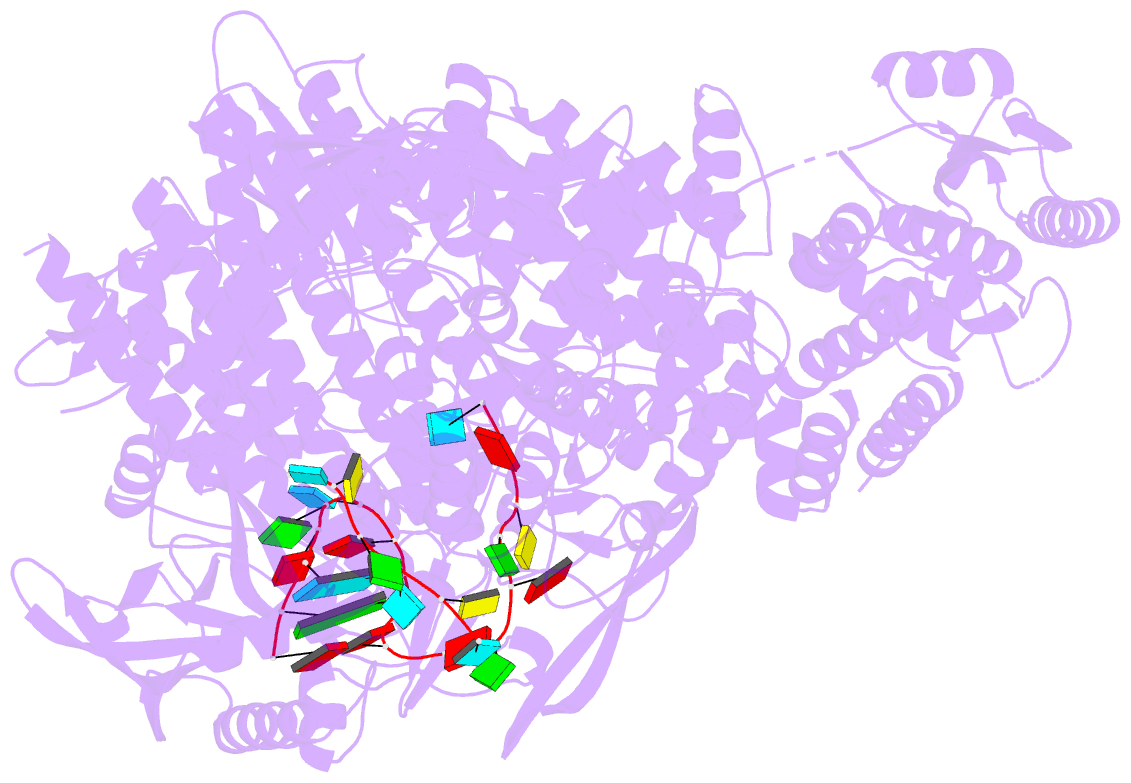
Summary information and primary citation
- PDB-id
-
6t0u;
DSSR-derived features in text and
JSON formats
- Class
- viral protein
- Method
- cryo-EM (3.12 Å)
- Summary
- Bat influenza a polymerase product dissociation complex
using 44-mer vrna template with intact oligo(u)
sequence
- Reference
-
Wandzik JM, Kouba T, Karuppasamy M, Pflug A, Drncova P,
Provaznik J, Azevedo N, Cusack S (2020): "A
Structure-Based Model for the Complete Transcription
Cycle of Influenza Polymerase." Cell,
181, 877. doi: 10.1016/j.cell.2020.03.061.
- Abstract
- Influenza polymerase uses unique mechanisms to
synthesize capped and polyadenylated mRNAs from the genomic
viral RNA (vRNA) template, which is packaged inside
ribonucleoprotein particles (vRNPs). Here, we visualize by
cryoelectron microscopy the conformational dynamics of the
polymerase during the complete transcription cycle from
pre-initiation to termination, focusing on the template
trajectory. After exiting the active site cavity, the
template 3' extremity rebinds into a specific site on the
polymerase surface. Here, it remains sequestered during all
subsequent transcription steps, forcing the template to
loop out as it further translocates. At termination, the
strained connection between the bound template 5' end
and the active site results in polyadenylation by
stuttering at uridine 17. Upon product dissociation,
further conformational changes release the trapped
template, allowing recycling back into the pre-initiation
state. Influenza polymerase thus performs transcription
while tightly binding to and protecting both template ends,
allowing efficient production of multiple mRNAs from a
single vRNP.