Summary information and primary citation
- PDB-id
-
6uef;
DSSR-derived features in text and
JSON formats
- Class
- DNA
- Method
- X-ray (2.95 Å)
- Summary
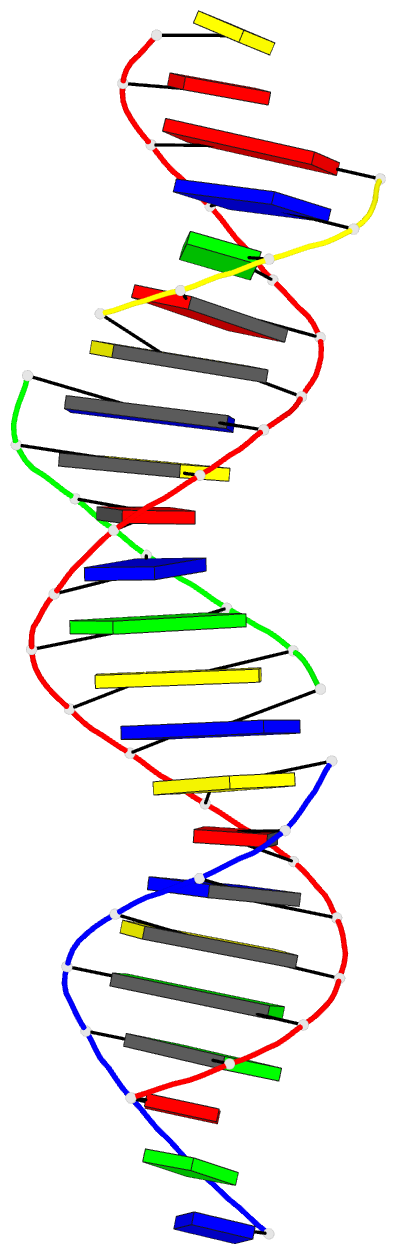
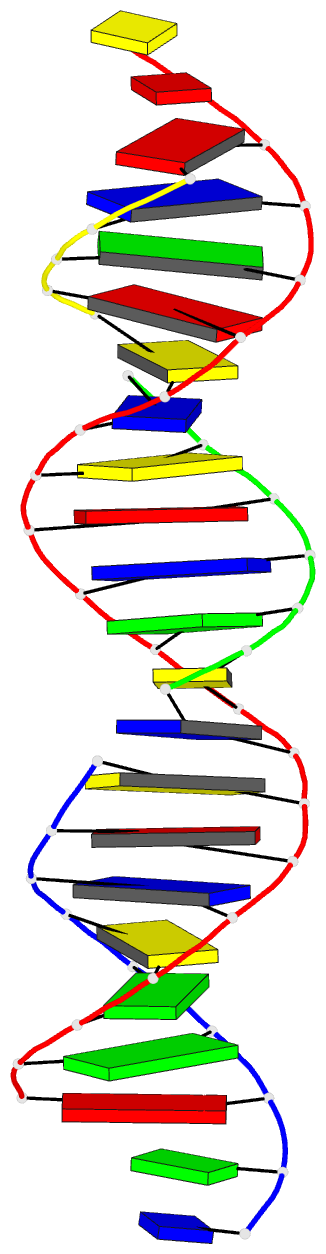
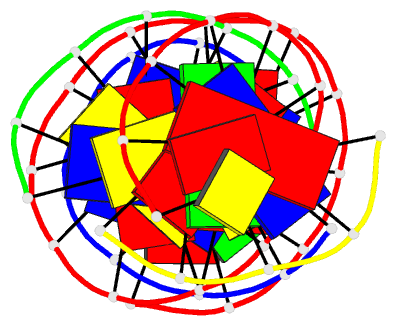
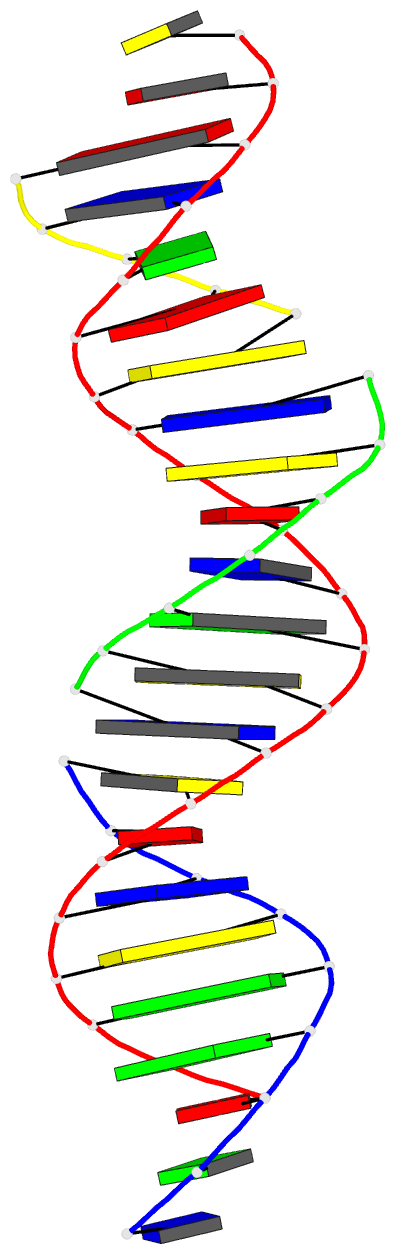
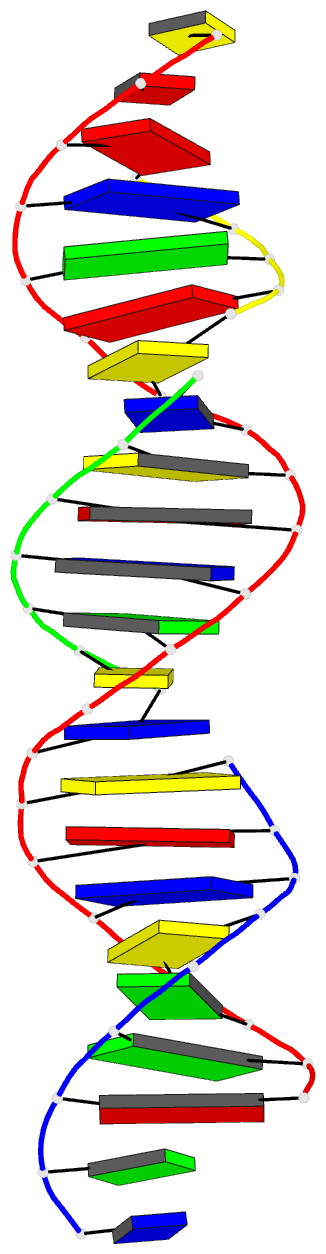
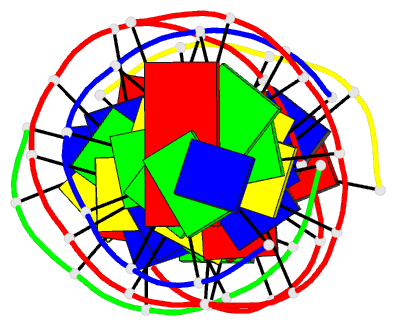
- Crystal structure of a self-assembling DNA scaffold
containing sequence modifications to attempt to disrupt
crystal contacts in a rhombohedral lattice.
- Reference
-
Simmons CR, MacCulloch T, Zhang F, Liu Y, Stephanopoulos
N, Yan H (2020): "A
Self-Assembled Rhombohedral DNA Crystal Scaffold with
Tunable Cavity Sizes and High-Resolution Structural
Detail." Angew.Chem.Int.Ed.Engl.,
59, 18619-18626. doi: 10.1002/anie.202005505.
- Abstract
- DNA is an ideal molecule for the construction of 3D
crystals with tunable properties owing to its high
programmability based on canonical Watson-Crick base
pairing, with crystal assembly in all three dimensions
facilitated by immobile Holliday junctions and sticky end
cohesion. Despite the promise of these systems, only a
handful of unique crystal scaffolds have been reported.
Herein, we describe a new crystal system with a repeating
sequence that mediates the assembly of a 3D scaffold via a
series of Holliday junctions linked together with
complementary sticky ends. By using an optimized junction
sequence, we could determine a high-resolution (2.7 Å)
structure containing R3 crystal symmetry, with a slight
subsequent improvement (2.6 Å) using a modified sticky-end
sequence. The immobile Holliday junction sequence allowed
us to produce crystals that provided unprecedented atomic
detail. In addition, we expanded the crystal cavities by
50 % by adding an additional helical turn between
junctions, and we solved the structure to 4.5 Å resolution
by molecular replacement.