Summary information and primary citation
- PDB-id
-
7mw8;
DSSR-derived features in text and
JSON formats
- Class
- hydrolase
- Method
- X-ray (1.9 Å)
- Summary
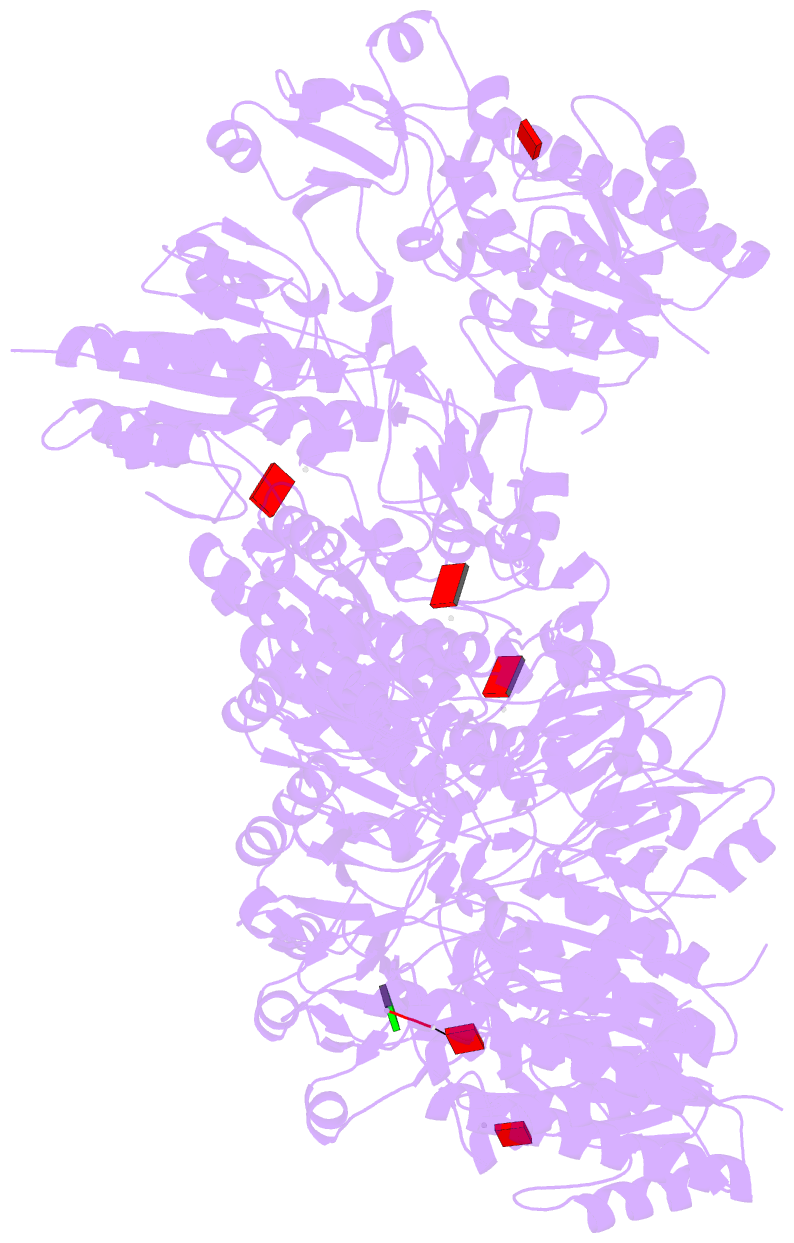
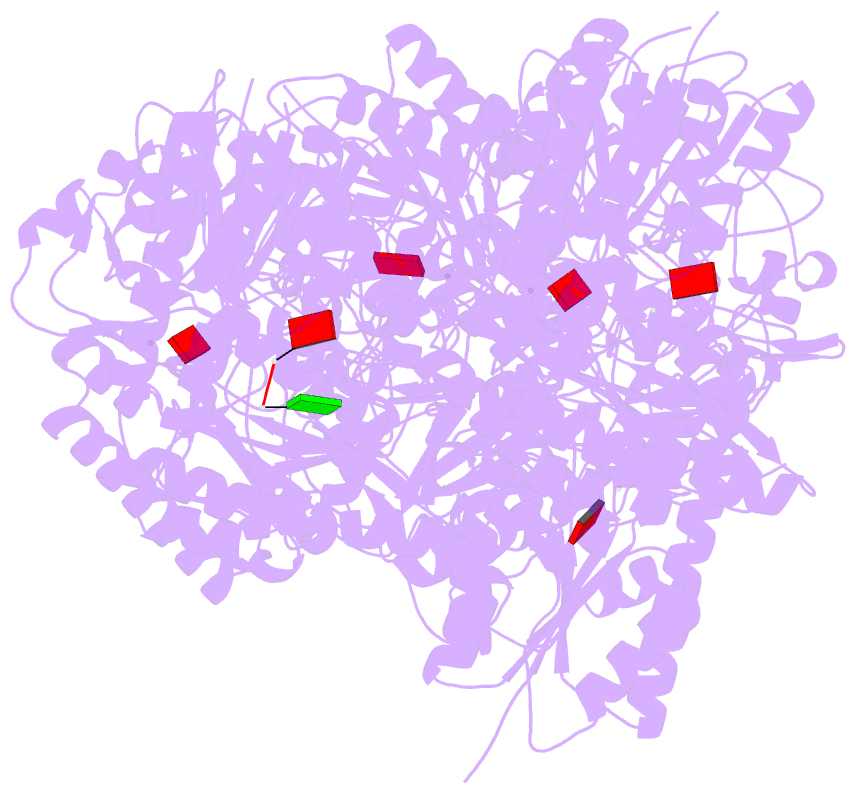
- Crystal structure analysis of xac nucleotide
pyrophosphatase-phosphodiesterase
- Reference
-
Carozza JA, Cordova AF, Brown JA, AlSaif Y, Bohnert V,
Cao X, Mardjuki RE, Skariah G, Fernandez D, Li L (2022):
"ENPP1's
regulation of extracellular cGAMP is a ubiquitous
mechanism of attenuating STING signaling."
Proc.Natl.Acad.Sci.USA, 119,
e2119189119. doi: 10.1073/pnas.2119189119.
- Abstract
- The metazoan innate immune second messenger 2′3′-cGAMP
is present both inside and outside cells. However, only
extracellular cGAMP can be negatively regulated by the
extracellular hydrolase ENPP1. Here, we determine whether
ENPP1’s regulation of extracellular cGAMP is a ubiquitous
mechanism of attenuating stimulator of interferon genes
(STING) signaling. We identified ENPP1H362A, a point
mutation that cannot degrade the 2′-5′ linkage in cGAMP
while maintaining otherwise normal function. The
selectivity of this histidine is conserved down to
bacterial nucleotide pyrophosphatase/phosphodiesterase
(NPP), allowing structural analysis and suggesting an
unexplored ancient history of 2′-5′ cyclic dinucleotides.
Enpp1H362A mice demonstrated that extracellular cGAMP is
not responsible for the devastating phenotype in ENPP1-null
humans and mice but is responsible for antiviral immunity
and systemic inflammation. Our data define extracellular
cGAMP as a pivotal STING activator, identify an
evolutionarily critical role for ENPP1 in regulating
inflammation, and suggest a therapeutic strategy for viral
and inflammatory conditions by manipulating ENPP1
activity.