Summary information and primary citation
- PDB-id
-
7ptk;
DSSR-derived features in text and
JSON formats
- Class
- RNA
- Method
- cryo-EM (5.18 Å)
- Summary
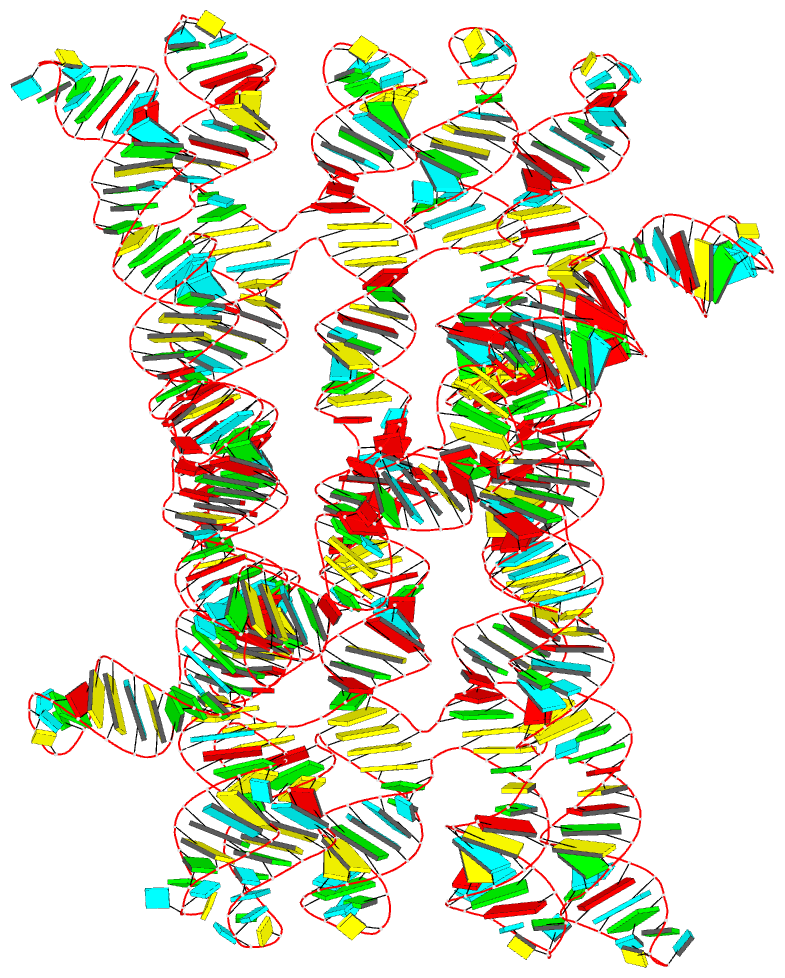
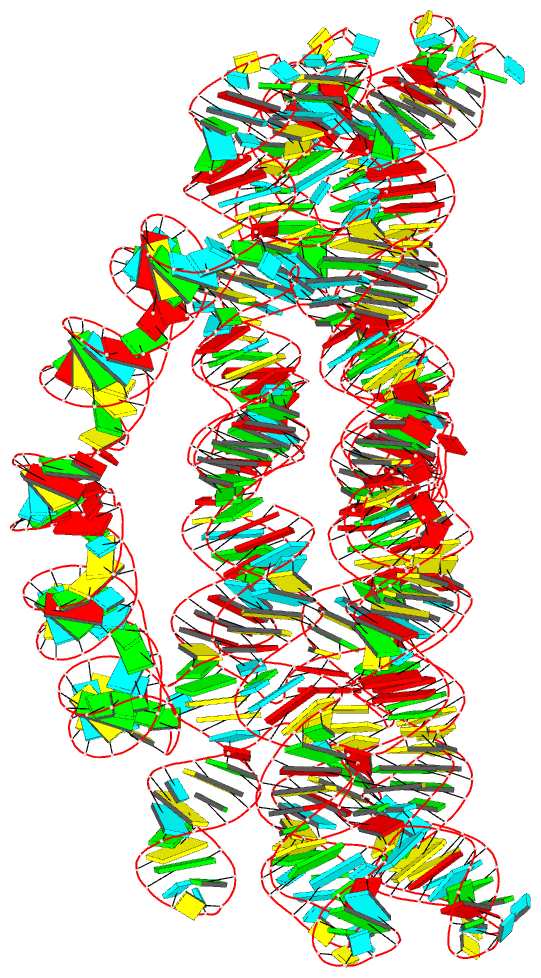
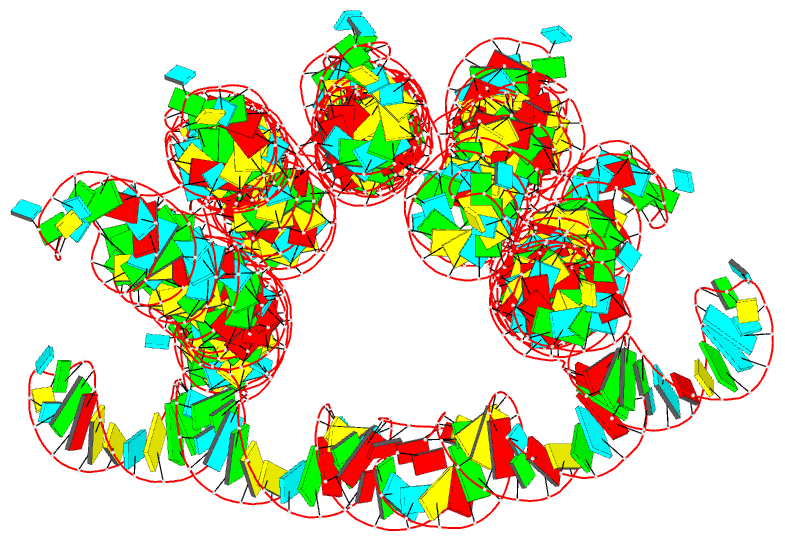
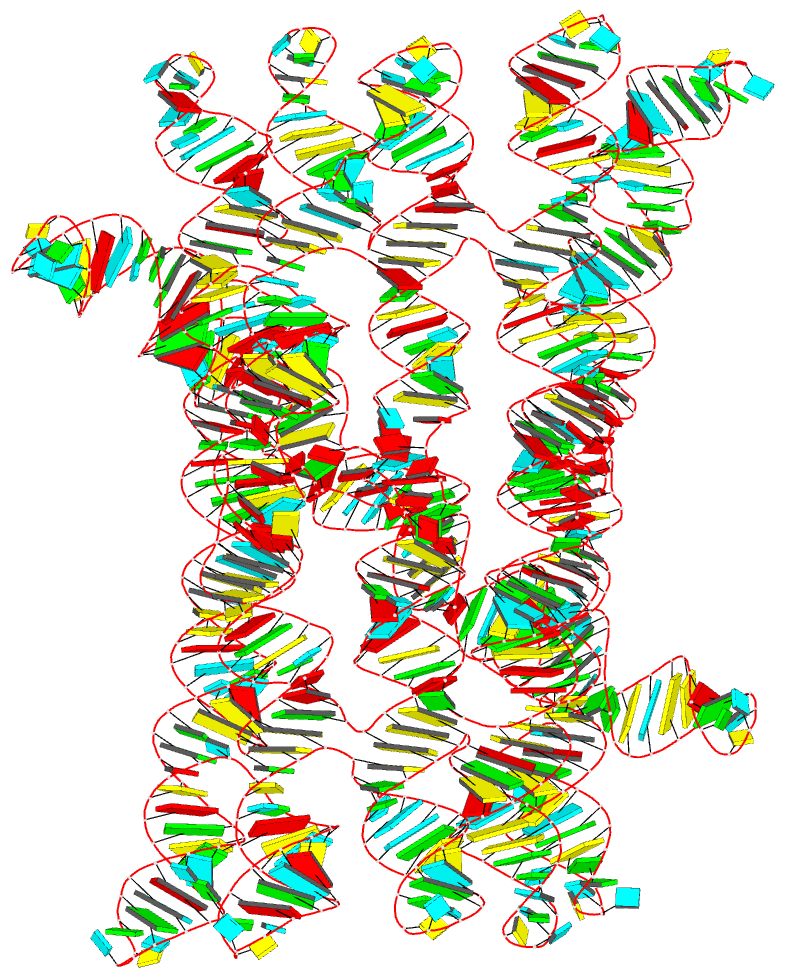
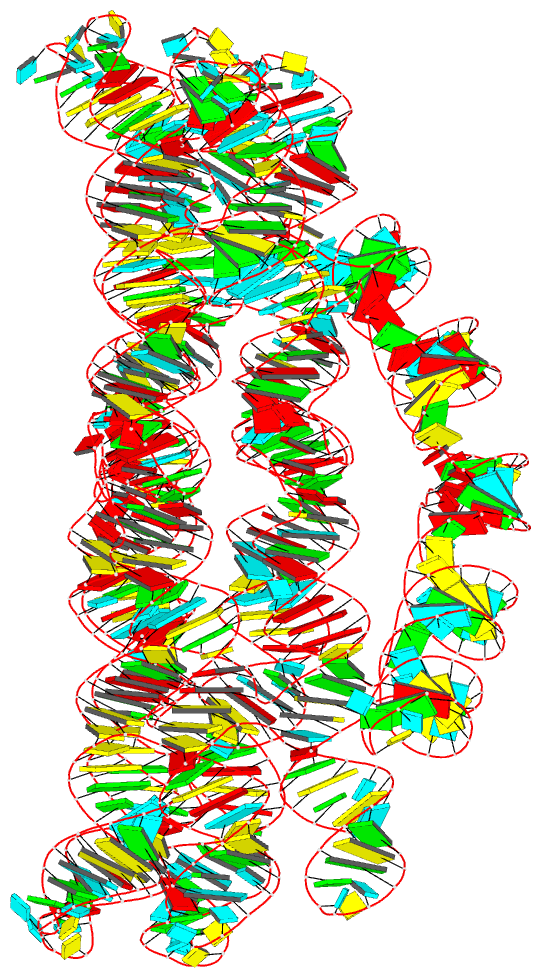
- Young conformer of a 6-helix bundle of RNA with
clasp
- Reference
-
McRae EKS, Rasmussen HO, Liu J, Boggild A, Nguyen MTA,
Sampedro Vallina N, Boesen T, Pedersen JS, Ren G, Geary
C, Andersen ES (2023): "Structure,
folding and flexibility of co-transcriptional RNA
origami." Nat Nanotechnol,
18, 808-817. doi: 10.1038/s41565-023-01321-6.
- Abstract
- RNA origami is a method for designing RNA
nanostructures that can self-assemble through
co-transcriptional folding with applications in
nanomedicine and synthetic biology. However, to advance the
method further, an improved understanding of RNA structural
properties and folding principles is required. Here we use
cryogenic electron microscopy to study RNA origami sheets
and bundles at sub-nanometre resolution revealing
structural parameters of kissing-loop and crossover motifs,
which are used to improve designs. In RNA bundle designs,
we discover a kinetic folding trap that forms during
folding and is only released after 10 h. Exploration of the
conformational landscape of several RNA designs reveal the
flexibility of helices and structural motifs. Finally,
sheets and bundles are combined to construct a multidomain
satellite shape, which is characterized by
individual-particle cryo-electron tomography to reveal the
domain flexibility. Together, the study provides a
structural basis for future improvements to the design
cycle of genetically encoded RNA nanodevices.