Summary information and primary citation
- PDB-id
-
8vws;
DSSR-derived features in text and
JSON formats
- Class
- DNA binding protein-DNA
- Method
- cryo-EM (3.1 Å)
- Summary
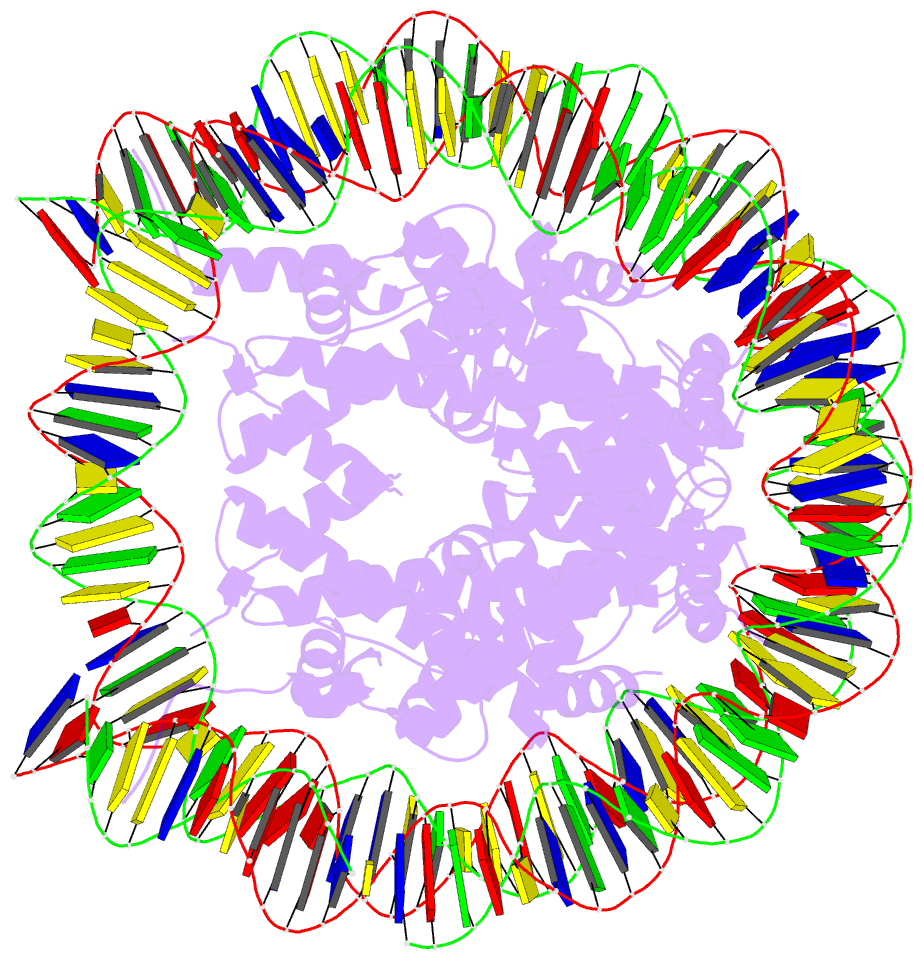
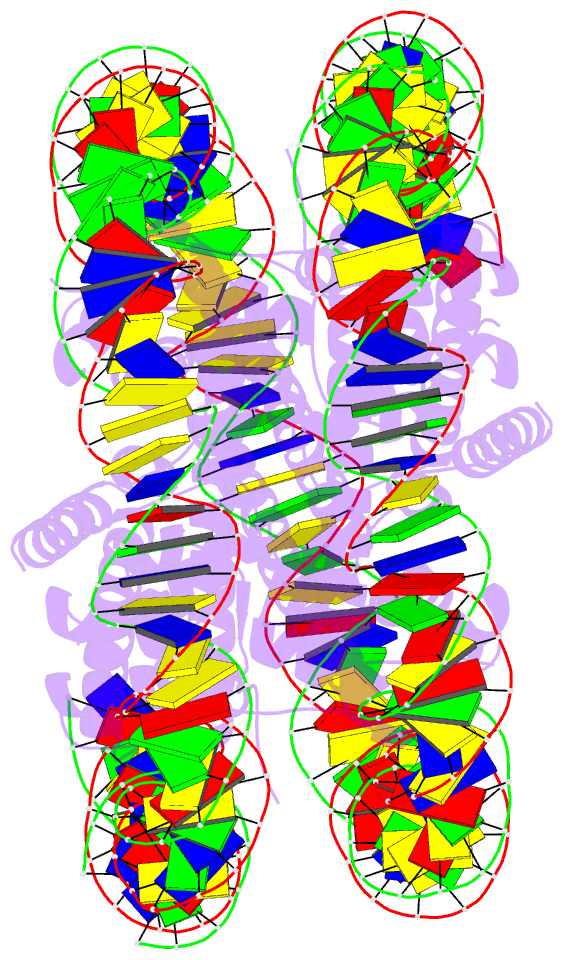
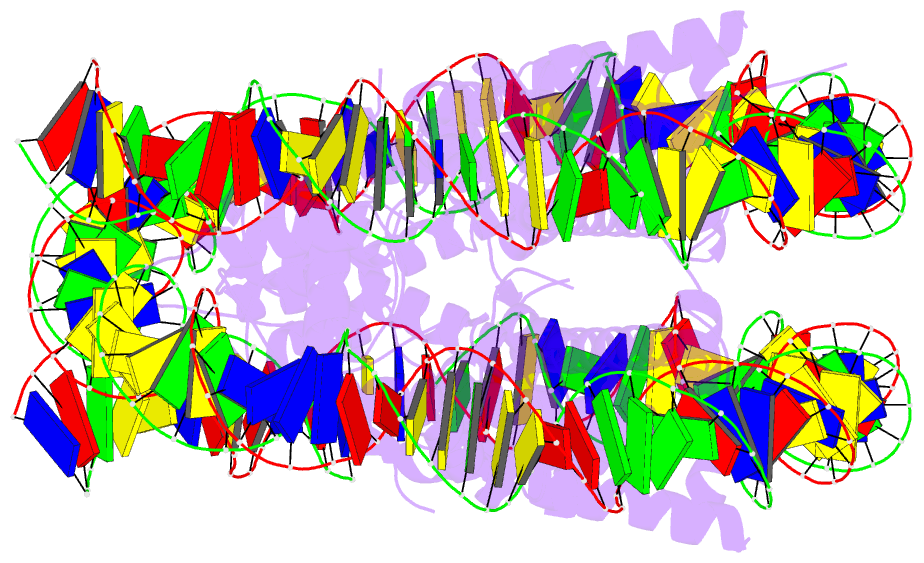
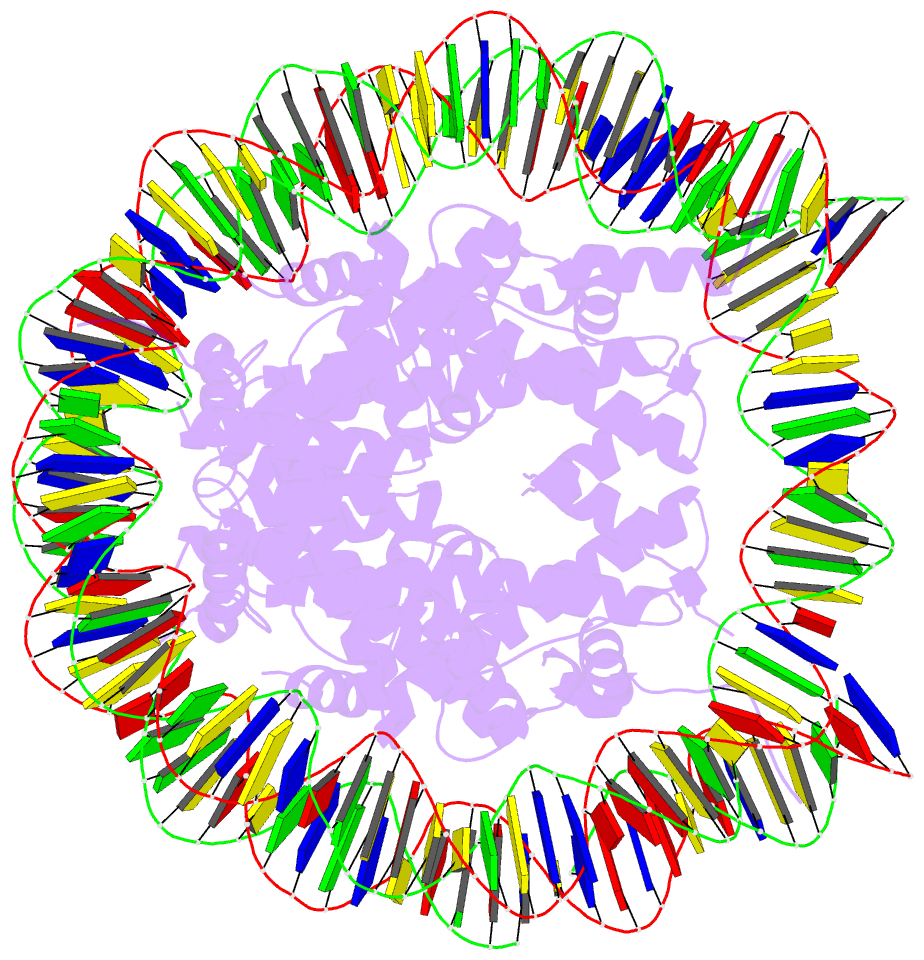
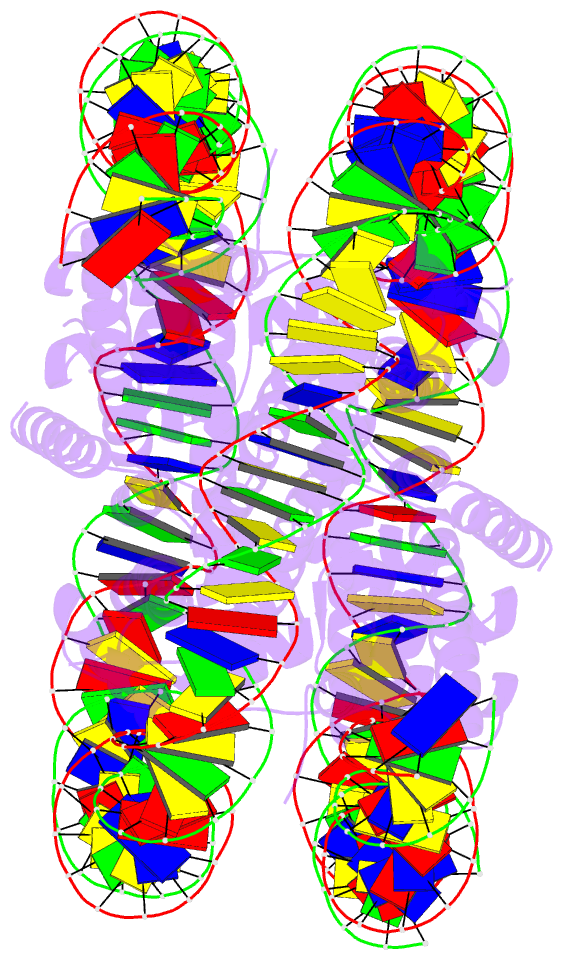
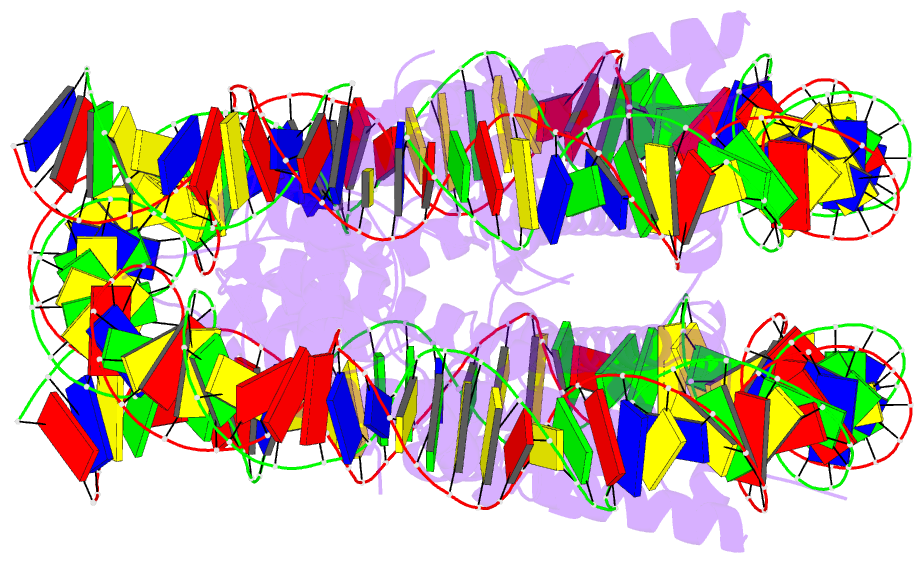
- Nucleosome containing 8oxog at shl-6
- Reference
-
Cordero C, Mehta KPM, Weaver TM, Ling JA, Freudenthal BD,
Cortez D, Roberts SA (2024): "Contributing
factors to the oxidation-induced mutational landscape in
human cells." Nat Commun,
15, 10722. doi: 10.1038/s41467-024-55497-z.
- Abstract
- 8-oxoguanine (8-oxoG) is a common oxidative DNA lesion
that causes G > T substitutions. Determinants of local
and regional differences in 8-oxoG-induced mutability
across genomes are currently unknown. Here, we show DNA
oxidation induces G > T substitutions and
insertion/deletion (INDEL) mutations in human cells and
cancers. Potassium bromate
(KBrO<sub>3</sub>)-induced 8-oxoGs occur with
similar sequence preferences as their derived
substitutions, indicating that the reactivity of specific
oxidants dictates mutation sequence specificity. While
8-oxoG occurs uniformly across chromatin, 8-oxoG-induced
mutations are elevated in compact genomic regions, within
nucleosomes, and at inward facing guanines within strongly
positioned nucleosomes. Cryo-electron microscopy structures
of OGG1-nucleosome complexes indicate that these effects
originate from OGG1's ability to flip outward positioned
8-oxoG lesions into the catalytic pocket while inward
facing lesions are occluded by the histone octamer.
Mutation spectra from human cells with DNA repair
deficiencies reveals contributions of a DNA repair network
limiting 8-oxoG mutagenesis, where OGG1- and MUTYH-mediated
base excision repair is supplemented by the
replication-associated factors Pol η and HMCES.
Transcriptional asymmetry of
KBrO<sub>3</sub>-induced mutations in OGG1- and
Pol η-deficient cells also demonstrates
transcription-coupled repair can prevent 8-oxoG-induced
mutation. Thus, oxidant chemistry, chromatin structures,
and DNA repair processes combine to dictate the oxidative
mutational landscape in human genomes.