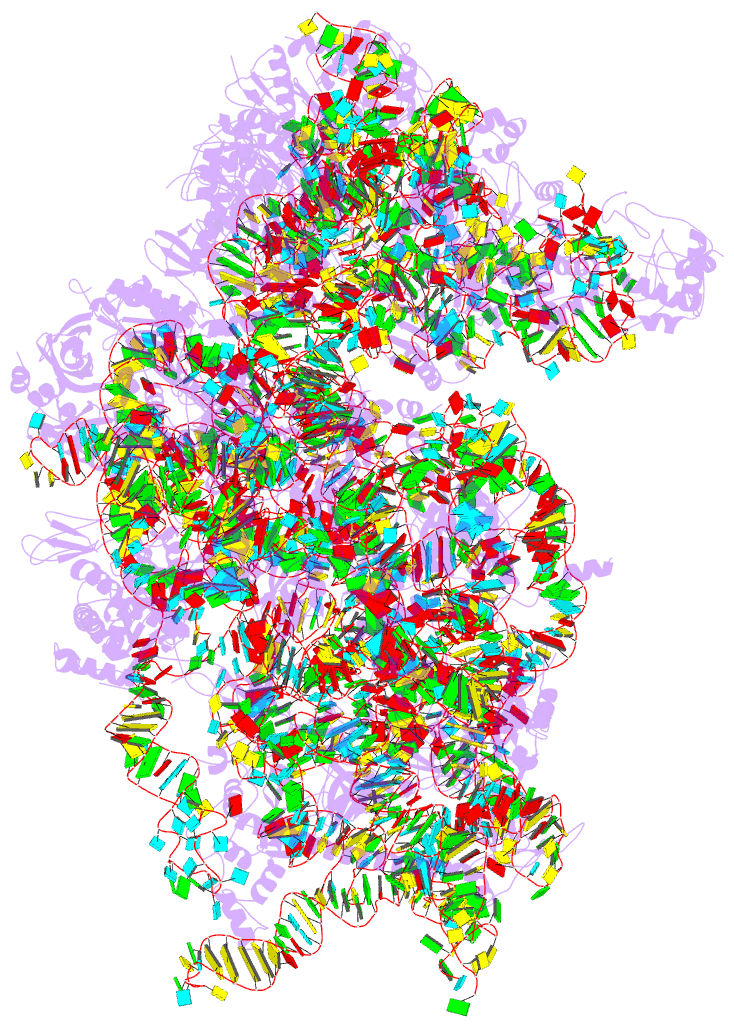
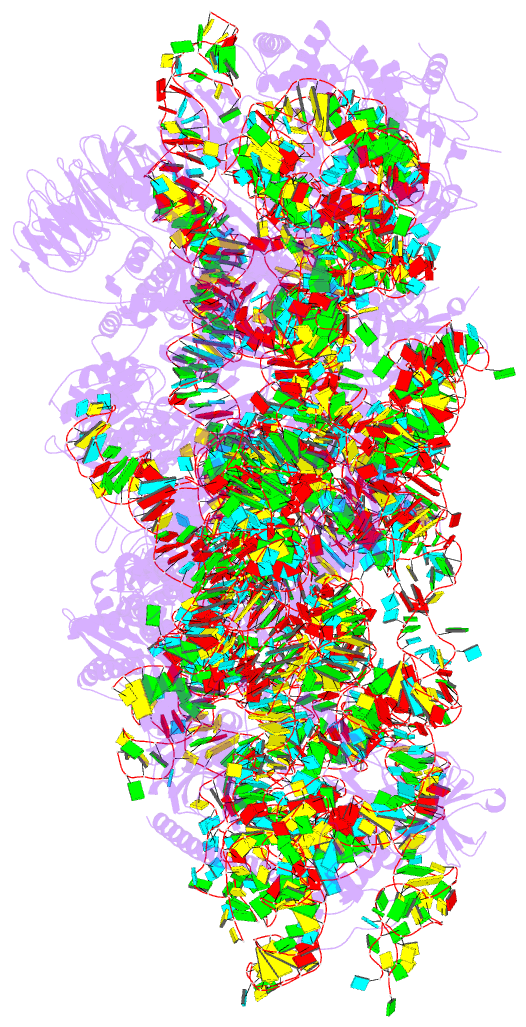
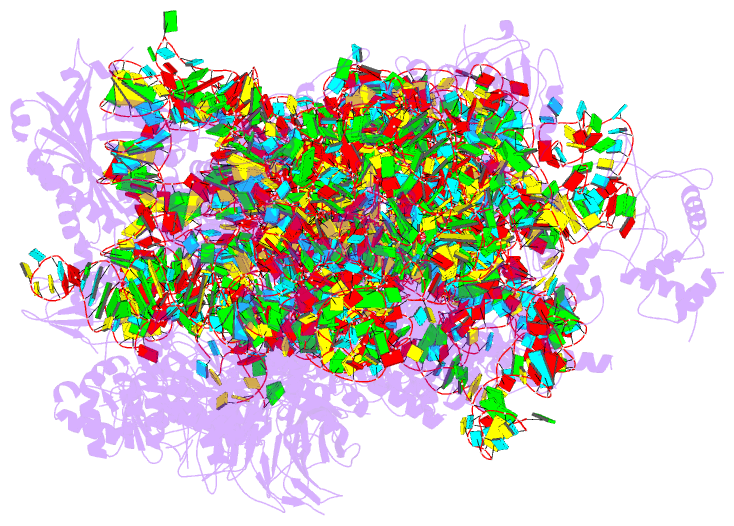
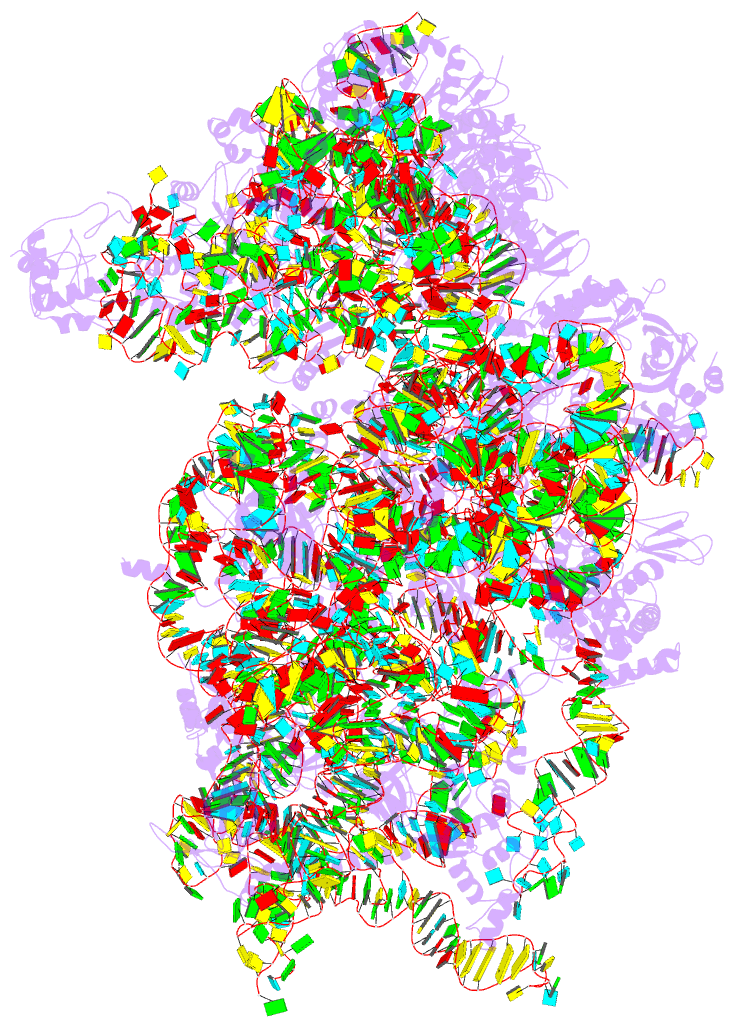
Summary information and primary citation
- PDB-id
-
9kmw;
DSSR-derived features in text and
JSON formats
- Class
- ribosome
- Method
- cryo-EM (2.73 Å)
- Summary
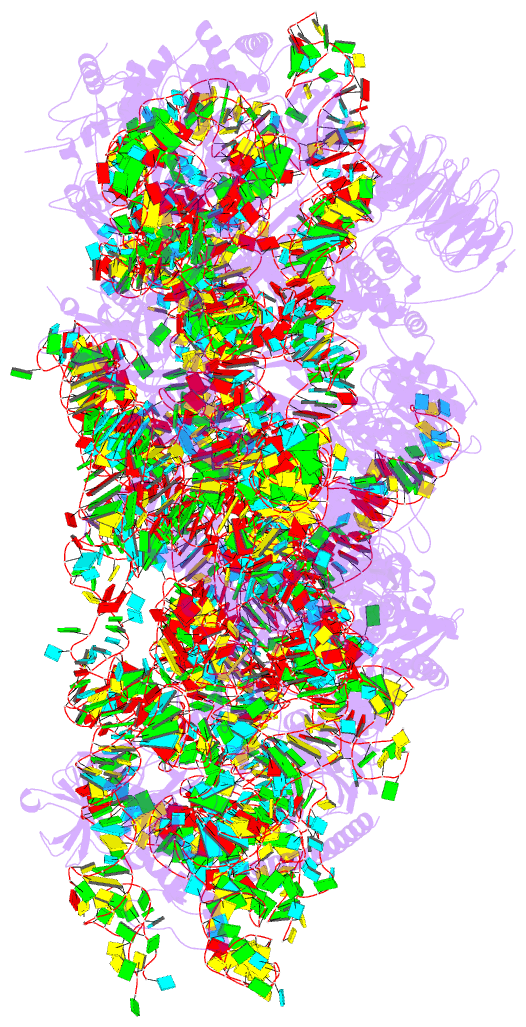
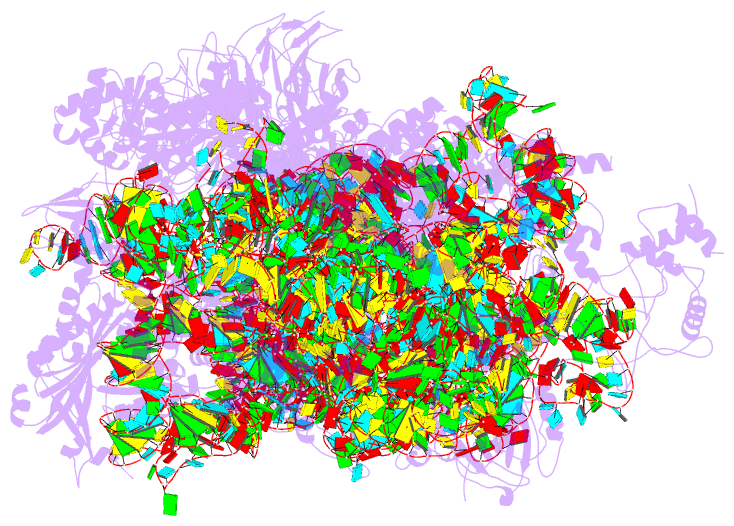
- Sarsr-mpcov-gx nsp1 bound to the human 40s ribosomal
subunit-state2
- Reference
-
Yan R, Wu M, Ge X, Jin Q, Wang M, Zhou H, Li Y, Wang Y,
Yuan S (2026): "Strategic
variations in sarbecovirus and merbecovirus Nsp1 linker
regions for translation inhibition." Nucleic
Acids Res., 54. doi: 10.1093/nar/gkag017.
- Abstract
- Nonstructural protein 1 (Nsp1) is a key virulence
factor of coronaviruses, and its stable binding to the 40S
ribosomal mRNA entry channel facilitates multiple
functions, including suppression of host immune responses
and degradation of host mRNA. To understand the structural
basis of the conserved protein across viral lineages, we
determined the cryo-EM structures of Nsp1-40S complexes of
four coronaviruses from wild animals. Our results show that
all Nsp1 proteins engage the mRNA entry channel via their
C-terminal domain (CTD), but do not fully restrict the
rotational mobility of the 40S head, which retains ∼5° of
movement and repositions the Nsp1 linker region.
Comparative analysis revealed distinct patterns in the
linker regions connecting the N- and CTDs. Sarbecovirus
Nsp1 contains a longer linker, whereas the merbecovirus
Nsp1 adopts a shorter linker that navigates structural
constraints more readily. Functionally, we find that linker
length correlates with translation inhibition efficiency,
suggesting a structural tuning mechanism. Additionally,
variations in linker and helix 1 of the CTD among different
lineages may serve as molecular markers for viral
classification. Together, our results provide a comparative
structural framework for understanding how coronavirus Nsp1
proteins modulate host translation and reflect evolutionary
adaptations in ribosome engagement.