Summary information and primary citation
- PDB-id
-
8d9k;
DSSR-derived features in text and
JSON formats
- Class
- transferase
- Method
- cryo-EM (3.72 Å)
- Summary
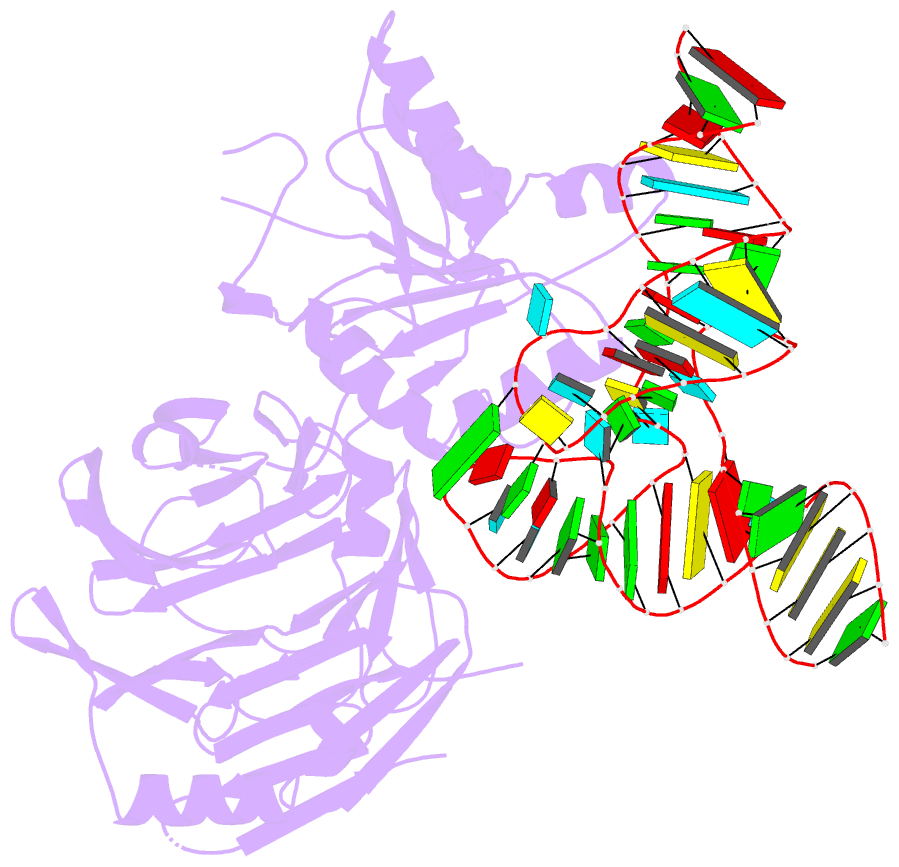
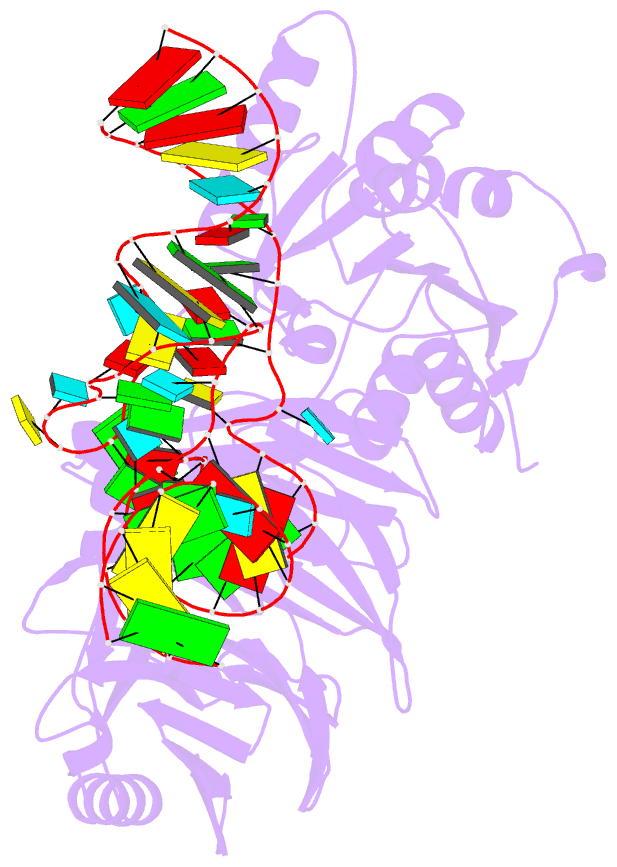
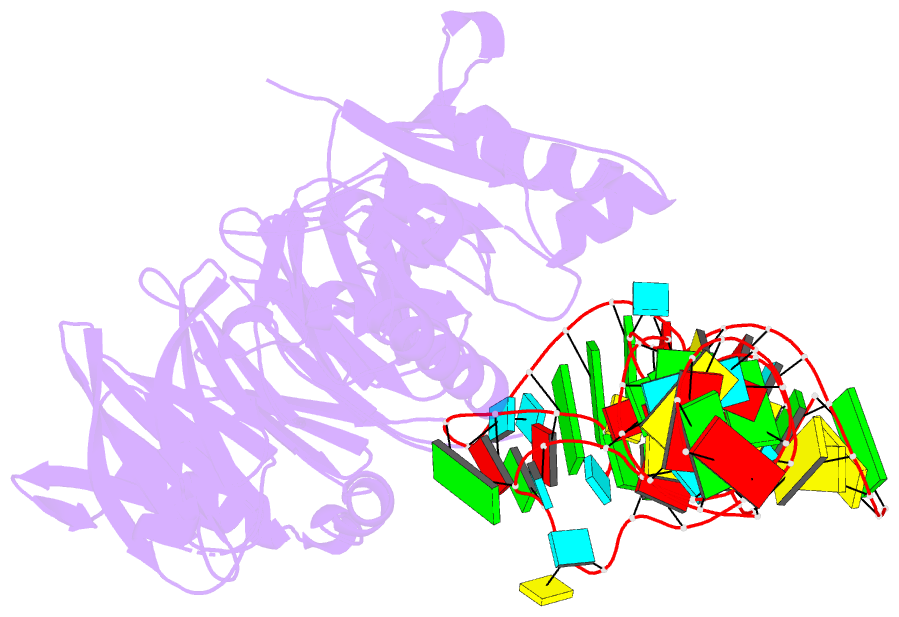
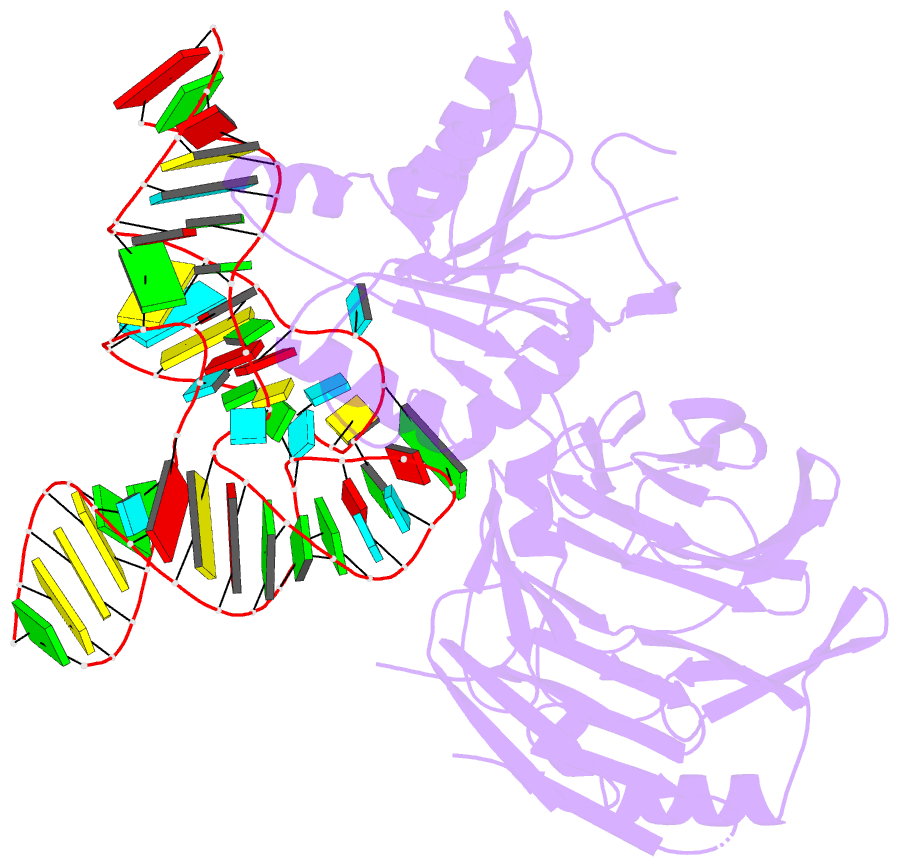
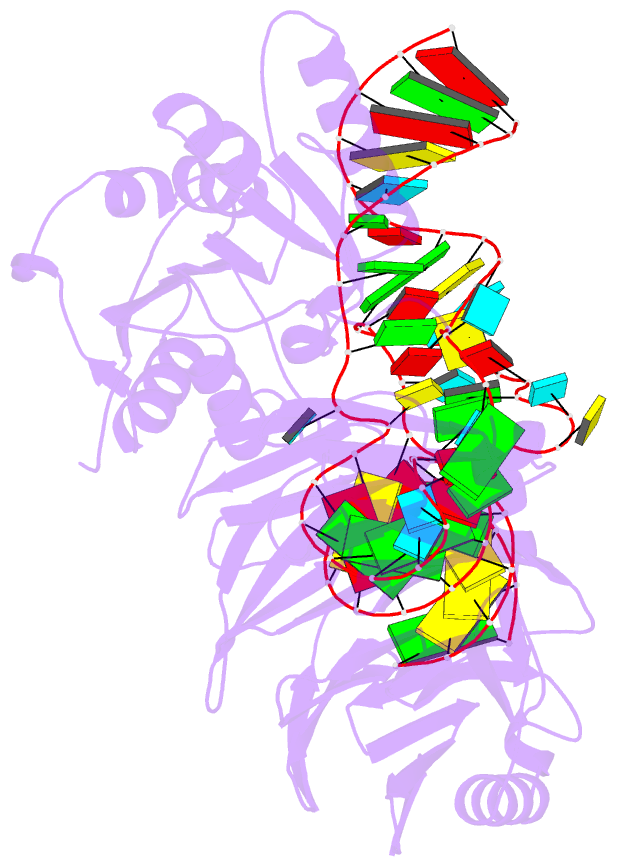
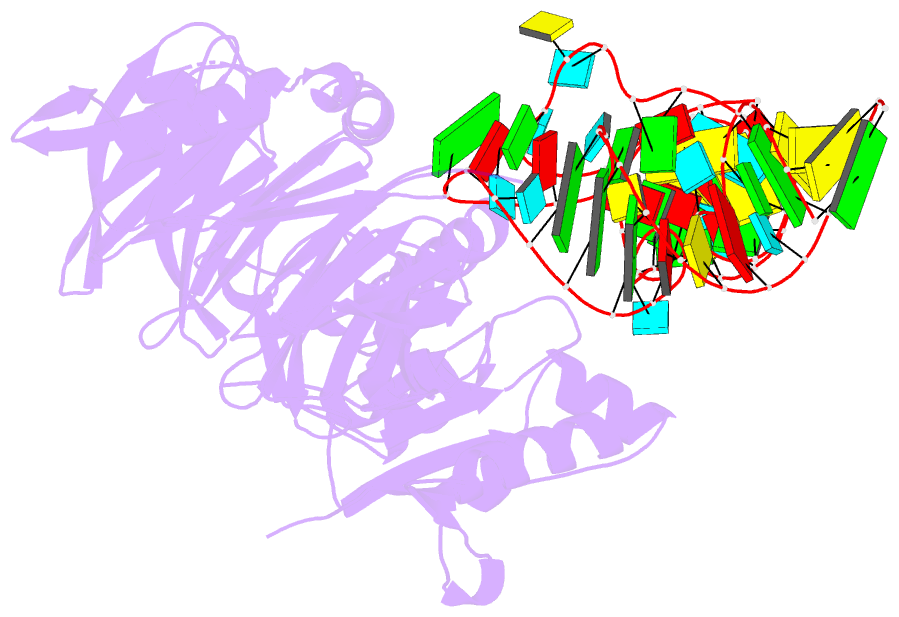
- Cryoem structure of human mettl1-wdr4 in complex with
lys-trna
- Reference
-
Ruiz-Arroyo VM, Raj R, Babu K, Onolbaatar O, Roberts PH,
Nam Y (2023): "Structures
and mechanisms of tRNA methylation by METTL1-WDR4."
Nature, 613, 383-390. doi:
10.1038/s41586-022-05565-5.
- Abstract
- Specific, regulated modification of RNAs is important
for proper gene expression<sub>1,2</sub>. tRNAs
are rich with various chemical modifications that affect
their stability and function<sub>3,4</sub>.
7-Methylguanosine (m<sub>7</sub>G) at tRNA
position 46 is a conserved modification that modulates
steady-state tRNA levels to affect cell
growth<sub>5,6</sub>. The METTL1-WDR4 complex
generates m<sub>7</sub>G46 in humans, and
dysregulation of METTL1-WDR4 has been linked to brain
malformation and multiple
cancers<sub>7-22</sub>. Here we show how METTL1
and WDR4 cooperate to recognize RNA substrates and catalyse
methylation. A crystal structure of METTL1-WDR4 and
cryo-electron microscopy structures of METTL1-WDR4-tRNA
show that the composite protein surface recognizes the tRNA
elbow through shape complementarity. The cryo-electron
microscopy structures of METTL1-WDR4-tRNA with
S-adenosylmethionine or S-adenosylhomocysteine along with
METTL1 crystal structures provide additional insights into
the catalytic mechanism by revealing the active site in
multiple states. The METTL1 N terminus couples cofactor
binding with conformational changes in the tRNA, the
catalytic loop and the WDR4 C terminus, acting as the
switch to activate m<sub>7</sub>G
methylation. Thus, our structural models explain how
post-translational modifications of the METTL1 N terminus
can regulate methylation. Together, our work elucidates the
core and regulatory mechanisms underlying
m<sub>7</sub>G modification by METTL1,
providing the framework to understand its contribution to
biology and disease.