Summary information and primary citation
- PDB-id
-
9cfn;
DSSR-derived features in text and
JSON formats
- Class
- RNA
- Method
- X-ray (2.9 Å)
- Summary
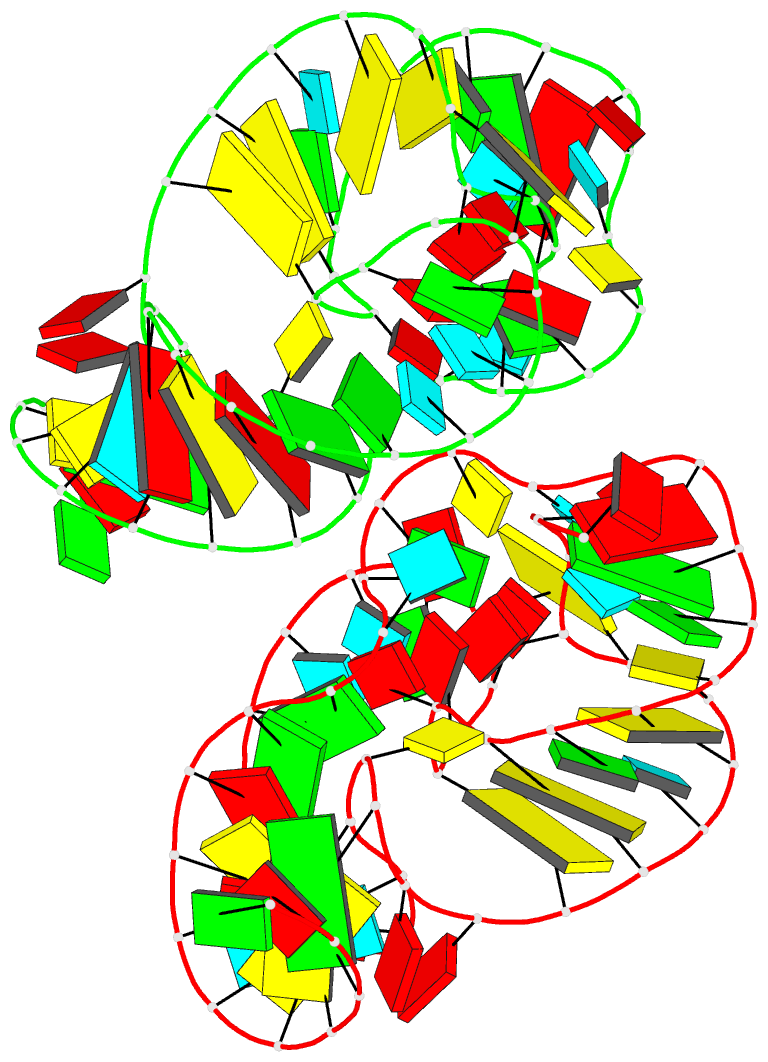
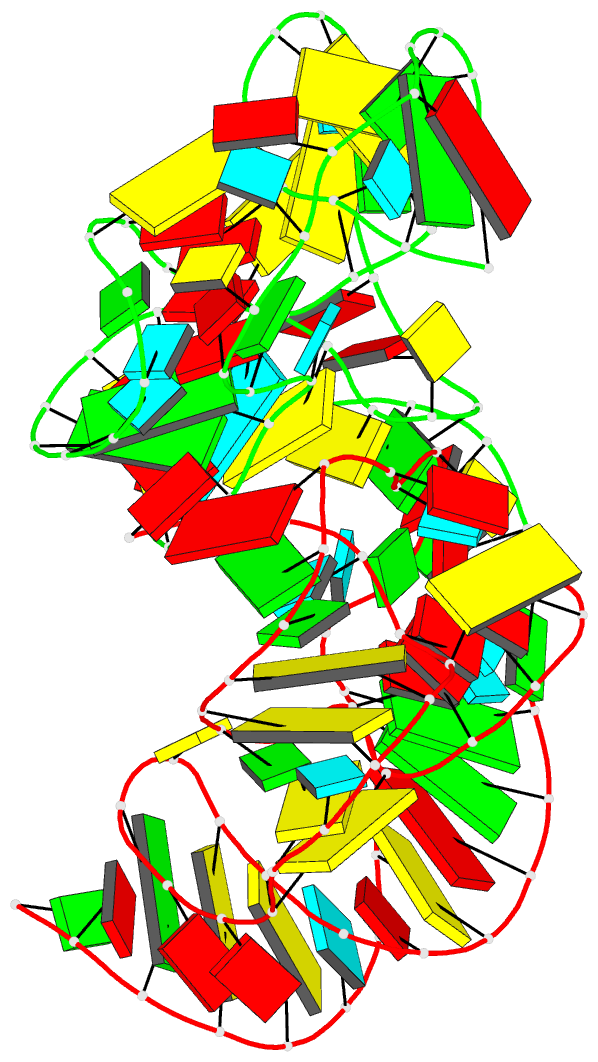
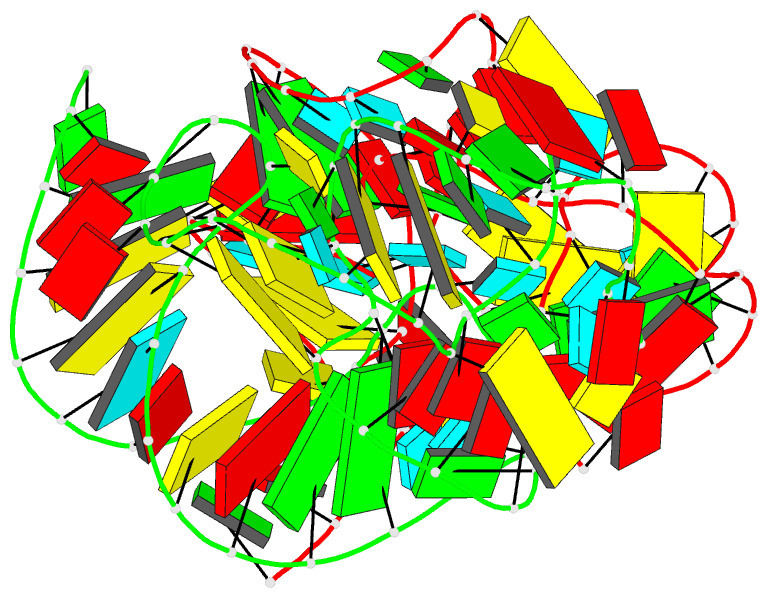
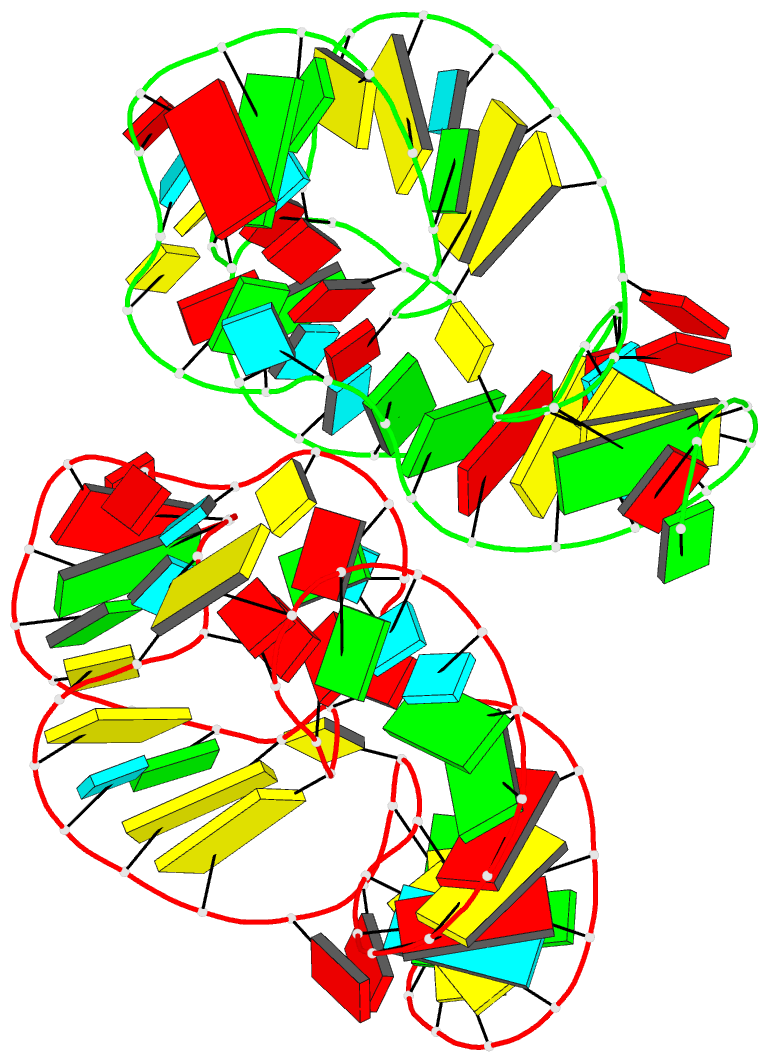
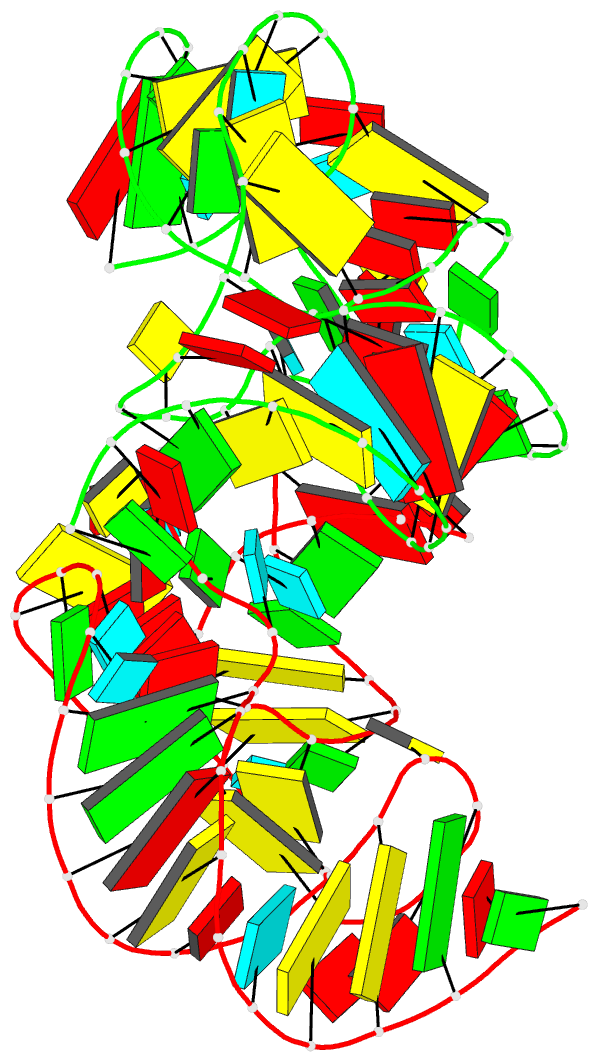
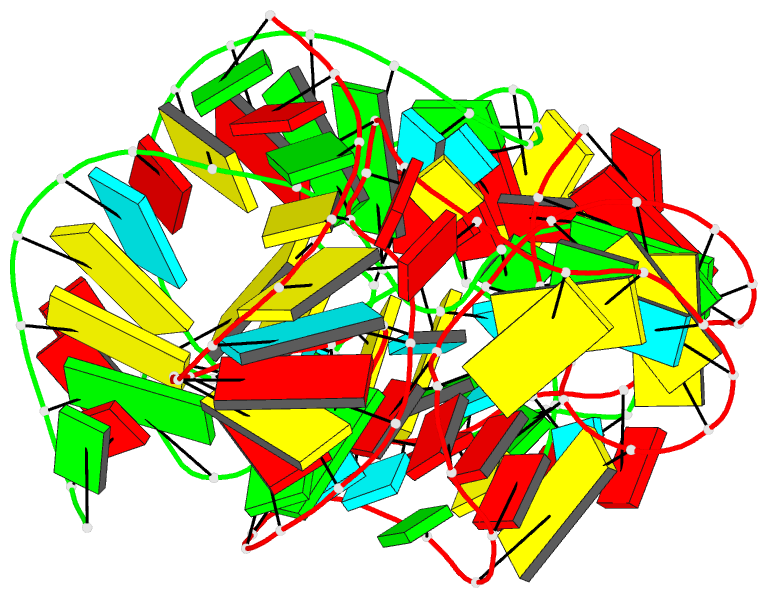
- Crystal structure of an exoribonuclease-resistant RNA
from a tombusvirus-like associated RNA
- Reference
-
Gezelle JG, Korn SM, McDonald JT, Gong Z, Erickson A,
Huang CH, Yang F, Cronin M, Kuo YW, Wimberly BT,
Steckelberg AL (2025): "A
conserved viral RNA fold enables nuclease resistance
across kingdoms of life." Nucleic Acids
Res., 53. doi: 10.1093/nar/gkaf840.
- Abstract
- Viral exoribonuclease-resistant RNA (xrRNA) structures
block cellular nucleases to produce subgenomic viral RNAs
during infection. High sequence variability among xrRNAs
from distantly related viruses raises questions about the
shared molecular features that enable these RNAs to
withstand the strong unwinding forces of exoribonucleases.
Here, we present the first structure of a plant-virus xrRNA
in its active conformation and uncover universal principles
of xrRNA folding. Comparison with the structure of a
human-pathogenic flavivirus xrRNA reveals that both share a
core structural motif-a protective ring encircling the
RNA's 5' end-despite lacking sequence similarity.
Disrupting this core motif through targeted mutagenesis
eliminates exoribonuclease-resistance and attenuates viral
infection. We identify hundreds of related structures
across multiple virus families, supporting the conservation
of this mechanism. Our study demonstrates how distantly
related RNA viruses have converged on a common structural
strategy to inhibit cellular nucleases, with a universal
ring topology as the defining feature of viral xrRNAs.