Summary information and primary citation
- PDB-id
-
2a6o;
DSSR-derived features in text and
JSON formats
- Class
- transcription-DNA
- Method
- X-ray (2.6 Å)
- Summary
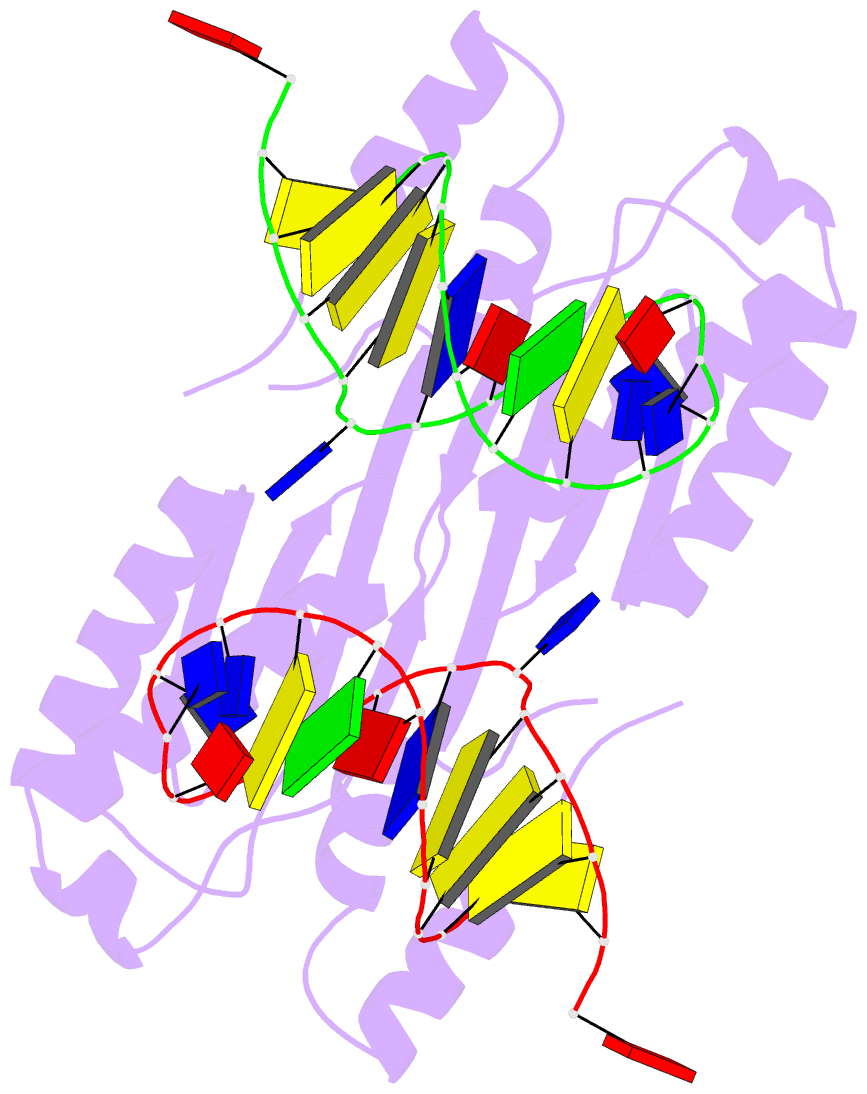
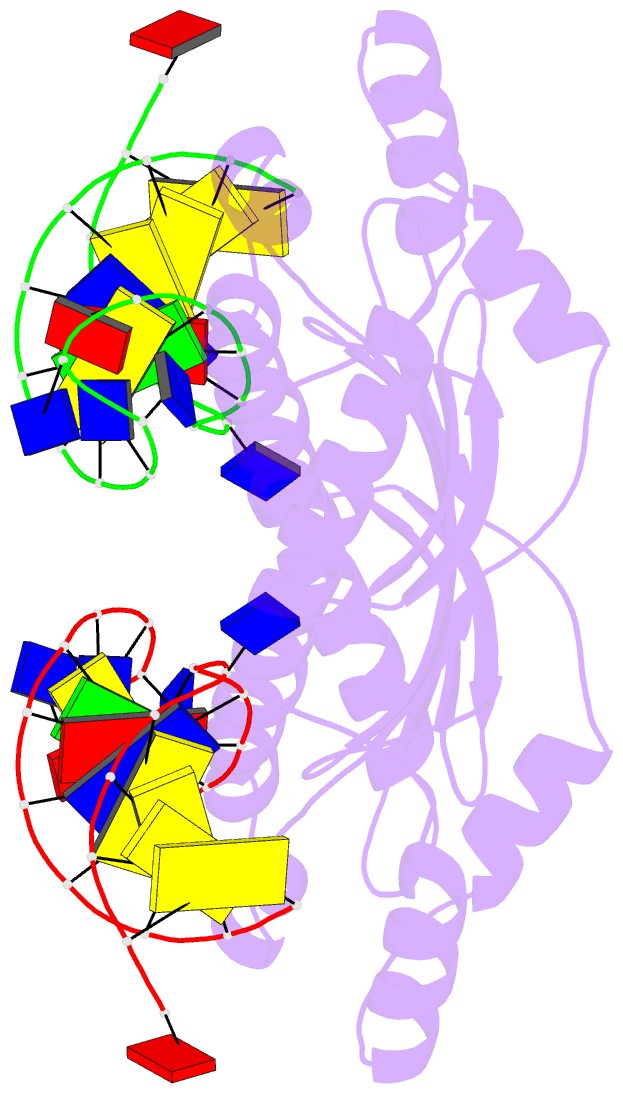
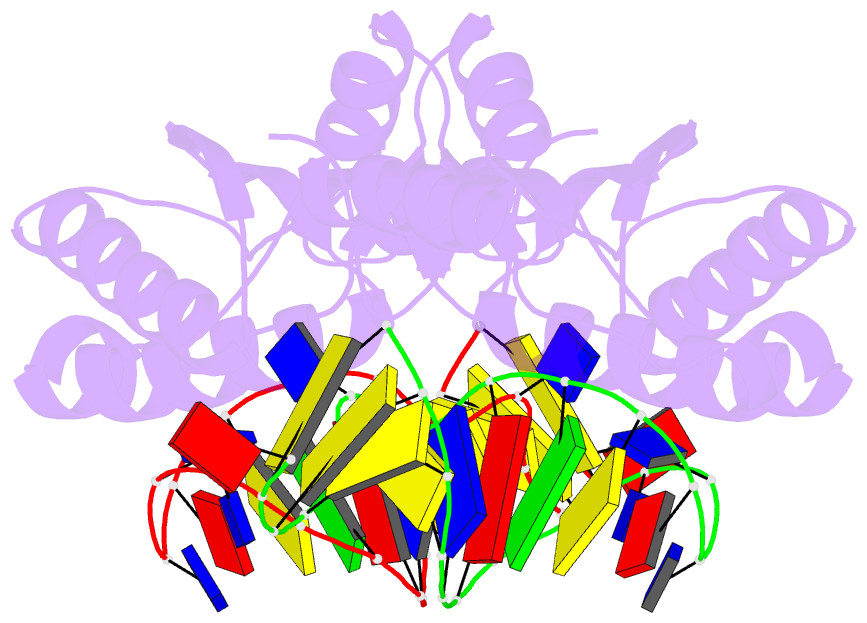
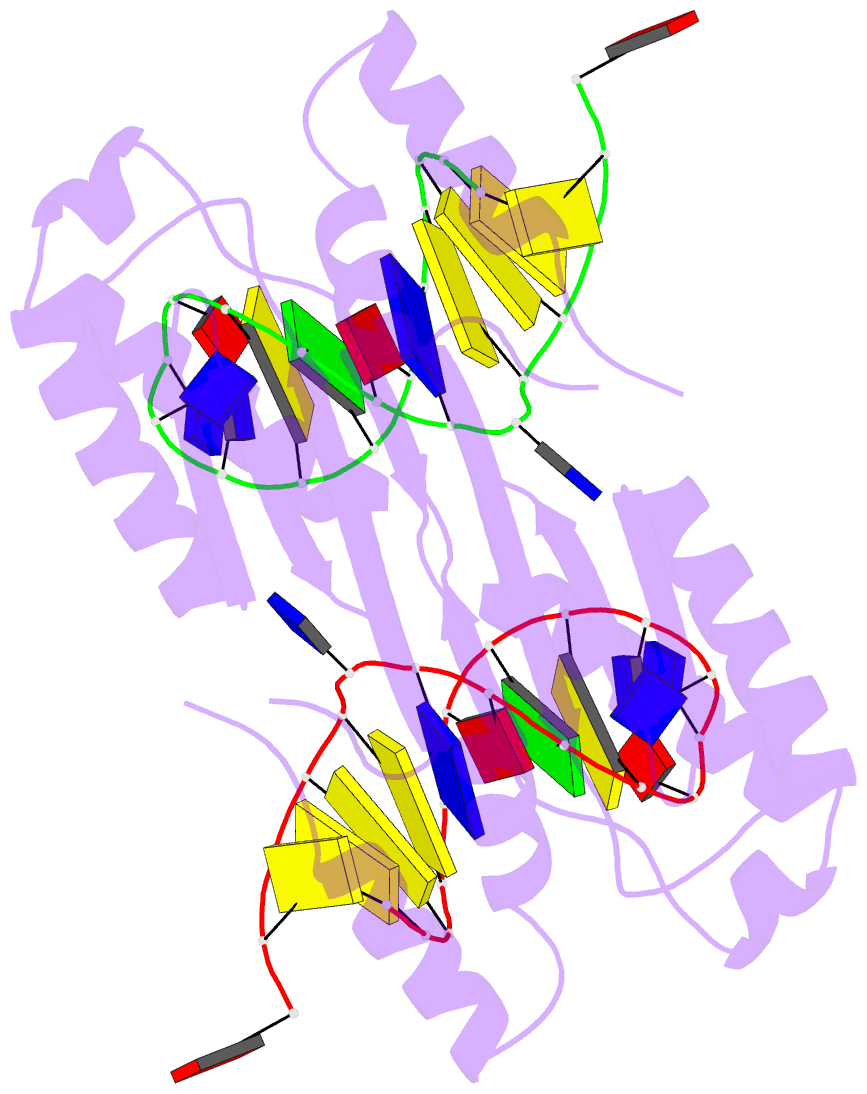
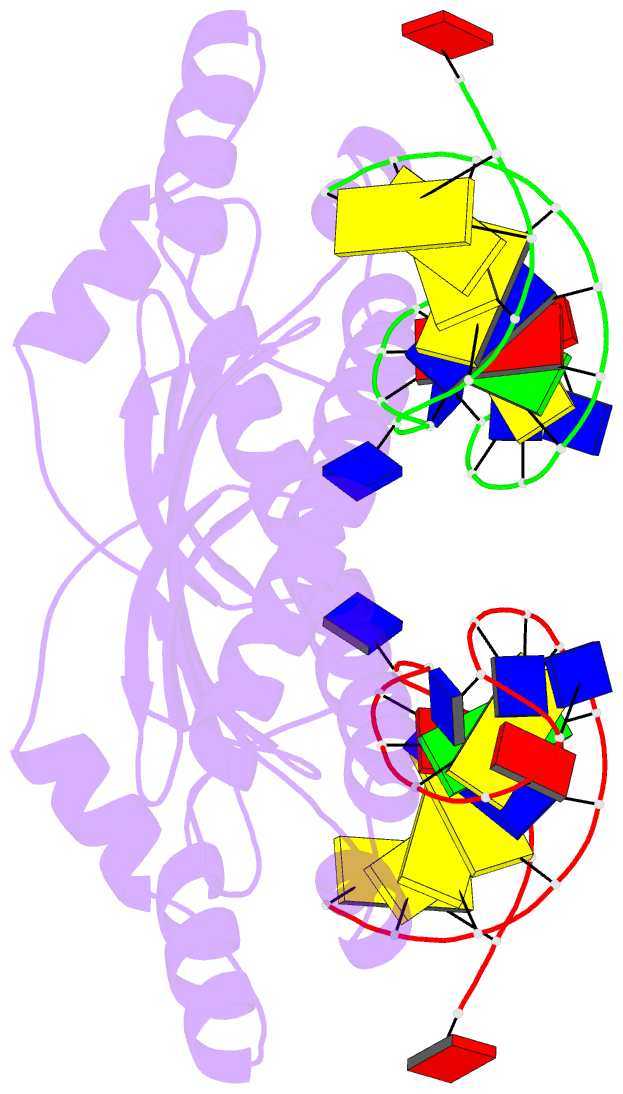
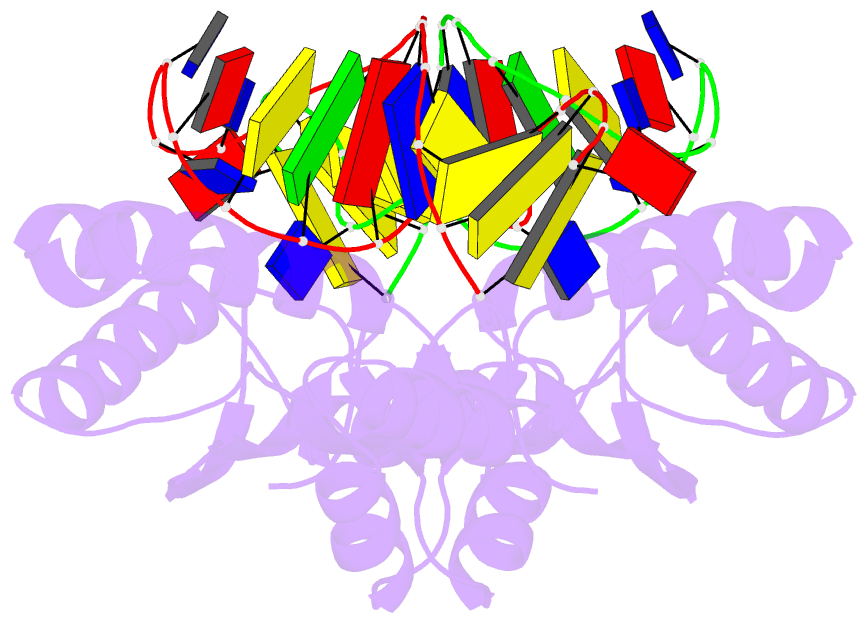
- Crystal structure of the ishp608 transposase in complex
with stem-loop DNA
- Reference
-
Ronning DR, Guynet C, Ton-Hoang B, Perez ZN, Ghirlando R,
Chandler M, Dyda F (2005): "Active
site sharing and subterminal hairpin recognition in a new
class of DNA transposases." Mol.Cell,
20, 143-154. doi: 10.1016/j.molcel.2005.07.026.
- Abstract
- Many bacteria harbor simple transposable elements
termed insertion sequences (IS). In Helicobacter pylori,
the chimeric IS605 family elements are particularly
interesting due to their proximity to genes encoding
gastric epithelial invasion factors. Protein sequences of
IS605 transposases do not bear the hallmarks of other
well-characterized transposases. We have solved the crystal
structure of full-length transposase (TnpA) of a
representative member, ISHp608. Structurally, TnpA does not
resemble any characterized transposase; rather, it is
related to rolling circle replication (RCR) proteins.
Consistent with RCR, Mg2+ and a conserved tyrosine, Tyr127,
are essential for DNA nicking and the formation of a
covalent intermediate between TnpA and DNA. TnpA is
dimeric, contains two shared active sites, and binds two
DNA stem loops representing the conserved inverted repeats
near each end of ISHp608. The cocrystal structure with
stem-loop DNA illustrates how this family of transposases
specifically recognizes and pairs ends, necessary steps
during transposition.